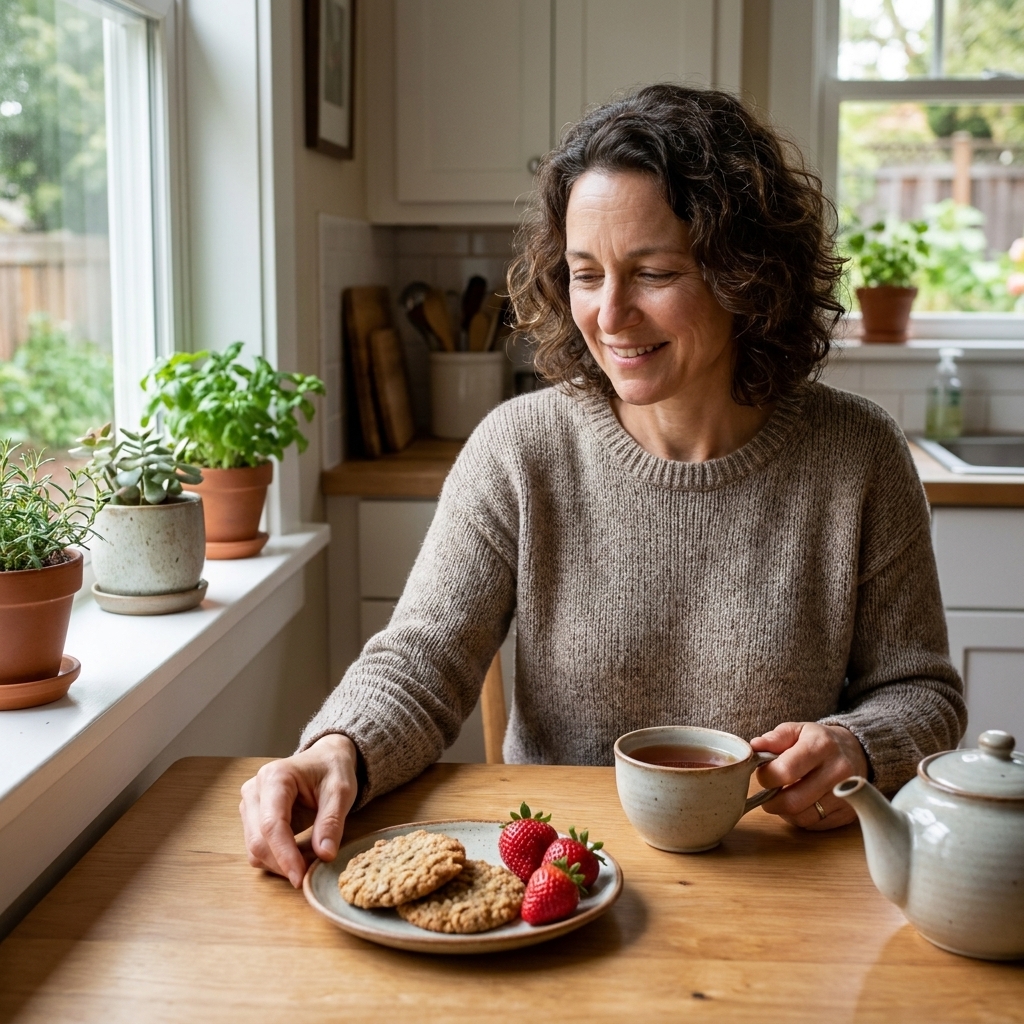
There was a season of my life when dinner meant standing at the counter, inhaling something “quick,” and scrolling emails like it was my second job. As a former corporate event planner, I was basically trained to multitask through my own needs.
Now I treat the dining space as a tiny daily reset. Not fancy. Not perfect. Just intentional enough that my brain gets the message: we are here. And when you make it easier to be present, mindful eating becomes less of a wellness project and more of a natural byproduct.
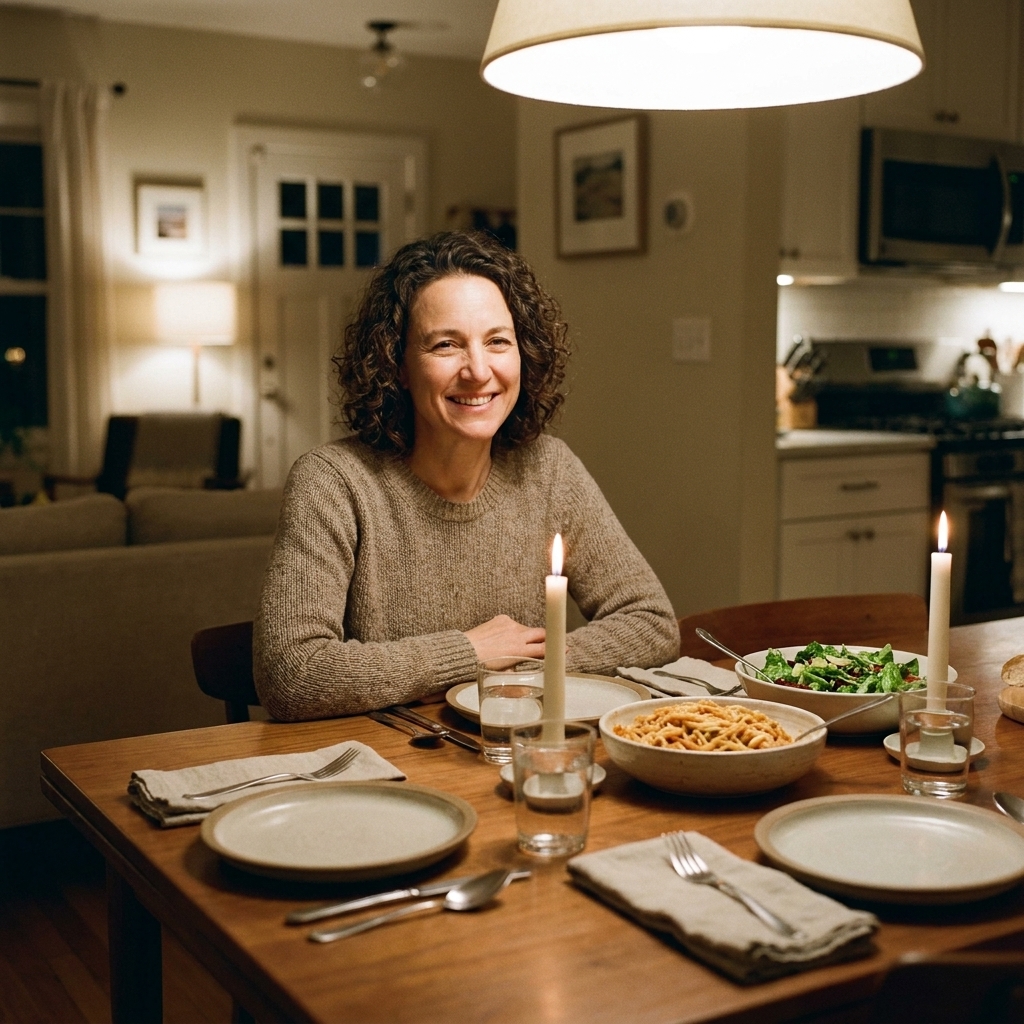
Let’s set up a distraction-free dining space that can support calmer eating, help you notice fullness cues, and make it easier to connect with the people you live with, including the version of you eating tomorrow in a cleaner space.
Start with the goal: presence, not perfection
A distraction-free dining space is not a museum display. It is simply a place that gently reduces the pull of other things so you can focus on food and company.
When I’m coaching clients on mindful nutrition, we talk about changing the environment first. Why? Because willpower is unreliable at 6:30 p.m. when you are hungry and tired. Your space can do some of the work for you.
Ask these two quick questions
- What steals attention at meals? Phones, TV, clutter, work papers, bright overhead lighting, noisy appliances.
- What helps attention come back? Comfortable seating, a clear surface, softer light, a simple ritual, fewer visual cues that scream “do more.”
Pick one “steals attention” item to reduce this week. That is a win.
Choose your eating zone
Even if you do not have a formal dining room, you can create a reliable eating zone: a table, a counter corner, a tray at the coffee table, even a small bistro setup near a window. The magic is consistency. When you eat in the same spot, your brain can start associating it with slowing down.
Small-space friendly setups
- One end of the kitchen table: Keep it clear except for a centerpiece you love.
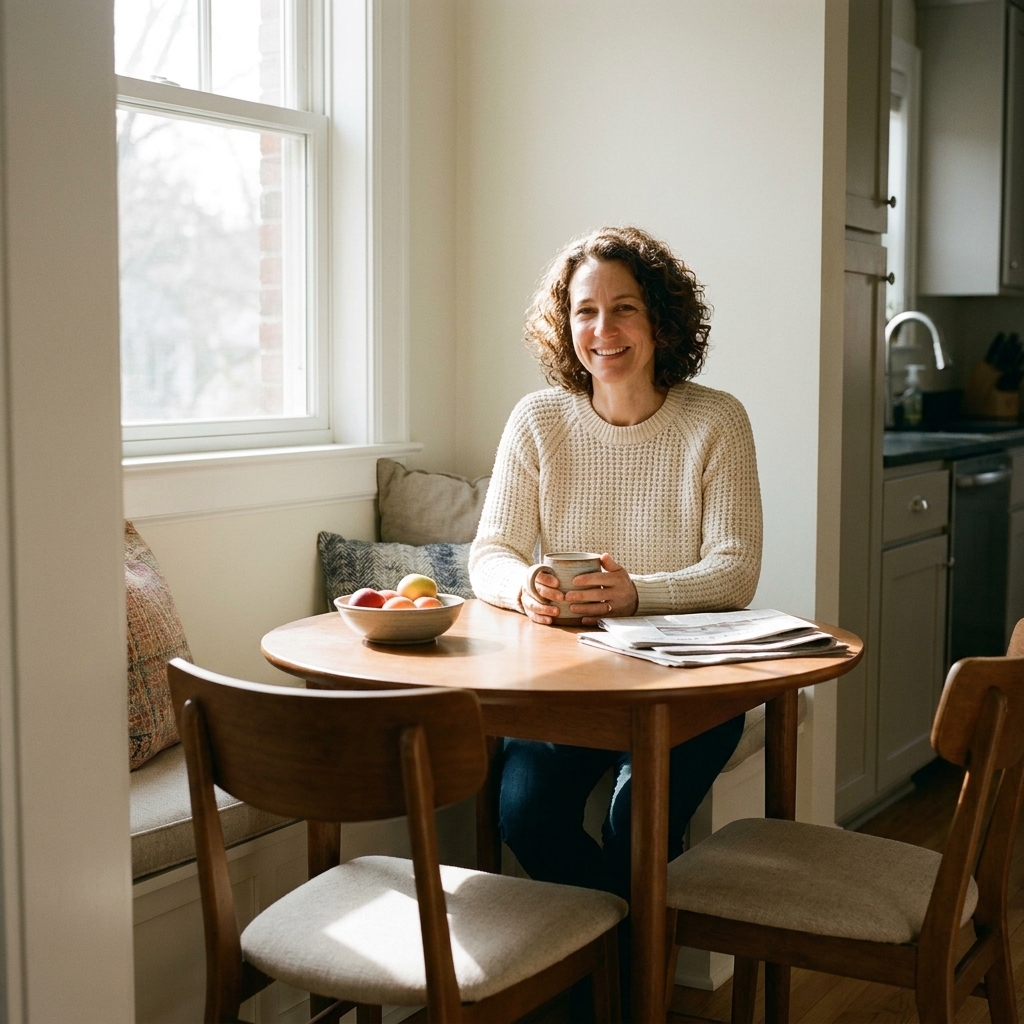
- A two-chair nook: A tiny round table often feels calmer than a big rectangle crammed into a corner.
- Counter seating: Add two stools and make it screen-free by default.
- A meal tray rule: If you are on the couch, use a tray and pause everything else. Same concept, different location.
Clear the table
Clutter is visual noise. When the table is stacked with mail, school papers, and random chargers, your body tends to stay in task mode. One of the simplest ways to encourage mindful eating is to make the table look like it is meant for eating.
A 90-second table reset
- Put anything non-meal-related into a basket or bin (one basket is enough).
- Wipe the surface quickly. Not deep clean, just reset.
- Set one small anchor item: a napkin, a candle, a little vase, or a bowl of fruit.
If you live with other people, make the “basket for table stuff” a shared system. It keeps you from being the only one responsible for maintaining the calm.
Build a no-screens structure
Let’s be real: telling yourself “no phone at dinner” works until you are waiting for a delivery update or you remember you never texted your sister back.
The trick is to create a physical home for devices so the decision is automatic.
Try one of these realistic boundaries
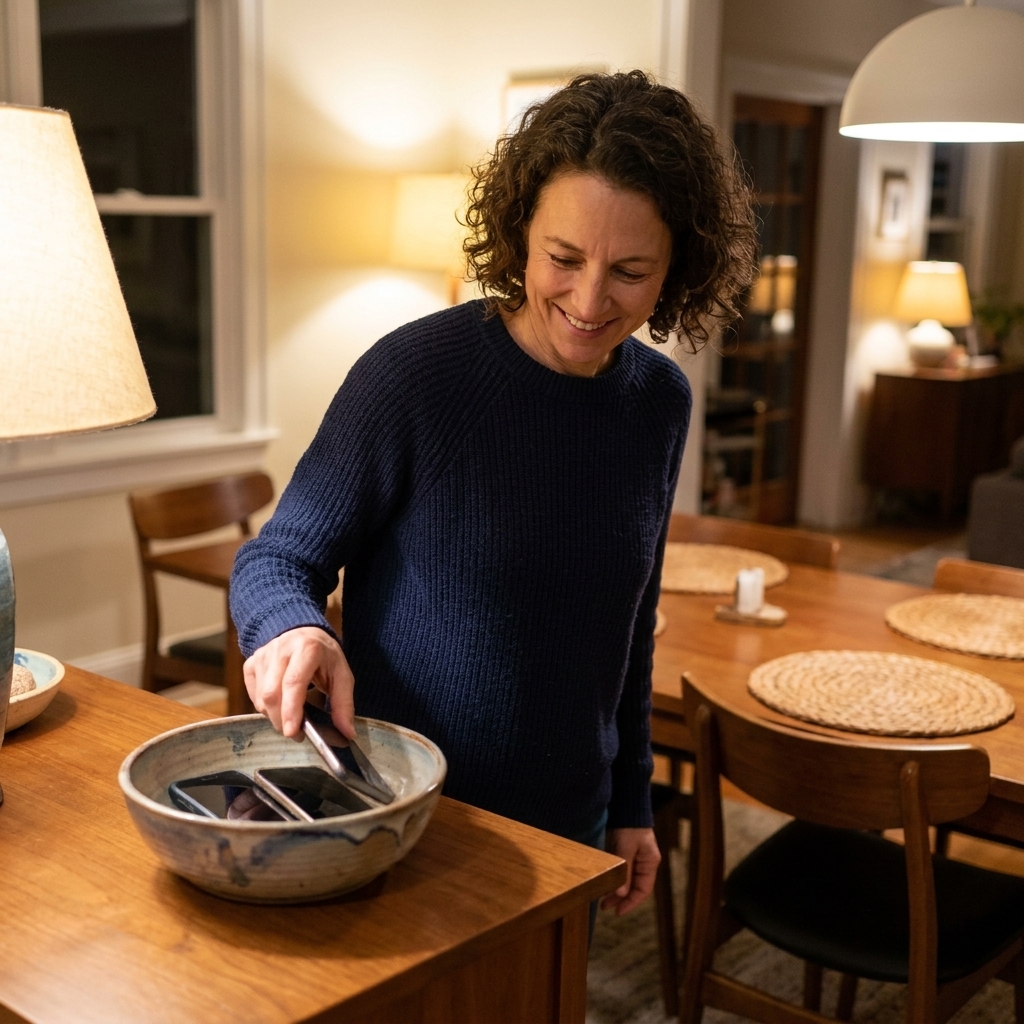
- Phone bowl: A simple bowl or tray near the dining area where everyone drops their phone.
- Charging station: Plug in phones in the kitchen or hallway during meals.
- One exception rule: If you need a device for a timer or music, only one device stays out, face down, notifications off.
- TV compromise: Start with “TV off for the first 10 minutes,” then build from there.
Presence is a practice. You are allowed to ramp up slowly.
Use lighting and sound
Most of us feel a room before we think about it. Bright overhead lights and loud background noise can keep you in a more keyed-up state, which can make it easier to rush, snack mindlessly, or keep scanning for the next task.
If stress tends to show up in your stomach, this matters even more. When you feel more settled, it is often easier to chew, slow down, and notice what your body is asking for.
Lighting tweaks that make a big difference
- Switch to a warm bulb (around 2700K) in your dining area.
- Use a lamp instead of overhead lighting when possible.
- Try a candle during dinner a few nights a week for instant “we are here” energy.
If you have kids or pets, skip the open flame and use an LED candle. Same cue, less stress.
Sound choices that support mindful eating
- Skip the TV audio. If you want background sound, choose a mellow playlist.
- Lower appliance noise if you can (dishwasher later, blender earlier).
- If your home is naturally loud, try soft instrumental music to smooth the edges.
Make it comfortable
Mindful eating is harder when you are perched awkwardly, leaning forward, or bumping knees under a table that is too low. Comfort supports patience.
Quick comfort upgrades
- Add a cushion if chairs feel hard or cold.
- Adjust table height if you are using a counter. The right stool height reduces fidgeting.
- Check spacing so plates, glasses, and elbows are not constantly colliding.
- Set the table even for a simple meal. A placemat counts.
My personal rule: if it feels like I am eating in a holding pattern, I change one thing until it feels like a place to land.
Design for connection
If you want deeper family connection, the environment can help here too. When meals feel awkward or rushed, people naturally reach for screens or escape routes. A few simple prompts make conversation easier without forcing it.
Low-pressure connection ideas
- A rose and thorn check-in: One good thing, one hard thing from the day.
- High-low-haha: A high, a low, and something funny.
- Question jar: A small jar of simple questions like “What is a smell you love?”
- Gratitude bite: Before the first bite, name one thing you appreciate about the meal or the day.

Keep the kitchen steady
A distraction-free dining space is easier to maintain when the kitchen does not feel like a tornado zone. You do not need a full cleanup after every meal, but a short closing routine prevents the next meal from starting in chaos.
A simple after-dinner reset (10 minutes)
- Clear plates and load the dishwasher or soak one pan.
- Wipe the table and counters.
- Set up one thing for tomorrow (coffee maker, water bottles, lunch container).
- Leave one small pleasant touch, like a clean cloth napkin folded on the table.
This is not about being spotless. It is about creating an easier start for your future self.
If you share your space
Shared households need shared agreements. The key is to keep the rules simple and positive, not controlling.
Try these scripts
- For roommates: “Can we keep the table clear so it is always a place we can eat? Let’s use this basket for mail and random stuff.”
- For kids: “Phones and tablets take a break during dinner so our brains can taste food and notice each other.”
- For partners: “Can we do three screen-free dinners a week and see how it feels?”
And yes, you will have off nights. Connection is built through repetition, not rigid rules.
If your setup is not ideal
If you work late shifts, live in a studio, eat in a shared apartment, or deal with sensory sensitivities, you are not doing it wrong. You are just working with real life.
- No table: Use a tray and make it the “meal-only” surface.
- Lots of noise: Try low, steady background music or earplugs that soften sound without blocking conversation.
- Focus is hard: Some people (especially neurodivergent folks) do better with a little structure, like one calm playlist or a simple ritual. Experiment and keep what helps.
Mindful table checklist
- Table is clear (or mostly clear)
- Phones have a home away from the table
- Lighting is warm and not harsh
- Seating is comfortable
- One simple ritual begins the meal (a breath, gratitude, a check-in)
- Conversation is welcome, not forced
If you only do two of these tonight, you are still building the habit.
FAQ
What if I eat alone most nights?
Solo meals deserve calm too. Try one small ritual: plate your food (even if it is leftovers), sit down, and take three slow breaths before the first bite. You are still practicing presence.
Is background music considered a distraction?
It depends. Music can be supportive if it is low volume and not attention-grabbing. If you notice you are eating faster or checking your phone more, try a quieter playlist or no music for a few meals and compare.
How do I stop scrolling while I eat?
Make the environment do the heavy lifting. Put a phone bowl in a visible spot, charge your phone in another room during meals, and keep something satisfying at the table like sparkling water, a napkin, or a candle (LED is great). The goal is to reduce friction for the habit you want.
We watch TV as a family. Do we have to stop?
Not necessarily. If TV time feels like true connection for your household, keep it. If you want more mindful eating, experiment with a hybrid: screen-free dinners on weekdays and a cozy show night on weekends, or TV off for the first half of the meal.
A next step
Tonight, pick one change you can make in under five minutes. Clear one square of table. Light a candle. Put phones in a bowl. Sit down for the first three bites.
Healthy living is not a strict regimen. It is a series of small choices that make you feel better, and a distraction-free dining space is one of the most underrated choices I know.