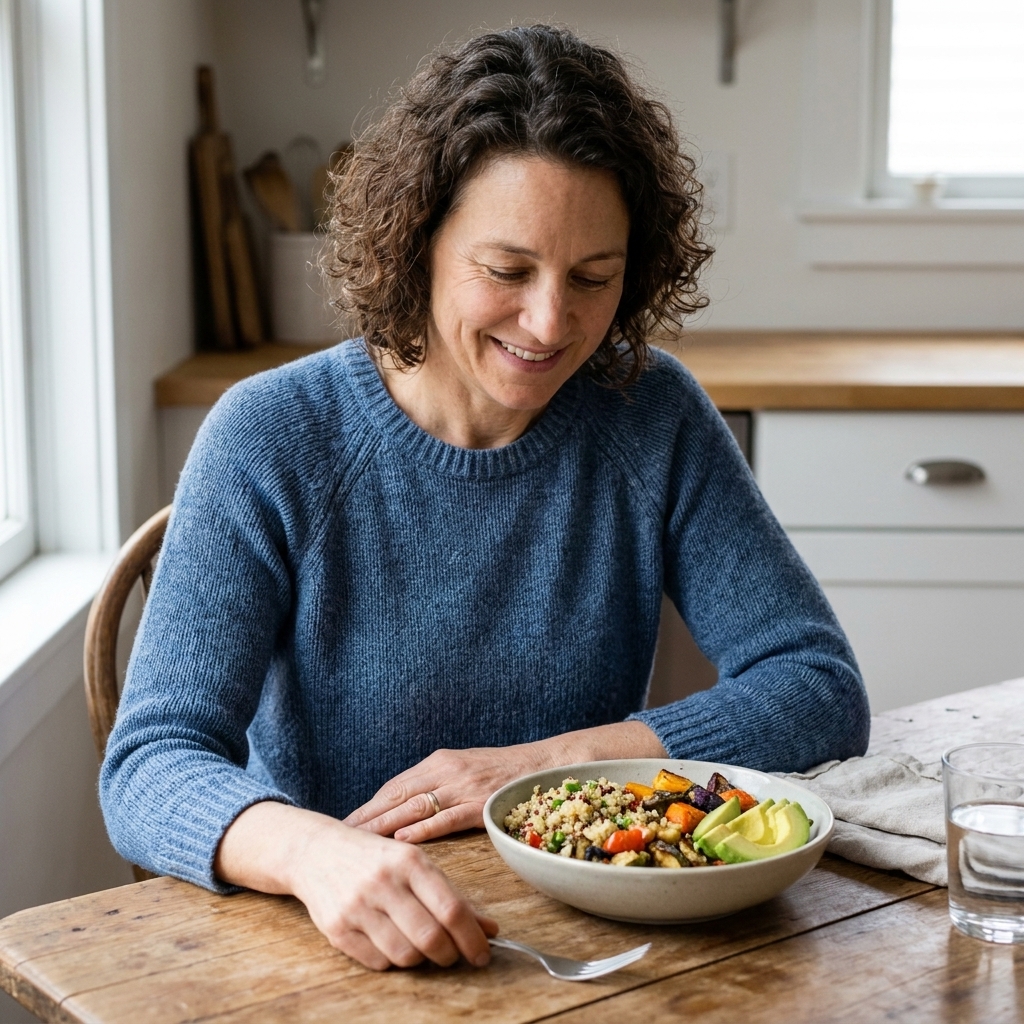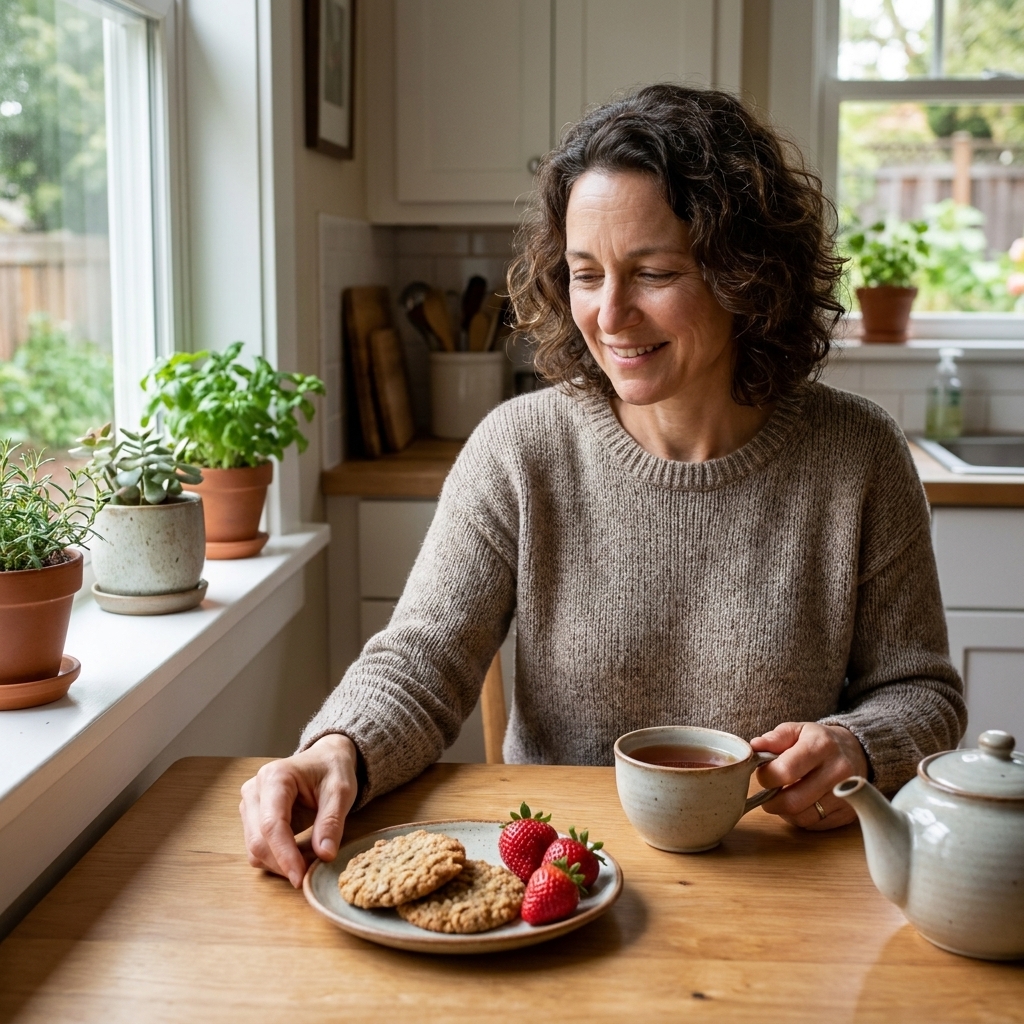
There is a moment in most meals when your body quietly says, “I’m good.” Not “I’m finished with every bite on this plate.” Not “I should stop because I’m being ‘good.’” Just a gentle, physical sense of enough.
If that moment feels hard to find, you are not broken. Many of us learned to eat by the clock, by the portion, by the mood, or by whatever chaos was happening in our day. Relearning fullness cues is less about willpower and more about reconnecting to sensation. Think of it like turning the volume back up on a signal that got muted.

What fullness cues feel like
Fullness is not a single switch that flips from hungry to stuffed. It is a range, and your “sweet spot” tends to live in the middle: comfortable, satisfied, steady.
Signs of comfortable fullness
- Gentle stomach fullness that feels like the meal is “settling,” not stretching.
- Breathing feels easy, no need to unbutton pants or lean back dramatically.
- Energy feels steady, not sleepy or heavy.
- Food starts to taste a little less exciting. The first bites were amazing, and now it is still good, but not urgent.
- You could keep eating, but you do not feel compelled to. This is a big one.
Signs you are past comfort
- Pressure or tightness in the stomach.
- Feeling “sloshy,” weighed down, or overly warm.
- A sudden drop in energy or sleepiness.
- Needing to loosen clothing, shift positions, or avoid moving.
- A mental edge of “Why did I keep going?” that shows up after.
Important note: fullness cues can show up differently depending on the meal. Fiber, protein, fat, carbonation, speed of eating, stress, and even your menstrual cycle can all change how quickly fullness arrives.
Why cues get confusing
In my event planning years, I ate like a person who was always “between things.” A muffin in the car. A salad standing up. A late-night meal after adrenaline wore off. My body had cues, but I was not in the room long enough to hear them.
If fullness feels inconsistent, there are a few common reasons:
- Eating too fast. Your gut and brain need time to communicate. When meals are rushed, the message arrives late.
- High stress. Stress hormones can dull hunger and fullness, or swing you toward feeling ravenous.
- Distraction. Screens, working lunches, driving, and scrolling make it easy to miss the “I’m good” moment.
- Restriction or diet rules. When you have been ignoring hunger, fullness can feel blunted or untrustworthy for a while.
- Eating past the cue often. If you frequently go from hungry to stuffed, your “satisfied” zone may feel unfamiliar at first.
This is not about blame. It is about noticing what interferes with your signal so you can gently clear the static.
A simple comfort scale
You do not need to measure bites or count calories to rebuild trust. Try a “comfort scale” instead. It is intentionally non-perfectionist.
- 1 to 2: Uncomfortably hungry, shaky, urgent.
- 3 to 4: Hungry, stomach feels empty, food sounds very appealing.
- 5: Neutral, could eat, could wait.
- 6 to 7: Comfortably satisfied, pleasant fullness, still energized.
- 8: Full, a little heavy, would not want to exercise right now.
- 9 to 10: Stuffed, uncomfortable, regretful.
Your goal is not to “win” at a number. It is to notice patterns. Many people feel best stopping around a 6 or 7, but your body gets the final vote.
Mini check-in
Mid-meal, pause for ten seconds and ask:
- Where is my stomach right now: empty, neutral, gently full, tight?
- How is the taste: still amazing, or less interesting?
- If I stopped in three bites, would I feel deprived or relieved?
How to slow down
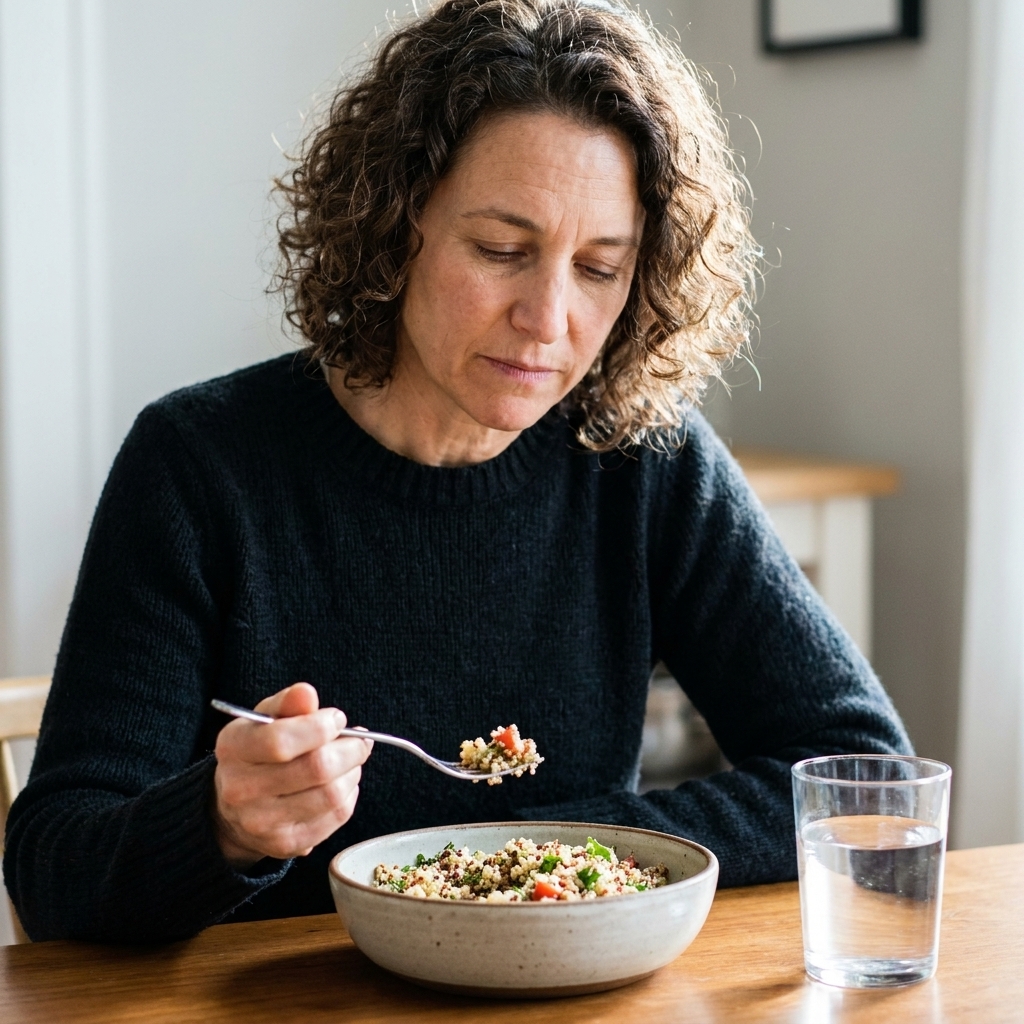
Slowing down is not about eating like a meditation monk. It is about giving your body enough time to speak up.
Low-effort pace resets
- First three bites, slower. Chew a little more than usual for just the first few bites. This sets a calmer pace without micromanaging the whole meal.
- Fork down sometimes. Put your utensil down every so often. Not every bite. Just occasionally.
- Water as a pause. Take a sip of water halfway through, then do a quick comfort scale check-in.
- Plate the meal (when possible). Eating straight from the bag or container makes it harder to see “enough.” Even a small bowl helps.
- Sit, even for 8 minutes. If you only have a short lunch, sit down anyway. Your nervous system reads that as “safe to digest.”
Fullness vs wanting more
This is where most of us get tripped up. You can be physically satisfied and still want to keep eating. That does not make you undisciplined. It makes you human.
Why you want to keep eating
- Scarcity mindset: “This is so good, I have to finish it.”
- Comfort seeking: “I need something soothing after that day.”
- Stimulation: Crunchy, salty, sweet foods can be fun even when you are full.
- Habit: Dessert because it is what you always do, not because you want it.
A gentle question
Ask: “What am I actually hungry for?”
If the answer is rest, connection, quiet, or a break, you can still choose to eat. But now you are choosing with awareness, not momentum.
You do not need to stop eating the second you notice fullness. You just want to notice it early enough that you still have options.
How to stop at satisfied
These are my favorite real-life tools, especially if you are used to eating past the point of comfort.
1) Build a satisfaction plate
Meals that are too light can keep you chasing fullness, and meals that are heavy without satisfaction can lead to grazing. Aim for a mix of:
- Protein (eggs, yogurt, tofu, chicken, beans)
- Fiber (fruit, vegetables, whole grains, legumes)
- Healthy fats (olive oil, avocado, nuts, cheese)
- Flavor (salt, acid, herbs, spice, crunch)
Satisfaction is a fullness cue’s best friend.
2) Serve a starting portion
If you grew up in a clean-plate culture, serving less can feel weird. Try reframing: you are not limiting, you are starting. You can always get more if you are still hungry after a pause.
3) Make a halfway point
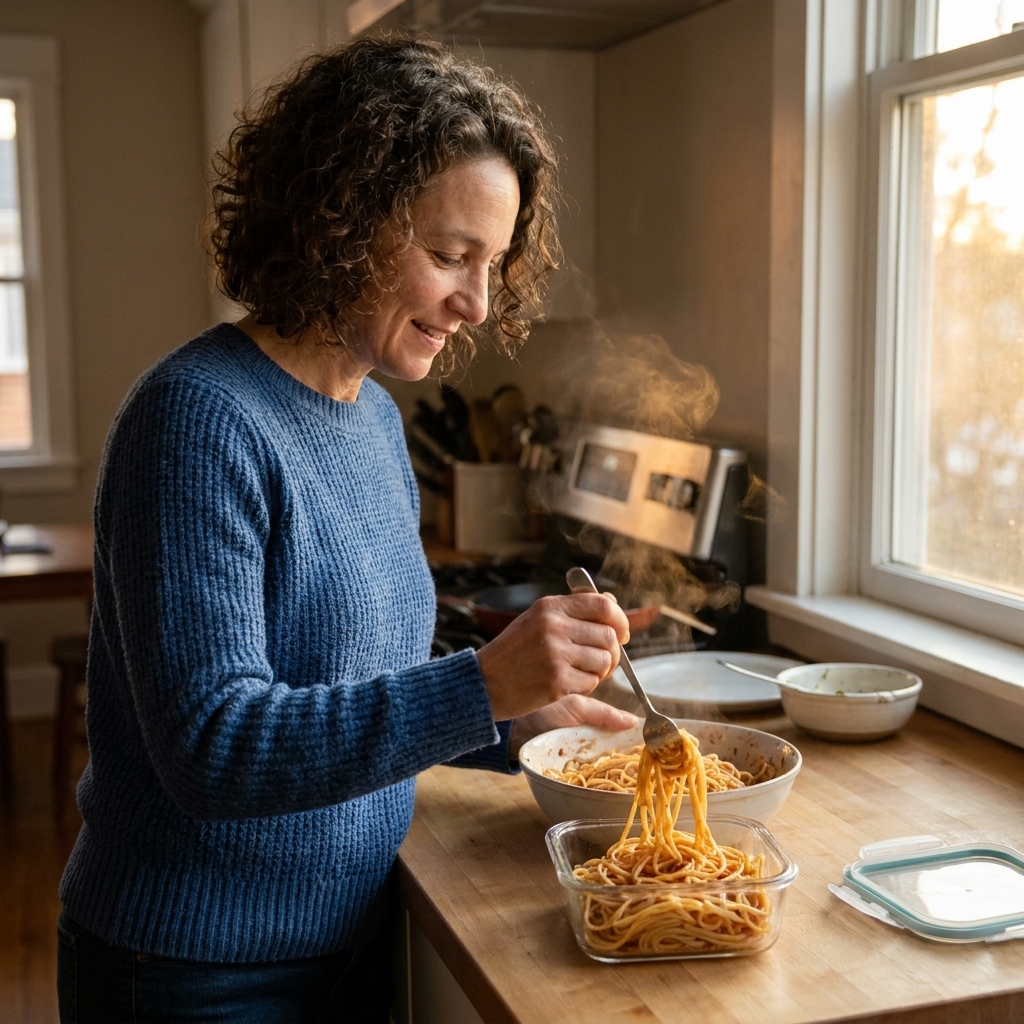
Halfway through, stop for a breath and do a quick body scan. If you are already at a 6 or 7, you can decide: keep going, save it, or pack the rest. You are in charge.
4) Plan the next step
Sometimes we keep eating because we do not know what to do when the meal is over. Give yourself a simple after-meal ritual:
- Make tea.
- Step outside for two minutes.
- Put leftovers away immediately.
- Brush your teeth.
- Text a friend.
It is easier to stop when your brain knows what comes next.
If you cannot feel full
Some people do not register fullness clearly, especially if they have a history of chronic dieting, high stress, certain medications, neurodivergence, or long stretches of ignoring hunger. If that is you, you are not doing it wrong.
Try supporting your cues with structure, then let sensation catch up:
- Regular meals and snacks so you are not swinging from “too hungry” to “too full.”
- Add protein at breakfast to steady appetite signals later in the day.
- Reduce distraction for the first 5 minutes of a meal, then relax.
- Use gentle external anchors like the halfway point pause or a smaller bowl for snacks.
If you experience frequent bingeing, purging, intense anxiety around eating, or you truly cannot sense hunger or fullness, it is a really good idea to work with a registered dietitian or therapist who specializes in eating concerns. You deserve support that feels safe and personal.
3-minute satisfied check
Try this once a day for a week, no pressure to do it perfectly.
- Before you eat: Rate hunger 1 to 10 and notice mood (tired, stressed, calm, rushed).
- Halfway: Take 3 slow breaths. Rate fullness and notice taste enjoyment.
- At the end: Ask, “Am I comfortably satisfied?” If yes, stop. If not, have a little more and check again after a few bites.
That is it. You are practicing trust, not policing yourself.
FAQ
How long does fullness take?
Everyone is different, but many people notice that fullness becomes clearer after you have been eating for a bit and have had a moment to pause. If you tend to eat fast, slowing the first few minutes can help the signal arrive earlier.
What if I get hungry again soon?
That can happen, especially if the meal was light on protein, fiber, or fat, or if you were very hungry going in. Treat it as information, not failure. Next time, build a slightly more satisfying plate or add a planned snack.
Is it okay to leave food?
Yes. Leaving food is not wasteful if forcing it into your body makes you feel unwell. If it helps emotionally, pack leftovers right away so it still feels respected and usable.
What about restaurant portions?
Restaurant meals are often designed to be extra delicious and extra large. Consider sharing, boxing half early, or ordering an appetizer plus a side. And remember: you can stop at satisfied even if the plate is not empty.
A small win
Your homework is wonderfully tiny: notice one moment of “enough” this week. Not even stopping there, just noticing it. That moment is your body communicating with you. The more often you acknowledge it, the more you will trust it.
Healthy living is not a punishment. It is a relationship. And you are allowed to rebuild it gently, one meal at a time.