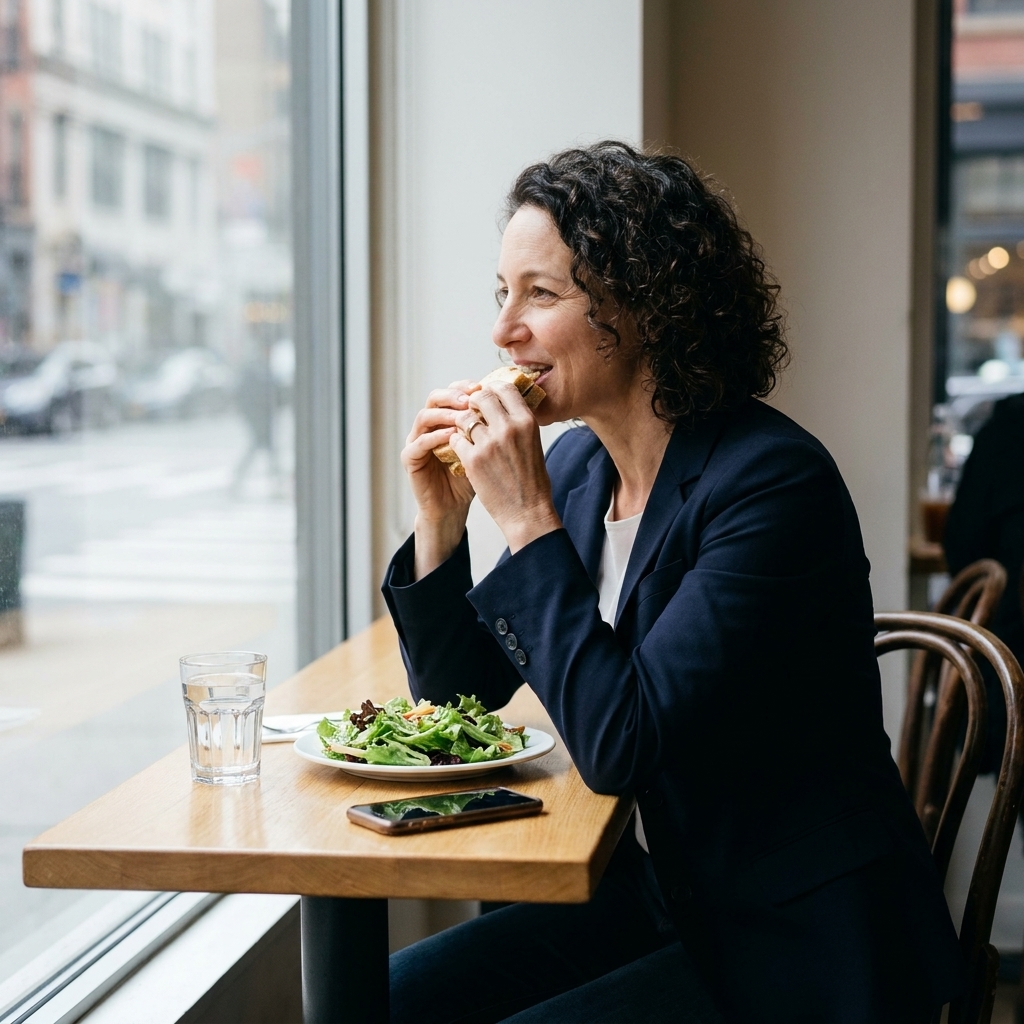
Snacking gets such a bad rap, doesn’t it? Somewhere along the way, a totally normal human experience got labeled as “naughty,” “off track,” or “I’ll start over Monday.” I’m not here for that.
Mindful snacking is simply the practice of being present with what you’re eating. Not perfect. Not restrictive. Just intentional enough that you actually enjoy your treat and walk away feeling satisfied, not spiraling.
What it means
Mindful snacking is the sweet spot between two extremes: mindless grazing on one side and strict food rules on the other.
It looks like:
- Pausing long enough to check in with your body and mood
- Choosing a snack on purpose (even if it’s a treat)
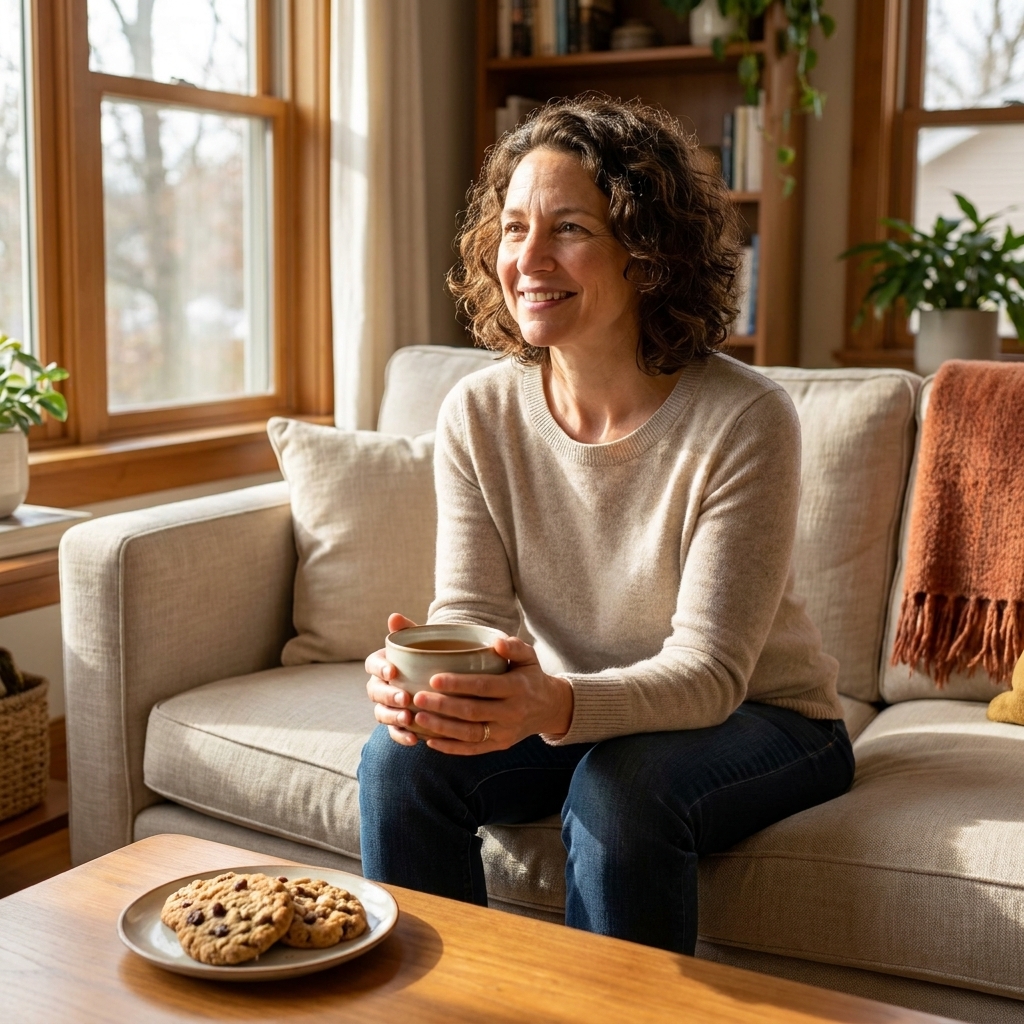
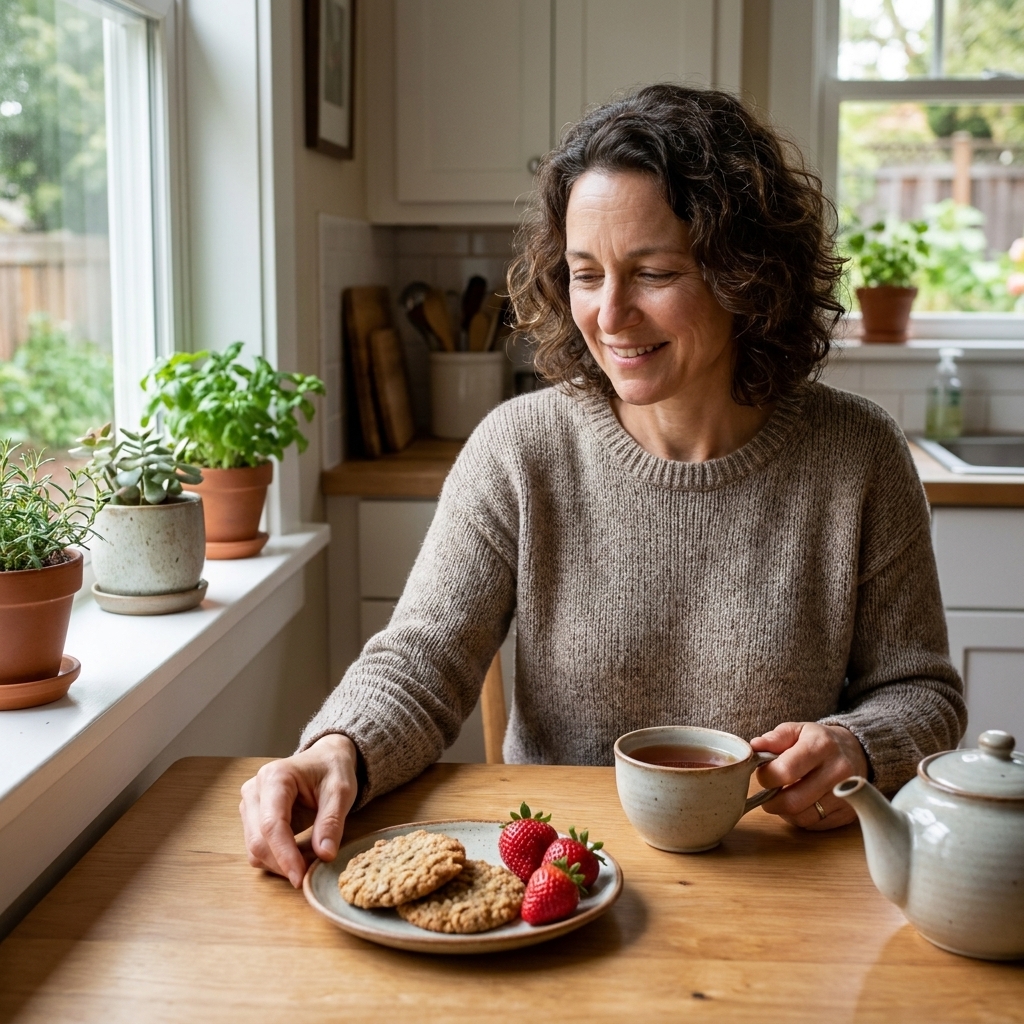
- Plating it so you can see it and enjoy it
- Savoring without scrolling, multitasking, or standing at the pantry
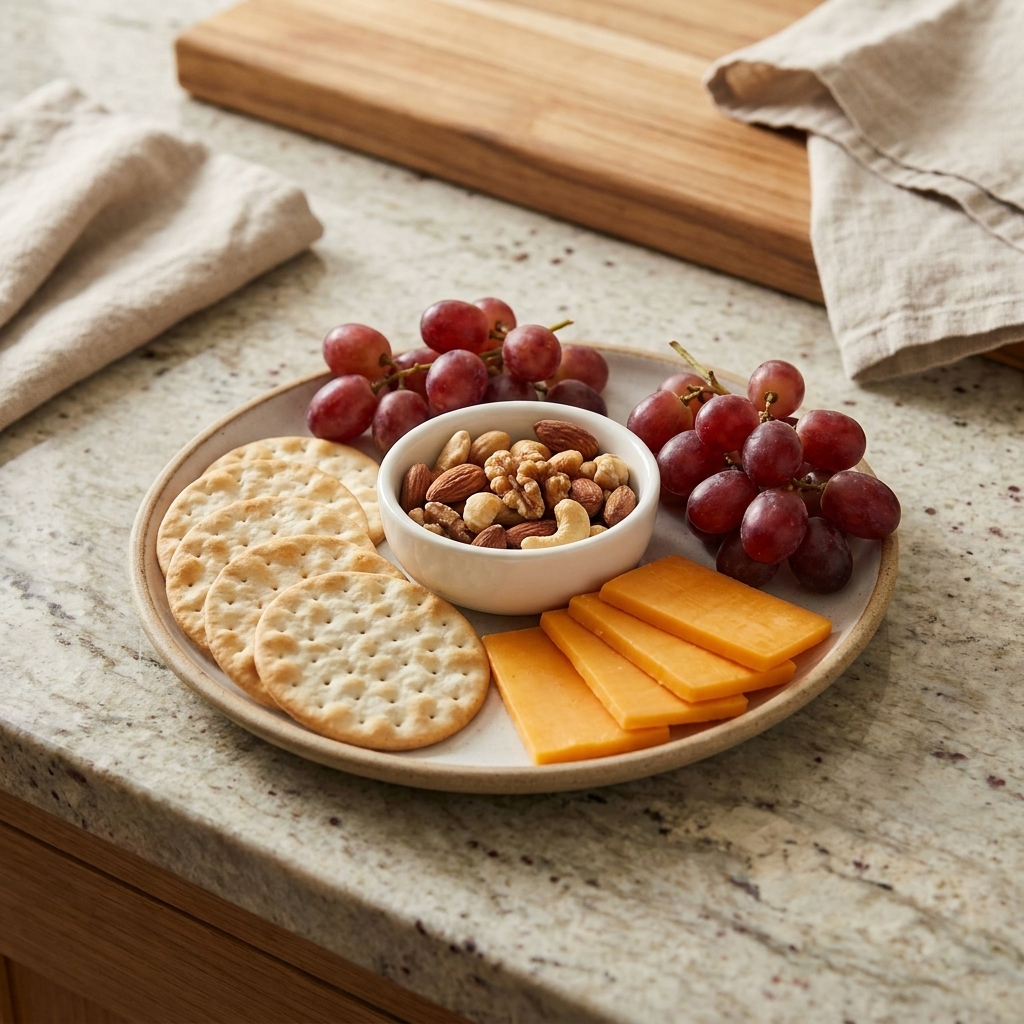
And yes, you can do this with potato chips, chocolate, cheese and crackers, or whatever your heart loves.
Stepping out of the guilt cycle
Guilt usually shows up when snacking feels secretive, rushed, or disconnected. Like eating straight out of the bag while answering emails and barely tasting a thing.
Here’s the little truth that changes everything: you don’t need to “earn” food. Food is not a moral test. It’s nourishment, pleasure, culture, comfort, energy, and connection.
When you bring attention to the experience, guilt often starts to loosen its grip. You’re no longer in a haze of “what did I even eat?” You’re present, and you’re allowed to enjoy it.
Guilt rarely supports lasting change. Presence often does.
3-step snack ritual
1) Pause (10 seconds is enough)
Before you snack, take one slow breath and ask:
- What am I needing right now? Energy? Comfort? A break? Something crunchy?
- How hungry am I? Not to police yourself, just to get clarity.
If you realize you’re actually tired, stressed, or bored, you can still snack. The point is that you’re choosing consciously. That alone is powerful.
2) Plate (yes, even for chips)
Plating is one of the simplest ways to reduce the “bottomless snack bag” effect. It also helps your brain register, We are eating now.
Try:
- A small bowl for popcorn or pretzels
- A plate for cookies, chocolate, or a slice of banana bread
- A little snack board moment for crackers, cheese, grapes, or hummus
3) Savor (remove one distraction)
You do not have to turn your snack into a meditation retreat. But I recommend removing one distraction to start, just one.
Choose your version:
- Sit down instead of standing
- Put your phone face down
- Turn off the TV for the first three bites
- Take your snack outside for fresh air
Then engage your senses:
- Look: What colors and shapes do you notice?
- Smell: What shows up before you even take a bite?
- Taste: Sweet, salty, tangy, buttery, spicy?
- Texture: Crunchy, creamy, chewy, crisp?
That’s it. That’s mindful snacking. Simple, human, doable.
Snacks that satisfy
If you find yourself snacking and still feeling unsatisfied, it’s often because the snack isn’t meeting the moment. Satisfaction usually comes from a mix of taste, enough food, and sometimes a little staying power.
Pleasure + power
This is one of my favorite, no-pressure frameworks:
- Pleasure: the thing you truly want (yes, chocolate counts)
- Power: something that helps you feel steady (protein, fiber, healthy fat, or just a bit more volume)
Examples:
- Chocolate + a handful of almonds
- Chips + guacamole or salsa
- Cookie + Greek yogurt (or a latte with milk if that feels good)
- Toast + peanut butter + honey
- Ice cream + berries
- Hummus + pretzels or veggies
- Edamame + sea salt
- Sunflower seed butter + apple slices
Notice what’s missing in your current snack routine: is it joy, or is it staying power? You can adjust without turning it into a project.
When life is chaotic
Let’s be real. Some days you are eating a granola bar in the car between meetings. I’ve been there. In my event-planner era, I could absolutely inhale a snack without realizing it was gone.
When life is busy, aim for one mindful anchor:
- Name it: “I’m eating a granola bar.” (This sounds silly, but it works.)
- Breathe once before the first bite.
- Taste the first bite on purpose.
If you can do that, you are practicing. You are not failing. You are building a skill.
If you’re managing something like diabetes, reflux, or a history of disordered eating, mindful snacking can still be supportive. It may just work best alongside individualized guidance from your care team.
Common hang-ups
“If I start, I won’t stop.”
This often comes from restriction, scarcity mindset, or eating while distracted. Try plating a portion and giving yourself permission to enjoy it. For many people, permission reduces the urgency over time. If you’re experiencing binge episodes or feeling out of control around food, you deserve more support and you do not have to DIY it.
“I snack at night and feel bad about it.”
Night snacking is incredibly common. Ask: are you under-eating during the day? Are evenings your only downtime? Consider a more filling afternoon snack, a relaxing transition routine, or a planned evening treat that you enjoy on purpose.
“I snack when I’m stressed.”
Stress-snacking is not a character flaw. It’s a coping strategy. You can keep the snack and add support: a glass of water, a few slow breaths, a quick stretch, or stepping outside for two minutes.
This week’s practice
Pick one snack each day and do it mindfully, start to finish. Not every snack. Just one.
- Pause
- Plate
- Savor
Then check in afterward: Do I feel satisfied? If yes, celebrate that win. If not, no shame. That’s just data, and you get to adjust tomorrow.
FAQ
Is mindful snacking the same as dieting?
No. Mindful snacking is about awareness and enjoyment, not rules, restriction, or tracking. It can support health goals, but it is not a diet.
Can I practice mindful snacking with “junk food”?
Absolutely. Mindfulness can be especially helpful with highly cravable foods because it helps some people actually taste them and notice satisfaction sooner.
How do I stop snacking out of boredom?
First, normalize it. Boredom snacking is common. Try pausing to ask what you’re really craving: stimulation, comfort, a break, or something to do with your hands. If you still want the snack, plate it and enjoy it. If you want something else, try a 5-minute activity first (short walk, shower, stretch, tidy one drawer).
What if I feel guilty even when I’m eating mindfully?
That’s okay. Guilt is a learned response for a lot of us. Keep practicing permission and presence. If guilt feels intense or tied to disordered eating patterns, consider working with a registered dietitian or a therapist who specializes in eating behavior for extra support.
If you take nothing else from this, take this: you are allowed to enjoy your snacks. Your life gets to include pleasure, and wellness gets to feel kind.