Mornings have a reputation for being either magical or miserable. In my experience, they're usually just… influential. The first 20 to 60 minutes of your day can influence how steady and focused you feel, or they can stack little stressors that follow you all the way to lunch. (And yes, it varies by person. You're not doing it wrong if your mileage differs.)
The good news: mental clarity isn't reserved for people with fancy schedules, perfect kitchens, or a two-hour sunrise routine. You can build a morning rhythm that feels supportive and realistic, even if you hit snooze, even if you have kids, even if you're not a “morning person.”

Let’s build your routine step by step, with zero pressure to do it all.
Start with your why
Before you add a single habit, get clear on the feeling you're trying to create. Mental clarity can mean different things depending on your life season.
Pick one clarity goal
- Less scattered: “I want to stop starting my day in reactive mode.”
- More grounded: “I want a steadier mood before I open my inbox.”
- More focused: “I want to know my top priority before the day takes over.”
- Less anxious: “I want my body to feel safer before I engage with the world.”
Try this: Finish the sentence: “A clear morning for me feels like…” Keep it to five words or fewer. Examples: unhurried, steady, present, capable, light.
Build it in layers
Here's my favorite way to make a routine stick: create a tiny core routine, then add optional layers when you have time and energy. This keeps your mornings from turning into a pass or fail situation.
Layer 1: The 5-minute core
This is the non-negotiable that works on your worst morning.
- One minute of light: Open curtains or step outside briefly.
- Water first: A few big sips count.
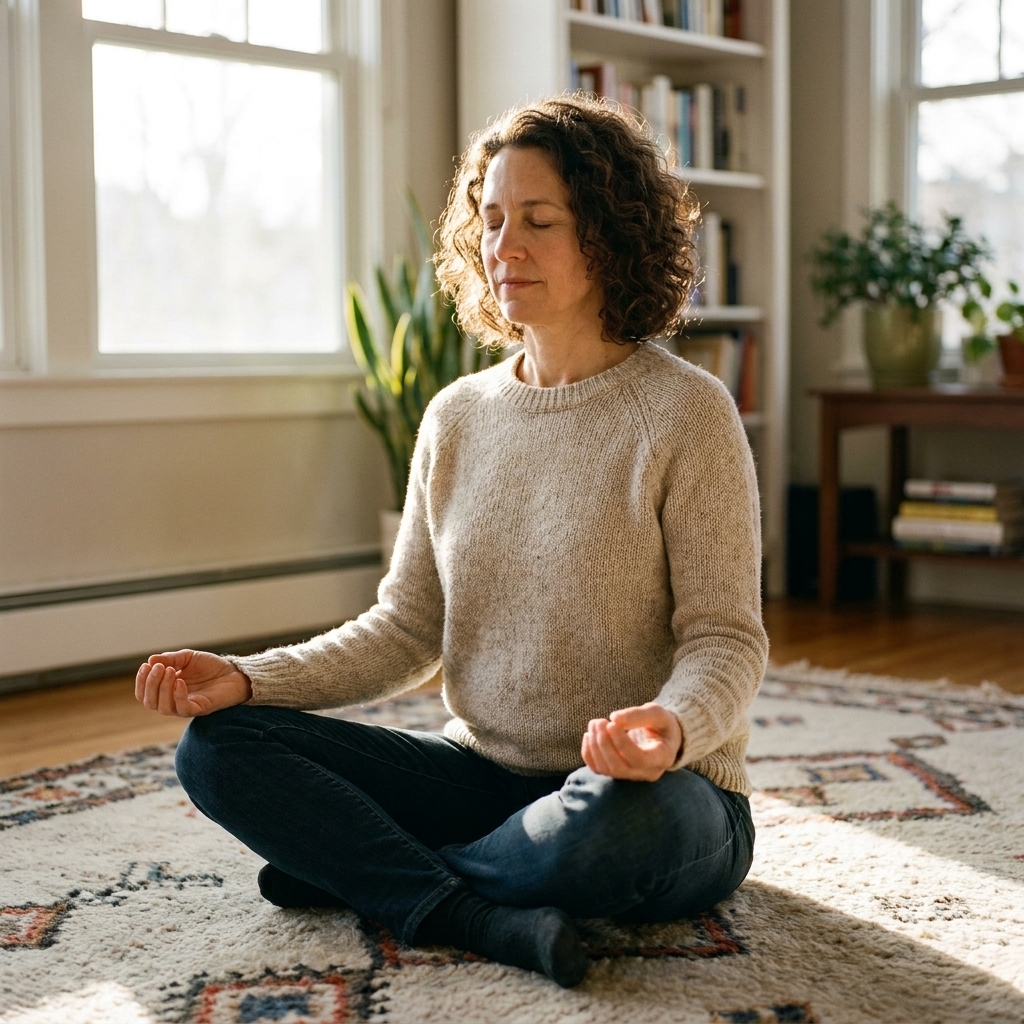
- Two to three minutes of calming breaths: Inhale for 4, exhale for 6, for 5 to 10 rounds.
That’s it. If you do only this, you still supported your brain and body.
Layer 2: The 15-minute clarity boost
This layer helps your thoughts feel less noisy.
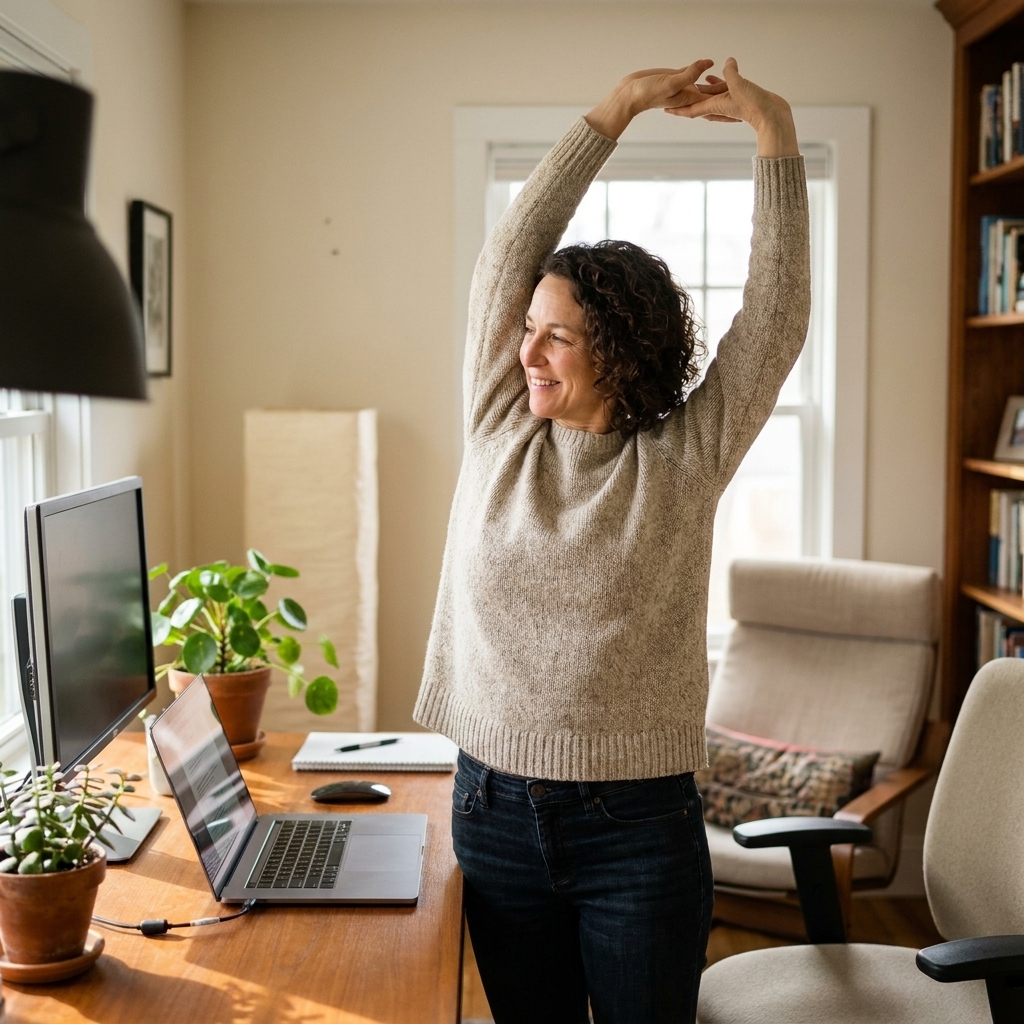
- Gentle movement: 5 to 10 minutes of stretching, a short walk, or slow yoga.
- Brain unload: Write down what's on your mind, then circle the one thing that matters most today.
- Simple fuel: Something with protein or fiber, even if it's small, can help many people feel steadier energy.
Layer 3: The 30 to 45-minute “I have time” version
Only when it fits your life, this can feel like a mini retreat.
- Mindful planning: Identify your top 3 priorities, plus one self-care anchor.
- Restorative movement: A full walk, Pilates, or a longer mobility session.
- Connection: A few minutes with your pet, a quick voice note to a friend, or reading a few pages of something soothing. A little positive emotion early on can make focus feel more available later.

The clarity sequence
If you want a simple order that supports mental clarity, use this flow. It's grounded in widely accepted ideas from circadian rhythm and stress physiology: light helps cue wakefulness, steady breathing can calm stress responses, and movement can help reduce mental fog.
1) Light before screens
Morning bright light exposure supports your circadian rhythm, which can help with alertness and sleep quality. Outdoor light is usually much brighter than indoor light, so stepping outside can help, but you don't need a perfect sunrise moment. Open the curtains, stand by a bright window, or step onto your porch.
Elective Well version: If you're new here, “Elective Well” means gentle, optional add-ons that feel supportive, not mandatory. Pair light with something pleasant. Let the dog out. Water a plant. Do one slow stretch. Keep it easy.
2) Hydration before caffeine (if you can)
You don't have to quit coffee to have mental clarity. I wouldn't take that joy away. But getting some water in first is something many people find helps them feel more awake and less jittery.
Tip: Leave a glass or bottle where you'll see it. Clarity loves fewer decisions.
3) Regulate with breath
Slow, steady breathing, especially with a longer exhale, can help nudge your body toward a calmer “rest and digest” response. That can mean less morning anxiety and more emotional steadiness.
- Try: Inhale for 4, exhale for 6, for 1 to 3 minutes.
- Or: Box breathing (4 in, hold 4, 4 out, hold 4) if you want a reset-button vibe.
Quick safety note: If breathwork ramps up anxiety or makes you feel dizzy, stop. Try breathing normally and simply lengthening the exhale a little, or place a hand on your belly and let your breath be easy.
4) Move just enough to clear fog
You aren't trying to crush a workout at 6 a.m. You're trying to send a message to your brain: “We're awake, we're safe, and we can focus.”
Choose your vibe:
- Low energy: Neck rolls, cat-cow, forward fold, legs up the wall.
- Restless mind: A brisk 10-minute walk.
- Stiff body: A mobility flow for hips, ankles, and shoulders.

Two quick focus tools
The brain dump (2 minutes)
Grab any notebook, or open a notes app if you must. Set a timer for two minutes and write everything on your mind. Not pretty, not organized.
Then add one sentence: “If I do only one thing today, it's…”
This is mental clarity in its simplest form: fewer open tabs in your head.
Top one plus tiny next step
Big goals can feel foggy first thing in the morning. Make focus doable by choosing a tiny action.
- Top one: “Finish the project outline.”
- Tiny next step: “Open the doc and write the three section headers.”
Clarity is often just momentum with a gentle start.
Make it personal
A sustainable morning routine should match your personality, your schedule, and your nervous system. Here are a few choose-your-own options.
If you wake up anxious
- Do breathwork before checking messages.
- Keep your phone on the other side of the room.
- Try a warm beverage slowly, even for three minutes.
If you wake up groggy
- Get light on your face ASAP.
- Splash cool water on your face or take a quick shower.
- Add upbeat music while you make breakfast.
If mornings are chaotic
- Build a routine within the routine: one deep breath at the sink, one minute of light at the door, one grounding phrase in the car.
- Prep one thing the night before (clothes, coffee setup, breakfast option).
- Let “good enough” be the win.
If you work from home and feel instantly behind
- Create a commute cue: a short walk, changing clothes, or lighting a candle at your desk.
- Set a start time for email and protect the first 15 minutes for your top priority.
If you have limited mobility or low energy
- Do the light and breathing steps from a chair or bed.
- Try one minute of gentle range-of-motion (ankle circles, shoulder rolls, wrist stretches).
- Choose comfort-first: warmth, hydration, and one next step is still a routine.
If your brain is fast (hello, ADHD)
- Make it visible: put the water bottle and notebook where you can't miss them.
- Use a timer: 2 minutes of brain dump, then stop on purpose.
- Pick a “first move” task that takes under 3 minutes to start.

Common blockers
“I do great for three days, then I quit.”
That isn't failure, that's information. Your routine is probably too big. Shrink it to the 5-minute core and rebuild from there.
“I don't have time.”
Borrow time from transitions, not from sleep. For example: one minute of breathing while the coffee brews, or a 7-minute walk instead of 20.
“My phone steals my morning.”
This is so real. Try a gentle phone plan:
- Charge your phone outside your bedroom.
- Use Do Not Disturb until a set time (like 9 or 10 a.m.).
- Keep social apps off your home screen, or set an app limit.
- Don't open social apps until after you get light and water.
“I want the perfect routine.”
Perfection is the fastest way to make healthy living feel like a punishment. We do elective wellness here. Your routine should feel like support, not a performance.
Sample routines
The 10-minute clarity starter
- Open curtains and take 10 slow breaths
- Drink water
- 2-minute brain dump
- Choose your top one priority
The 25-minute calm and focused
- Light and water
- 5-minute stretch or short walk
- 5 minutes journaling: “What would make today feel good?”
- Simple breakfast or protein snack
- Write your top one plus tiny next step
The “I have kids and zero spare minutes” routine
- One long exhale at the sink
- Step outside for 60 seconds while everyone is putting on shoes
- Water in the car or while packing lunches
- One intention phrase: “Steady and kind” or “One thing at a time”
Make it stick
Use habit anchors
Attach a new habit to something you already do.
- After I brush my teeth, I drink water.
- After I pour coffee, I do 5 slow breaths.
- After I let the dog out, I stand in the light for one minute.
Set up the night before
- Put your journal and pen on the table
- Lay out comfortable clothes
- Pre-fill your water bottle
- Decide your first task for work
Track the feeling, not the streak
Instead of “Did I do the whole routine?” ask: “Do I feel 5 percent clearer?” That's the metric that matters.
Quick FAQ
How long should a morning routine be for mental clarity?
As short as it needs to be to be consistent. Five minutes can help. If you have 15 to 30 minutes, you can add journaling and movement, but consistency beats length every time.
Should I meditate in the morning?
If you enjoy it, yes. If meditation feels intimidating, start with breathwork or a two-minute sit-and-notice practice. Mental clarity comes from nervous system support, not from doing it “right.”
What if I wake up late?
Do the 60-second version: light, water, one long exhale, and pick your top one task. You can still set the tone, even on a rushed day.
Is journaling necessary?
No, but it's a powerful shortcut for clarity if your mind is busy. Even one prompt helps: “What's taking up space in my head?”
Your next step
If you want this to feel doable, choose one action for tomorrow morning. Just one.
- Open the curtains as soon as you wake up
- Drink a glass of water
- Write one sentence: “Today, I want to feel…”
- Take a 7-minute walk
And if tomorrow is messy, you didn't “break” your routine. You're simply collecting data, adjusting, and building a morning that supports your real life. That's the whole point.