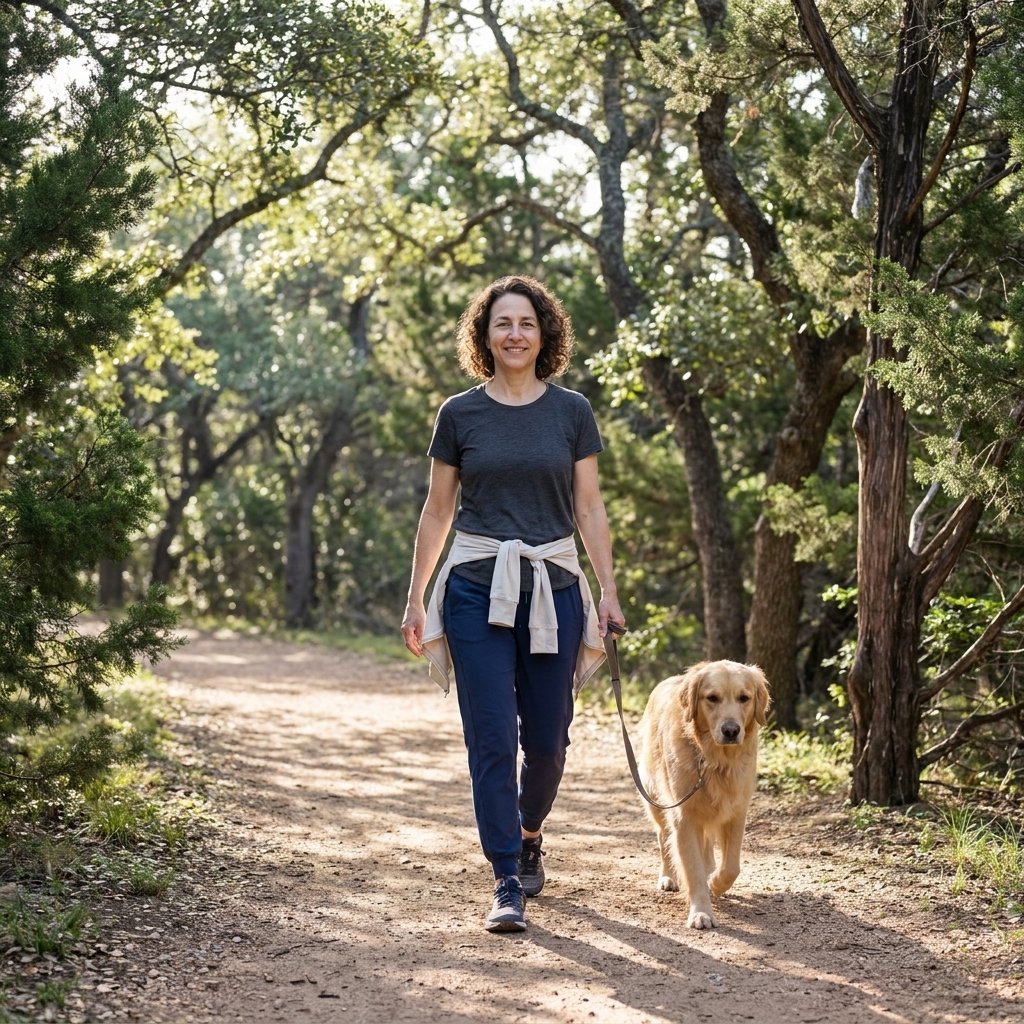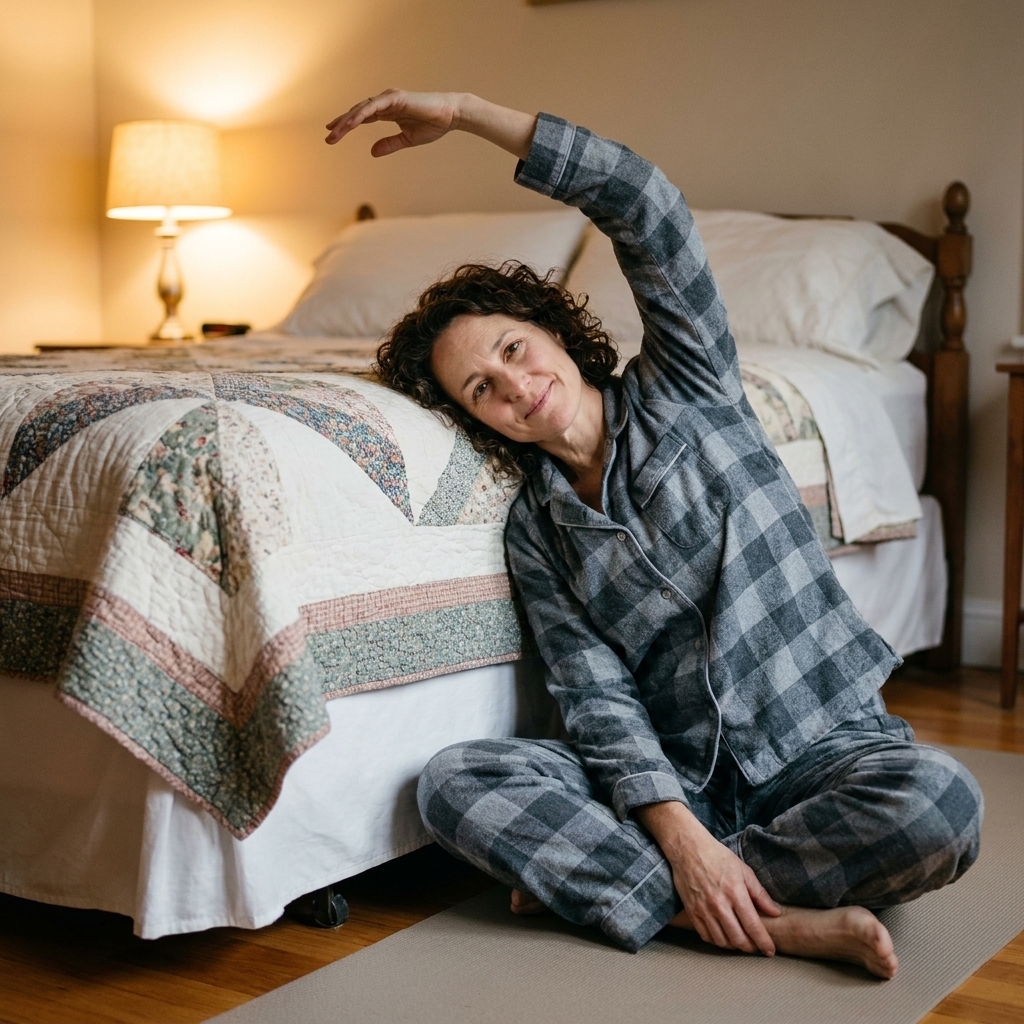
If your workday is a blur of tabs, meetings, and “quick” tasks that somehow take 47 minutes, you are not alone. The good news is you do not need a full workout to feel better in your body. What you need is a few tiny pockets of movement sprinkled through the day.
I call them movement snacks: short, low-pressure bursts of stretching, mobility, and gentle strength that help your body reset. They are sweat-free, office-friendly, and surprisingly helpful for energy and focus.
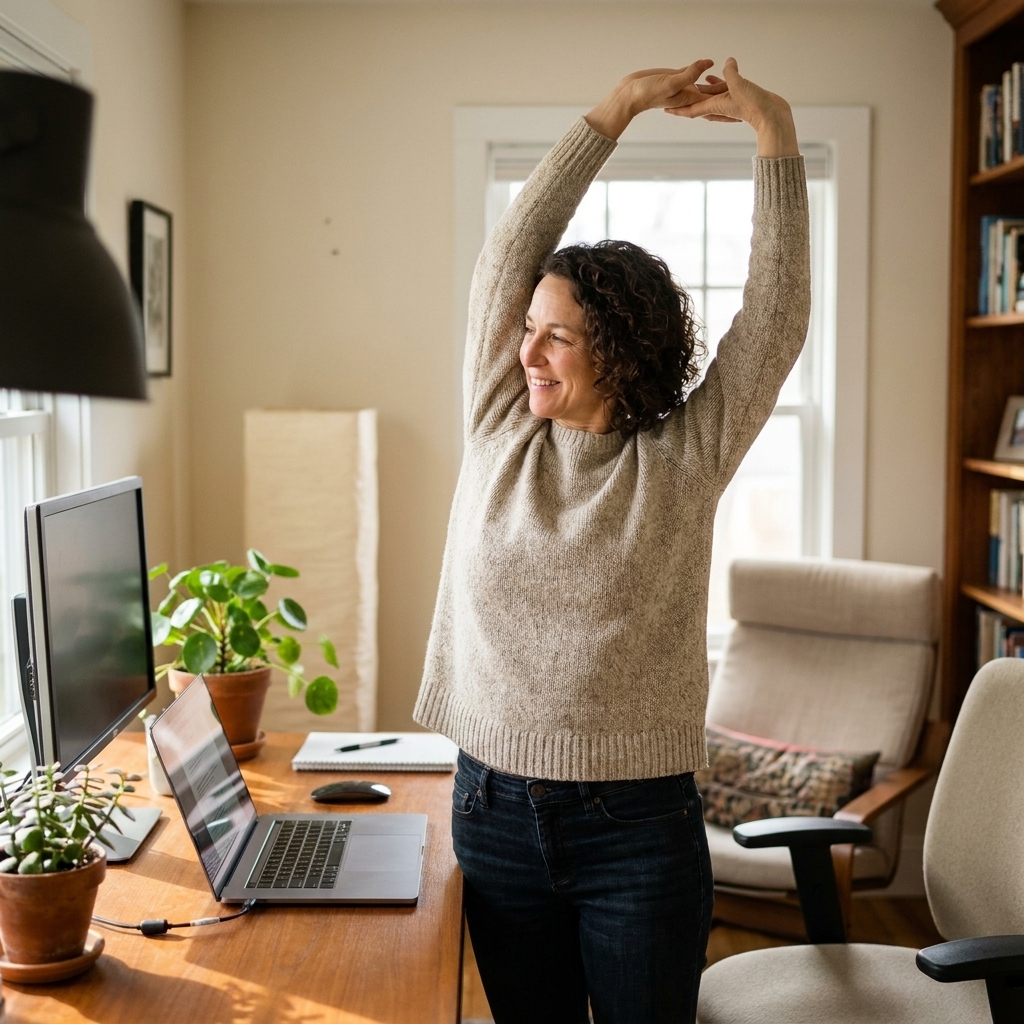
What a movement snack is
A movement snack is a 1 to 5 minute mini routine that loosens up tight spots, wakes up sleepy muscles, and for many people, helps the body shift out of “wired and stuck” mode.
Think: less “bootcamp,” more “ahh, my shoulders can breathe again.”
- It should feel doable, even on your busiest day.
- It should not require a costume change or a shower.
- It should help you return to work feeling clearer, not depleted.
If you only do one movement snack today, that is still a win. Consistency beats intensity here.
Why 5 minutes helps
When we sit or stay in one position for long stretches, our bodies start to bargain with us through stiffness, tension, and that vague “brain fog” feeling. A few minutes of movement often helps:
- Reduce neck, shoulder, and low back tightness from screens and sitting.
- Support circulation, which may gently boost energy.
- Improve posture awareness without forcing “perfect posture.”
- Reset your focus when you are stuck in task inertia.
Bonus: movement snacks are sneaky. They make your day feel more humane without needing a giant calendar overhaul.
How to fit them in
The secret is not “finding time.” It is attaching movement to something that already happens.
Use workday cues
- After you hit send on a big email: do 5 slow shoulder rolls and a chest opener.
- Before a meeting starts: stand up and do calf raises while you wait.
- After a call: take 60 seconds for neck stretches and wrist circles.
- When you refill water or coffee: add 10 counter push-ups.
- Every bathroom break: add a quick hip opener or forward fold.
Set kind reminders
If reminders help, keep them gentle. Try a calendar block labeled “Stretch and breathe” or a phone alarm that simply says “Move for 2 minutes.” The tone matters. You are not getting scolded. You are getting supported.
Pick the right snack for the day
- If you sit a lot: hips, ankles, and low back.
- If you type a lot: wrists, forearms, neck, and upper back.
- If you feel stressed: anything slow plus a minute of breathing.
If you are in a shared office, keep it low-key. Shoulder rolls, calf raises, and wrist circles are stealthy. For bigger stretches, step into a hallway, empty conference room, or a quiet corner.
Seven sweat-free movement snacks
These take about 2 to 5 minutes. If you want the full five, add one extra round of your favorite move or simply take 5 slow breaths at the end. Choose the option that matches your mood and your body. You do not need to do them all. One is enough.
1) Posture reset (shoulders and chest)
- Stand tall and do 10 shoulder rolls backward, slow and controlled.
- Interlace fingers behind your back (or hold a towel) and gently lift hands for a chest opener, 20 to 30 seconds.
- Do a doorway stretch: forearms on the frame, step through slightly, 20 seconds.
- Finish with 5 big breaths, relaxing your jaw and shoulders.
2) Keyboard hands recovery (wrists and forearms)
- Wrist circles 20 seconds each direction.
- Prayer stretch: palms together, lower hands gently, 20 seconds.
- Reverse prayer or backs of hands together if comfortable, 15 seconds.
- Forearm massage: squeeze and glide down the forearm with your opposite hand, 30 seconds per side.
- Finish with 10 gentle fist opens like you are releasing stress into the air.
3) Hip happy hour (hips and low back)
- Stand and do 10 hip circles each direction.
- Figure-four stretch standing: ankle over opposite knee, sit back slightly, 20 seconds per side (hold a desk for balance).
- Half split fold at your desk: one heel forward, hinge at hips, 20 seconds per side.
- End with 10 glute squeezes standing tall. Yes, it is subtle. Yes, it works.

4) Quick energizer plus calm finish
This one is perfect when you feel sleepy, sluggish, or stuck.
- March in place 60 seconds, swinging arms gently.
- 10 chair squats (stand up and sit down slowly, using the chair as a guide).
- 30 seconds of wall push-ups at an easy pace.
- Finish with box breathing: inhale 4, hold 4, exhale 4, hold 4, for 4 rounds.
5) Neck and upper back melt (screen-day relief)
- Chin tucks 8 reps: slide chin straight back, long neck, no strain.
- Ear-to-shoulder stretch 20 seconds each side (keep shoulders heavy).
- Desk thread the needle: stand facing your desk, place both hands on it, soften your knees, then slide one arm under the other and rotate your chest gently, 20 seconds each side.
- Thoracic opener: hands behind head, gently arch upper back over the chair back if it feels good, 5 slow reps.
6) Ankle and calf wake-up (circulation support)
- 20 calf raises holding a desk lightly.
- Ankle circles 10 each direction per side.
- Toe raises 15 reps (lift toes, keep heels down).
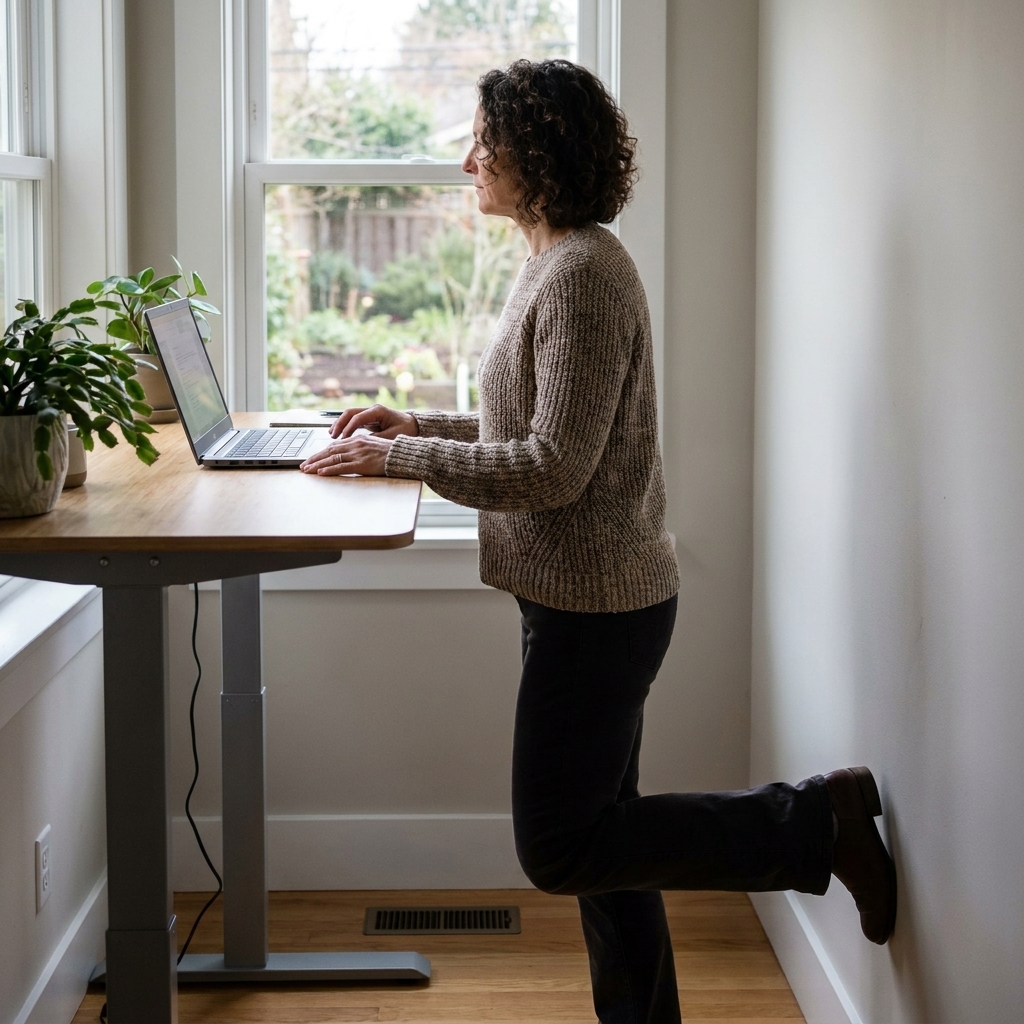
- Calf stretch against a wall, 20 seconds per side.
7) Meeting mobility flow (camera off option)
If you are listening but not presenting, this is a quiet option.
- Seated spinal twist 20 seconds per side.
- Seated cat-cow 6 slow reps, moving with breath.
- Seated hamstring stretch: extend one leg with heel down, toes up, sit tall, then hinge slightly from the hips until you feel a gentle stretch, 20 seconds per side.
- Shoulder blade squeezes 10 reps, hold 2 seconds each.
Make it feel good
You do not need perfect technique, but these cues help your body actually enjoy the snack:
- Stay at a 4 to 6 out of 10 intensity. You should be able to breathe comfortably and keep your face relaxed.
- Move slowly first. Speed is optional. Control is the real magic.
- Stack your breath with your movement: inhale to expand, exhale to soften.
- Stop if you feel sharp pain, numbness, or tingling. Discomfort from stretching is okay. Pain is a no.
If you are pregnant, dealing with vertigo, recovering from a recent injury, or managing a diagnosed condition, check with a clinician before trying new moves. And feel free to skip forward folds, balance-heavy stretches, or chair backbends if they do not feel steady or comfortable for you.
A simple 9-to-5 schedule
If you like structure, here is a gentle plan that totals 15 minutes across the whole day:
- 9:30 Neck and upper back melt (about 5 minutes)
- 12:30 Hip happy hour (about 5 minutes)
- 3:30 Quick energizer plus calm finish (about 5 minutes)
On high-meeting days, swap in the meeting mobility flow. On low-energy days, pick the ankle and calf wake-up. Your plan should flex with your life.
Common questions
Will movement snacks replace workouts?
They can complement workouts beautifully, and for some seasons of life they might be your main form of movement. The bigger point: they keep your body feeling cared for even when a full workout is not happening.
What if I feel awkward doing this at work?
Start with the subtle options: shoulder rolls, calf raises, wrist circles, or a short walk to refill water. If you work from home, you get full permission to do the bigger stretches with zero audience.
Do I need equipment?
Nope. A chair, a wall, and a desk are plenty. If you want a little upgrade, a light resistance band is nice, but totally optional.
How many should I do per day?
Aim for 1 to 3. If you are on a roll, great. If you do one 2-minute snack, also great. This is elective wellness, not a new job.
Your tiny next step
Pick one movement snack from this list and tie it to something you already do today, like “after I send my next email, I stand up and do shoulder rolls.”
That is it. Small, steady choices add up. And your body will absolutely notice the kindness.