My favorite kind of wellness is the kind you can actually keep. Not the all-or-nothing, buy-a-new-wardrobe, optimize-your-life kind. The kind that fits into the life you already have.
That is why I love the daily walk. It is gentle, doable, and quietly powerful. And with a few tiny tweaks, it can become less of a checkbox and more of a mindful, joyful little adventure.

Here are 10 ways to upgrade your walk starting today, whether you have 10 minutes or an hour.
1) Start with a 30-second arrival
Before you pick up your usual pace, give yourself a mini landing. This is the difference between rushing out the door and actually being on your walk.
- Stand still for three breaths. Feel your feet in your shoes.
- Drop your shoulders away from your ears.
- Choose a simple intention: “I am here,” “I am unwinding,” or “I am looking for beauty.”
This takes less than a minute and can make the rest of the walk feel like yours.
2) Do a senses scan
This is one of my go-to tools as a certified wellness coach because it is grounding and surprisingly fun. While you walk, notice:
- 5 things you see (a bright door, a bird, the shape of a cloud)
- 4 things you feel (sun on your arm, the breeze, your steps)
- 3 things you hear (wind in leaves, distant traffic, your breath)
- 2 things you smell (fresh-cut grass, someone’s laundry detergent)
- 1 thing you taste (a sip of water, mint from gum, the taste already in your mouth)
If you lose count, perfect. Just start again. That is mindfulness in real life.
3) Use soft eyes
In my old event-planner life, I walked like I was scanning for emergencies. Very efficient. Not very peaceful.
Try this instead: relax your gaze and take in the whole scene rather than locking onto one point. This can help you feel calmer and make your walk feel less like a mission.
Bonus: you will notice more little joys, like a jasmine vine you have passed 40 times and never truly seen.
4) Make it a scavenger hunt
If you want your walk to feel like an adventure, add a playful quest. You are not just walking. You are spotting.
Pick one theme
- Something yellow (flowers, a sign, a front door)
- Three different leaf shapes
- One beautiful shadow
- A bird you have not noticed before
- Two things that look like hearts (they are everywhere)
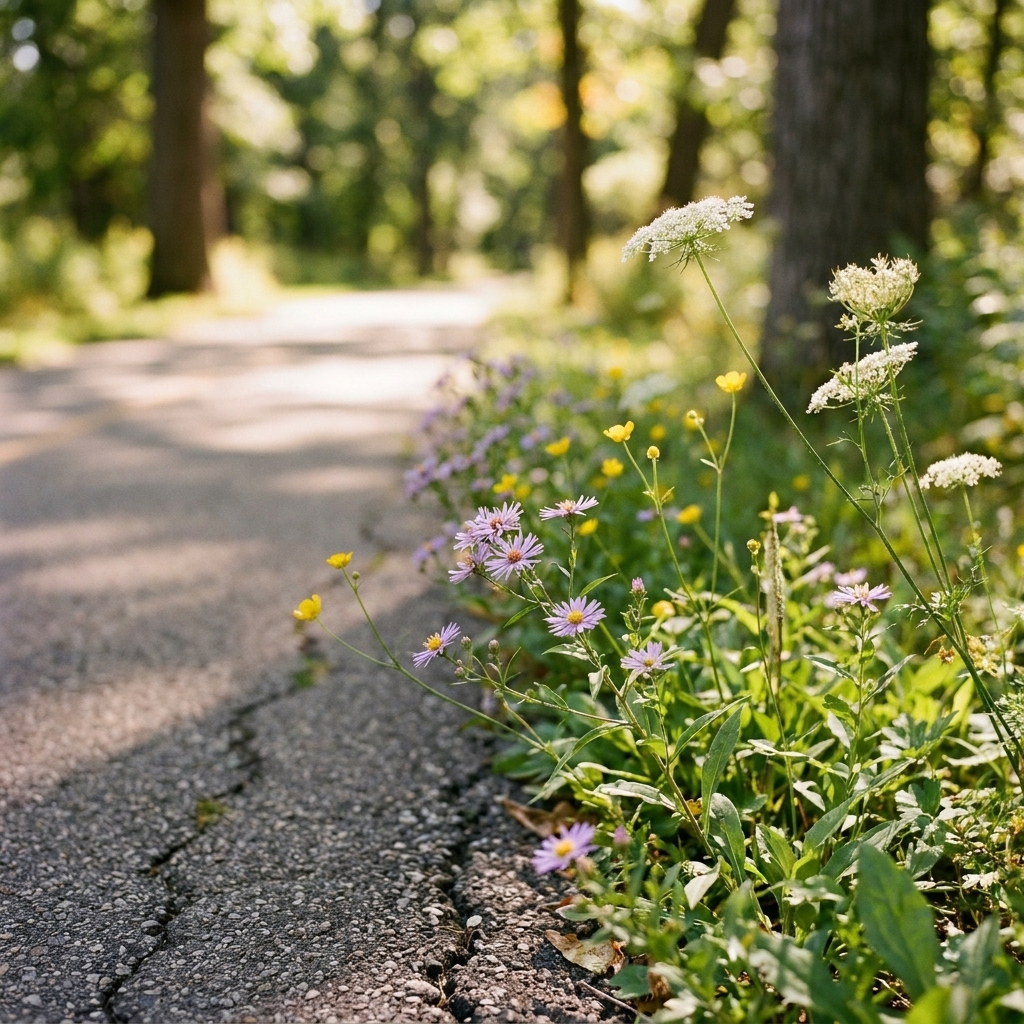
This simple game can help shift your mind from stress-mode to curiosity-mode. Curiosity is a form of relief.
5) Walk one block in silence
I love a good audio moment, but I also love the reset that comes from one quiet stretch. Think of it as a palate cleanser.
Try this:
- Put your phone on Do Not Disturb.
- Walk one block without music, podcasts, or calls.
- Listen for the most subtle sound you can find.
After that block, you can press play. The point is not strict silence. The point is giving your senses a chance to speak up.
6) Pick supportive audio
If you are going to listen to something, let it be intentional. Your walk can be a nervous system support tool, not just background noise.
Try these audio recipes
- For stress relief: a calming playlist, nature sounds, or a gentle guided breathing track
- For motivation: upbeat music you can strut to , or an inspiring short episode (20 minutes is plenty)
- For creativity: instrumental music or a podcast that sparks ideas, not panic
My personal rule: if I notice my jaw tightening, the audio is not helping. I switch it.
7) Add posture checkpoints
Walking is already great movement. And with one small adjustment, it can feel even better on your body.
Reset at a landmark
Pick something you pass often: a stop sign, a big tree, a mailbox area. Each time you spot it:
- Lift your chest gently (no military stiffness)
- Relax your shoulders
- Let your arms swing naturally
- Take one slightly longer exhale
This is restorative movement hiding in plain sight.
8) Notice without judging
Mindfulness is not about forcing your brain to be blank. It is about noticing without turning everything into a verdict.
On your walk, experiment with neutral language:
- Instead of “Ugh, I feel tired,” try “Tired is here today.”
- Instead of “This is boring,” try “My mind wants more stimulation.”
- Instead of “I should be faster,” try “I am moving my body right now.”
It is gentle. It is powerful. And it makes your walk feel like support, not scrutiny.
9) Do a gratitude lap
Gratitude works best when it is specific and not pressured. So keep it simple and real.
Try three ordinary good things
- A warm breeze
- Your legs carrying you
- A neighbor’s wind chimes
These are not small. They are your life, happening in real time.
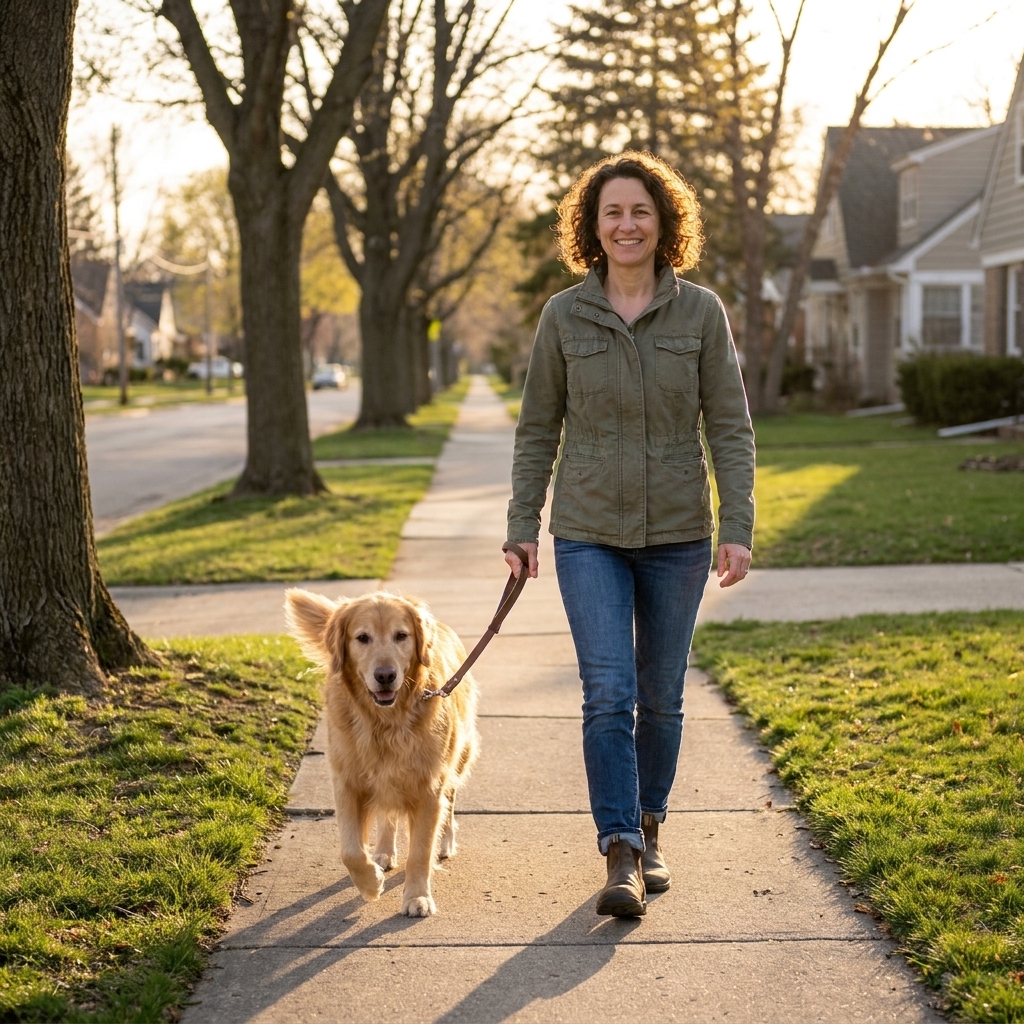
If you are having a hard day, you can also do “three things I can handle today.” That counts.
10) End with a closing ritual
Just like arriving matters, finishing matters. This helps your brain register: we did something good for us.
- Stop at your door and take one slow breath.
- Shake out your hands for five seconds.
- Say one sentence: “That helped,” or “I am glad I went.”
If you want to go one step further, jot a one-line note in your phone: what you noticed, what you loved, what felt easier after.
Keep it realistic
Mindful walking is not about doing all ten things at once. Think of this like a menu.
- Pick one idea per walk. Two if you are feeling spicy.
- Let your mood choose. Some days you need silence. Some days you need Beyoncé.
- Short walks count. A mindful 8-minute walk can noticeably shift your afternoon.
Safety and accessibility
- Stay aware. If you are crossing streets or in busy areas, keep your eyes up, volume low, and one ear open, or skip headphones altogether.
- Make it yours. “Walk” can mean a slow stroll, an indoor loop, a treadmill, or a roll or wheel outside. You can also do a senses scan seated on a bench. The point is presence, not pace.
Note: This article is for general wellness inspiration and is not medical advice. If you have health concerns, check in with a qualified clinician.
FAQ
What if my mind keeps wandering?
That is normal and honestly, expected. Mindfulness is not “never wandering.” It is “noticing you wandered, then returning.” Your walk is the practice.
Is mindful walking still exercise?
Yes. You are still moving your body, which can help support circulation, joints, mood, and energy. The mindful part simply adds a mental and emotional benefit too, and your experience may vary day to day.
What if I live somewhere noisy or not very scenic?
Noisy walks can still be mindful. Focus on body sensations, breath, and small visual details like light on windows or patterns in sidewalks. Adventure is a way of paying attention, not a destination.
Your next walk
If you take one thing from this, let it be this: your daily walk does not have to be another task. It can be a soft place to land in your day.
Choose one tiny upgrade and try it on your very next walk. Then notice how you feel when you come back inside. That feeling is the whole point.