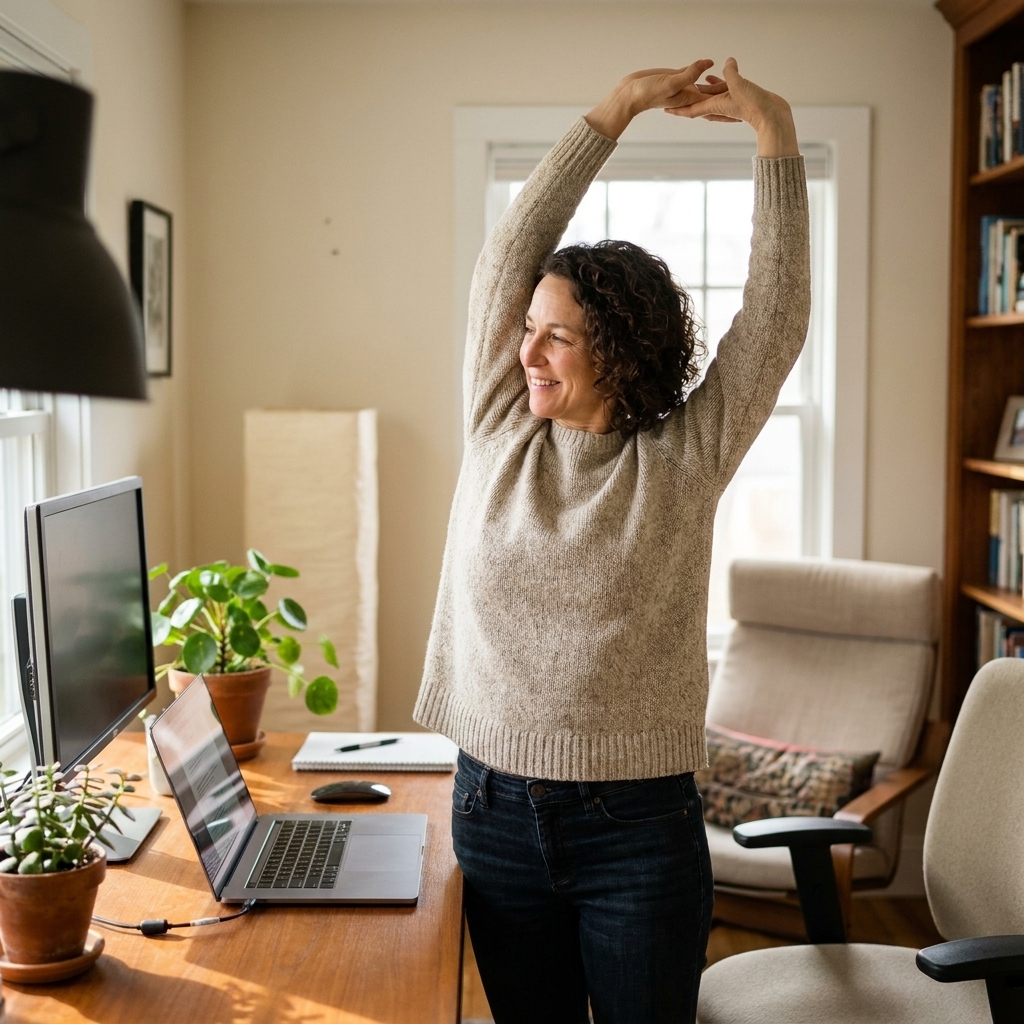
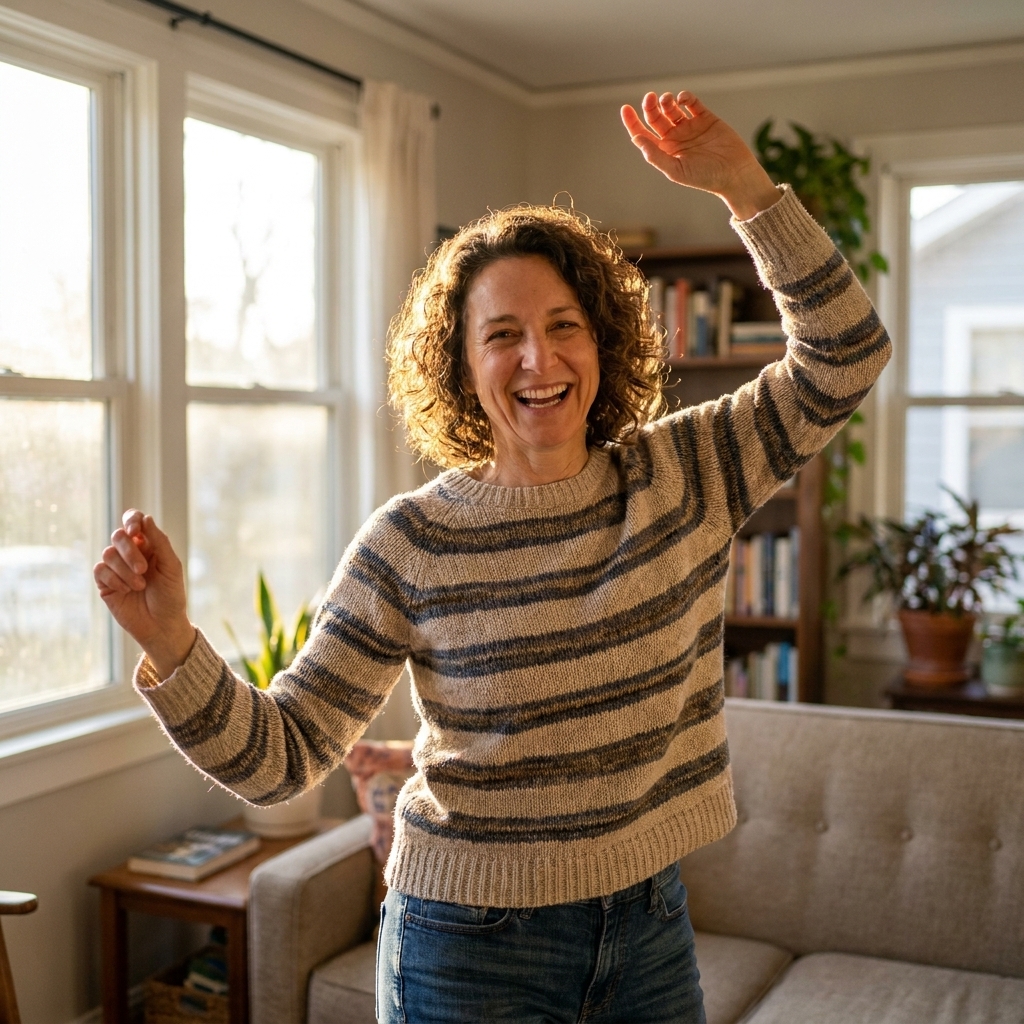
Some days, the nervous energy in my body feels like a browser with 37 tabs open. And when that happens, I have one fast, zero-perfection remedy that for me almost always helps: a solo dance party in my living room.
No choreography. No mirrors. No “I should be better at this.” Just movement that can remind your brain and body, oh right, we might be okay. If you are craving quick stress relief that also feels fun, this is your invitation to turn up one song and let your shoulders unclench.
Why dancing helps fast
Stress is not only a thought. It is a physical state. Solo dancing can help because it gives your body a chance to move, breathe, and release. Even a few minutes often shifts your energy from stuck to flowing.
- It can interrupt the stress loop. Movement changes your focus quickly, especially when paired with music.
- It can discharge tension. Shaking out your arms, rolling your shoulders, and bouncing lightly can feel like opening a pressure valve.
- It can support your mood. Upbeat music plus movement is a powerful combo for feeling more like yourself again.
- It is accessible. No equipment, no class schedule, no “right” way to do it.
Think of it as a daily nervous-system rinse. Like brushing your teeth, but for your insides.
Set up in 60 seconds
Your living room dance party does not need to look like a studio. It just needs to feel safe and easy.
Do a quick “dance floor” reset
- Slide the coffee table back or move anything sharp-edged if you tend to flail your arms (guilty).
- Grab water and set it nearby.
- If you are in socks on a slick floor, go barefoot or wear grippy socks for stability.
Create a tiny privacy bubble
If self-consciousness is your biggest barrier, privacy is your best friend. Close the door, pull the curtains, or face away from windows. If you live with others, you can also claim a predictable time like “one song after work” so it becomes normal and non-negotiable.
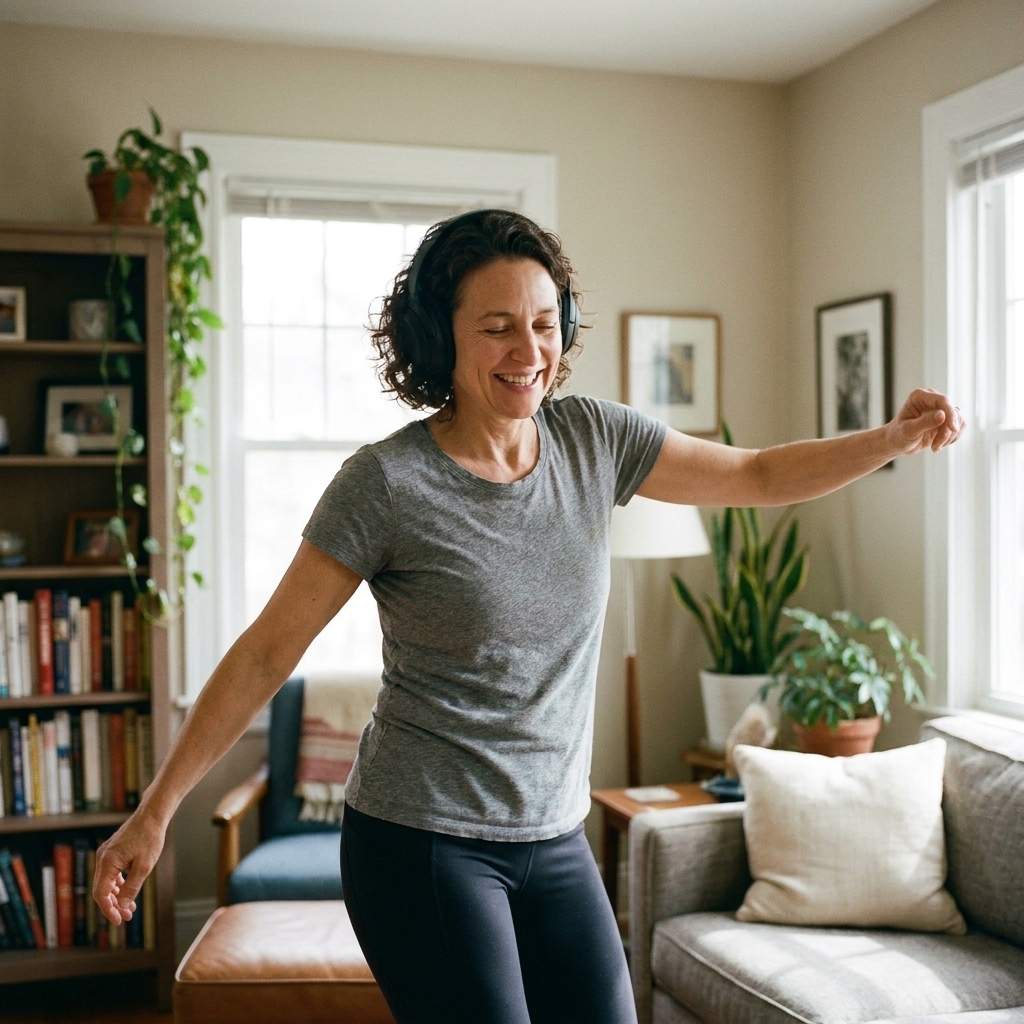
Build an uplifting playlist
Your playlist is the co-host of this routine. It should make it easier to start, not harder to choose.
My simple formula
- Song 1: The door-opener. Something friendly, familiar, and low-pressure.
- Songs 2 to 4: The mood lifters. Tracks with a steady beat that make you want to move without thinking.
- Song 5: The victory lap. A track that feels triumphant, playful, or sweetly nostalgic.
Tips that actually help
- Choose “body yes” music. If your shoulders want to move within 10 seconds, it is in.
- Keep it short. A 10 to 20 minute playlist is ideal. Too long can feel like a commitment.
- Add one grounding track. A slower song can help you downshift if you are feeling wired.
- Rotate weekly. Keep a core of favorites and swap a few tracks so it stays fresh.
If you freeze when choosing songs, try this simple lane: one throwback you know every word to, two upbeat tracks with a clear beat, and one softer song to land. Name your playlist something obvious like “One-Song Reset” or “Kitchen Dance Break” so you do not overthink it.
Less self-conscious
Most of us were taught, directly or indirectly, that dancing is a performance. Your solo dance party is the opposite. It is private, permission-based, and fully for you.
Gentle confidence shortcuts
- Start with headphones. It feels more immersive and less “loud for other people.”
- Dim the lights. Softer lighting helps you feel less “watched.”
- Face a wall or look down. This sounds funny, but it helps you get out of “how do I look?” mode.
- Make it a ritual. Same spot, same time, same first song. Routine creates safety.
- Use micro-movements. Begin with shoulder rolls and toe taps. It still counts.
A mantra I love
This is not a show. This is a release.
You do not have to feel confident to start. You just have to be willing to move for 60 seconds. Confidence often arrives after your body realizes you are not judging it.
Your 5 to 15 minute routine
Here is an easy structure you can follow until it becomes automatic. Adjust the timing as needed, and set a timer if that helps your brain relax.
Minute 0 to 1: Warm hello
- Take three slow breaths.
- Roll your shoulders back.
- Let your jaw unclench and your hands soften.
Minute 1 to 4: Shake-out
- Shake out your arms like you are flicking water off your fingertips.
- Do gentle knee bends or a light bounce.
- Let your head nod yes to the beat.
Minute 4 to 10: Free dance
- Pick one “anchor move” to return to, like step-touch, hip sway, or marching.
- Let the rest be spontaneous: spins, hand waves, dramatic lip sync, all welcome.
- If you freeze, go back to your anchor move and keep breathing.
Last 1 to 3 minutes: Landing
- Choose a slower song or lower the volume.
- Place one hand on your chest and one on your belly.
- Take a few calming breaths and notice what changed.
If 5 minutes is all you have, do one song and call it a win. Quick version: 10 seconds of breathing, 40 seconds of your anchor move, 10 seconds of slowing down. If you have 15, add a couple more songs and let it be a full reset.
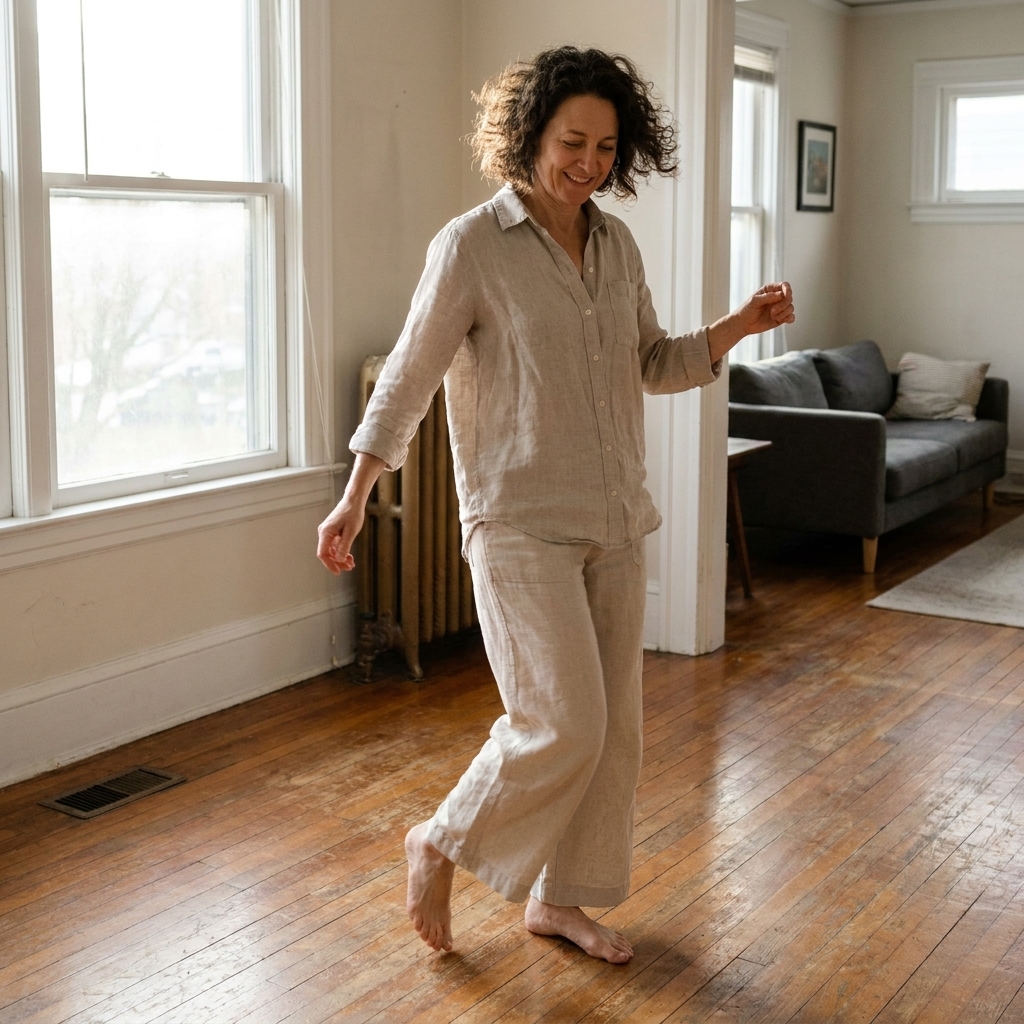
Make it a habit
The secret to doing this daily is keeping it delightfully easy. Your goal is not to become a dancer. Your goal is to become someone who regularly releases stress through joyful movement.
Habit anchors
- After work: One song before you sit down.
- Midday slump: Two songs instead of another coffee.
- Before dinner: Dance while the oven preheats.
- Before a shower: Quick dance, then rinse off the day.
Minimum viable dance
On low-energy days, your only job is to press play and move in any way for 60 seconds. You can stop after that, but most of the time you will keep going because starting is the hardest part.
If you have pain
Solo dance parties are wonderfully adaptable. If you are dealing with pain, chronic illness, or limited mobility, you can absolutely create a version that feels supportive.
- Chair dancing counts. Upper-body grooves, shoulder rolls, and hand choreography can be incredibly satisfying.
- Keep movements small. Swaying, tapping, and gentle bouncing can still shift your mood.
- Choose supportive music. Slower beats can feel safer for your joints and nervous system.
- Check in as you go. Pain is information. If something hurts, modify or stop.
If you feel dizzy, unusually short of breath, or notice pain increasing, pause and rest. If you have a medical condition and are unsure what is safe, it is always wise to consult a qualified healthcare professional. Wellness should feel like care, not like pushing through.
Common sticking points
“I feel silly.”
Perfect. Silly is often the doorway to relief. Start with a song you loved as a kid or teen. Nostalgia can soften self-judgment fast.
“I live with other people.”
Headphones are your best friend. You can also choose a consistent time and let it become part of the household rhythm, like your personal reset.
“I have neighbors.”
Keep the volume modest, go for low-impact moves (step-touch, marching, swaying), and skip jumping if your floors are squeaky or your downstairs neighbor is a light sleeper.
“I do not know how to dance.”
Try step-touch, march in place, or sway side to side. That is dancing. Add arm swings and you are officially doing it.
“I never remember.”
Put your speaker or headphones where you will see them. Visual cues often beat willpower.
A small invitation
If you take nothing else from this, take this: you deserve stress relief that can feel like joy, not like another task on your to-do list.
Pick one song. Clear one square of floor. Press play. Let your body do what it already knows how to do.
And if Barnaby, my golden retriever, were here, he would absolutely join you for the chorus and then dramatically flop onto the rug like he has been working very hard. Honestly, same.
FAQ
How long should a daily solo dance party be?
Anywhere from one song to 15 minutes is perfect. Consistency matters more than duration. Many people notice benefits quickly, especially with 3 to 5 minutes most days.
What time of day is best for stress relief dancing?
Whenever you notice tension building. Many people love after work as a transition, midday for an energy boost, or early evening to shake off the day before dinner.
Is dancing really good for stress?
For many people, yes. Music plus movement can help your body shift out of a stressed state by releasing physical tension and supporting mood. Consider it a simple tool that often feels calming and energizing at the same time.
What if I do not have space?
You only need enough room for a step-touch or gentle sway. Even standing by your kitchen counter and moving your upper body can count as a dance party.