Confession: when I was deep in my corporate event planner era, I could design a gorgeous room for other people… then come home and try to do yoga in a cramped spot between a laundry basket and a charging cable. If you have ever thought, I’d move more if I had a better setup, you are not being dramatic. Environment matters. The good news is you do not need a full home gym. You need a small space that feels like an easy “yes.”
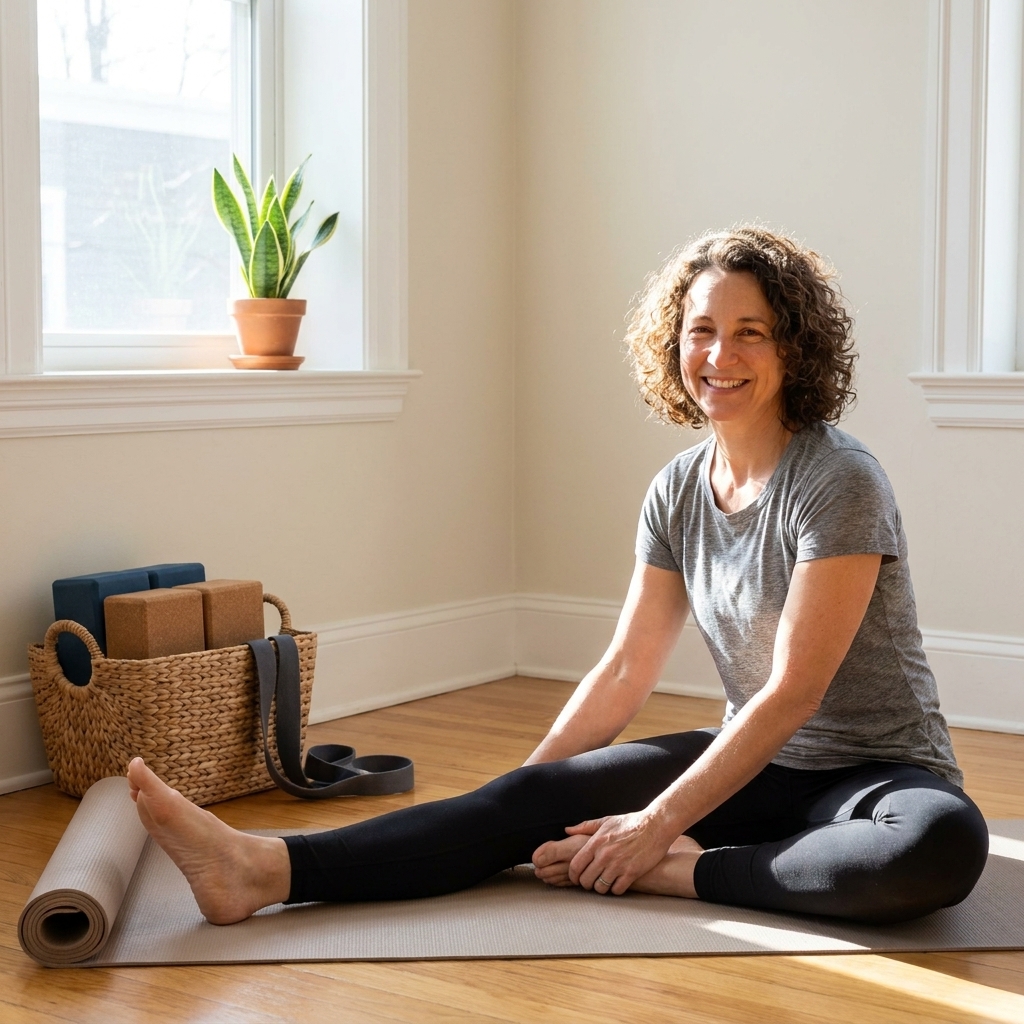
Here are five realistic steps to create an inviting home movement space for stretching, yoga, dance breaks, or whatever feels good today.
Step 1: Pick the easiest spot
The best movement space is the one you can access on your most tired day. Before you buy anything, do a quick scan of your home with one goal: find a place where you can reliably show up.
Look for these green flags
- Low friction: you can get there without moving five things first.
- Enough room to extend your arms: aim for at least a mat-sized footprint plus about 1 to 2 feet of buffer on one side (more if you like big flows).
- Comfortable light: natural light is a bonus, but any warm lamp can work.
- Ventilation: a window, ceiling fan, or even a small fan nearby makes movement feel better.
Great starter locations: the foot of your bed, a living room corner, the side of a couch, a hallway “runway,” or an office area that can double as a stretch zone.
Reminder: your space can be small and still be sacred. A corner counts.
Step 2: Clear micro-clutter
Micro-clutter is sneaky. It is the little pile of mail, the cords, the random shoes, the half-used candle. None of it is “that bad,” but together it can feel subtly stressful, which makes you think, I’ll do it later.
A 10-minute reset
- Remove floor obstacles: anything you could trip over has to go.
- Create one landing zone: a basket, tray, or small bin for items that tend to wander into the space.
- Hide or route cords: use a simple cord clip, or shift chargers to a different outlet if possible.
- Wipe the floor: even a quick sweep or vacuum makes the space feel intentional.
If you only do one thing today, do this: make it possible to roll out a mat without negotiating with your stuff.
Step 3: Make it comfortable
When movement feels uncomfortable for reasons that have nothing to do with your body, you will naturally avoid it. Your job is to make the space supportive.
Comfort upgrades worth it
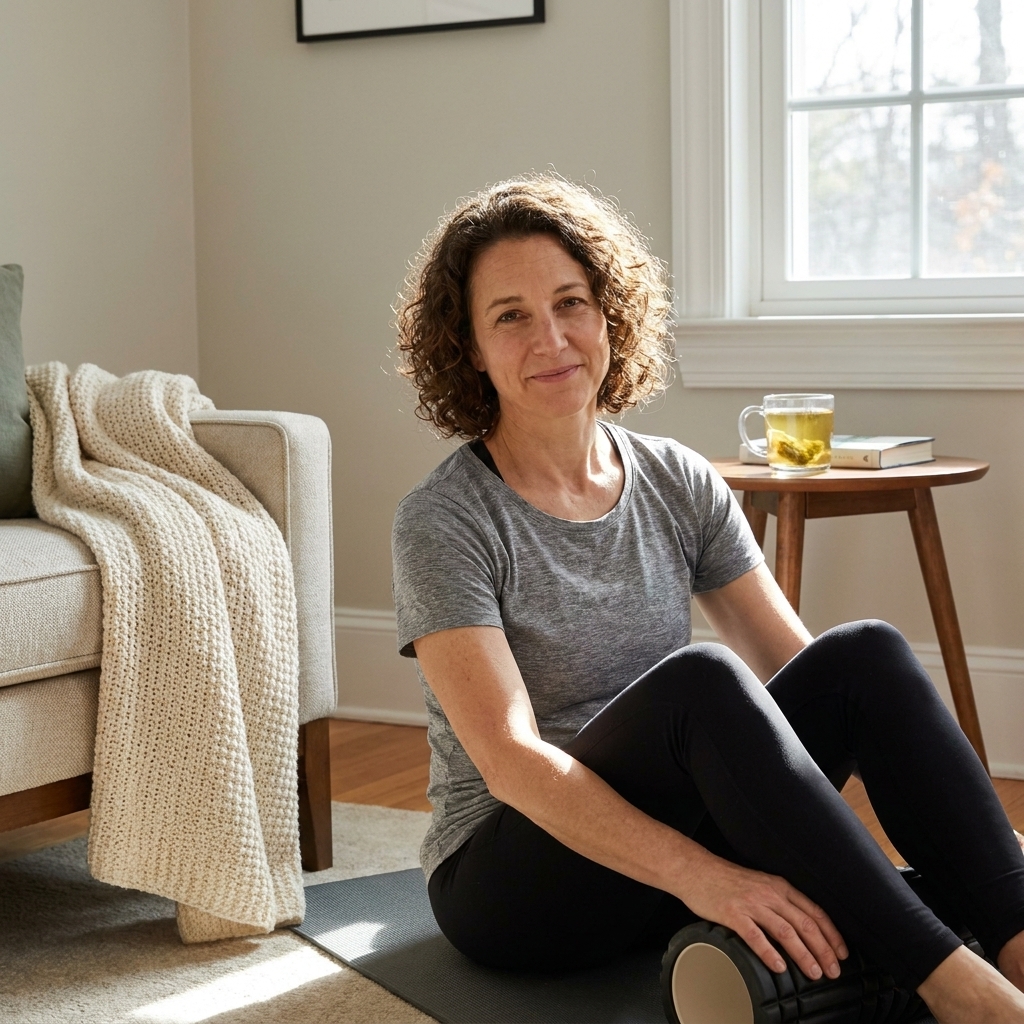
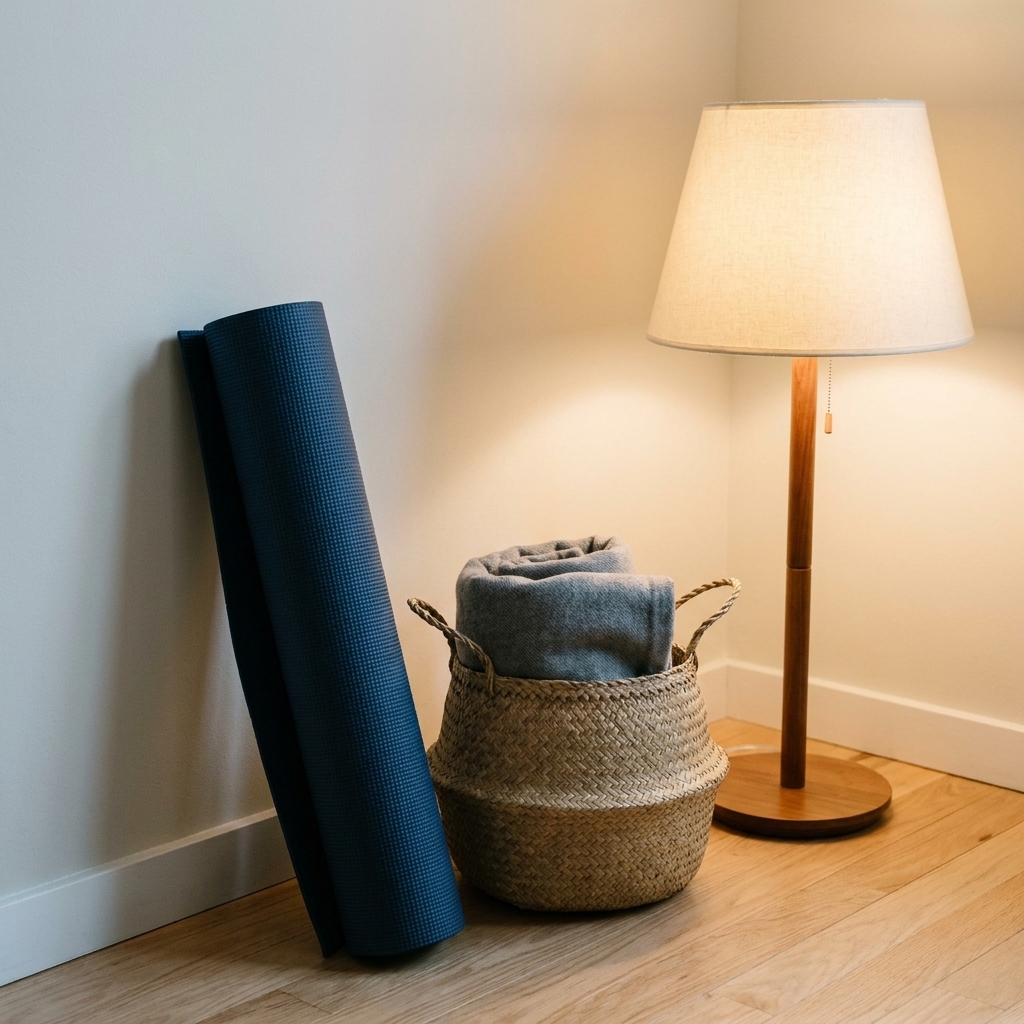
- Better underfoot: a mat that feels good under your hands and feet matters. If your floor is hard or cold, add a folded blanket for kneeling.
- Slip check: if you put your mat on a rug, make sure nothing slides. A grippy mat or rug pad can help, especially on hardwood.
- Temperature support: keep a light layer nearby, or a small fan for warmer months.
- Sound: a small speaker, white noise, or a playlist station makes the space feel alive.
- Wall support: if you like stretching, pick a spot near a wall for balance or legs-up-the-wall moments.
Prop tip: you do not need a huge collection. A yoga strap can be a scarf. Blocks can be sturdy books if they are stable (avoid slippery stacks). A bolster can be a firm pillow wrapped in a towel. If anything feels wobbly, swap it out. We are going for accessible, not studio perfect.
Super tight on space? A chair counts. Chair-based stretches plus wall-supported options can be a full session.
Step 4: Add one visual cue
This is the fun part. The goal is not to create a showroom. It is to create a vibe that gently pulls you in.
Choose 1 to 3 simple touches
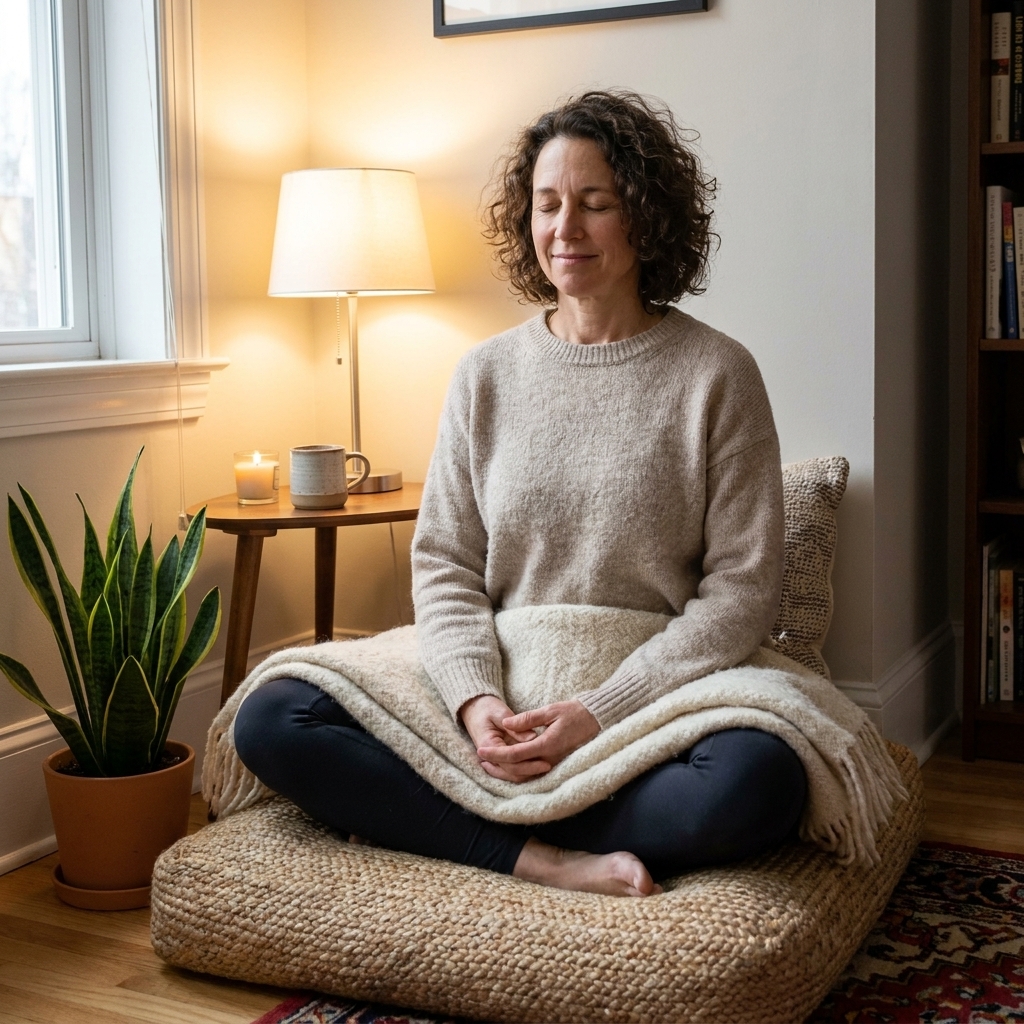
- A plant: even a small pothos or snake plant instantly softens a corner.
- A warm light source: a small lamp with a soft bulb goes a long way. (Any warm lamp works. If you use a salt lamp, keep it out of reach of pets that might lick it.)
- A mirror: great for dance breaks, posture checks, or simply making the space feel bigger.
- A signature scent: essential oil diffuser, room spray, or a candle you only use while moving. (Candle safety note: keep open flames away from props and never leave them unattended. Diffuser note: skip scents if you, your household, or pets are sensitive.)
- One meaningful object: a framed photo, a small piece of art, or a quote card on a shelf.
Design trick from my event planning days: repeat a color once. If your mat is sage green, add one more small green element like a plant pot or pillow. It makes the whole corner feel pulled together with basically zero effort.
Step 5: Make starting easy
Motivation is lovely, but systems are better. Make your movement space so ready that you can begin before your brain starts negotiating.
A ready-to-go setup
- Keep essentials visible: mat + one basket of props. That is it.
- Store by frequency: daily items on top, occasional items tucked below.
- Attach your habit to an existing cue: after you brush your teeth, before your shower, while your coffee brews, or right when you change into comfy clothes.
- Decide your minimum: 3 minutes counts. One song counts. A single stretch counts.
If you want a simple weekly rhythm, try this:
- Mon: 5 to 10 minutes of gentle mobility
- Wed: one song dance break or a short flow (apartment-friendly: keep it low-impact)
- Fri: restorative stretching or legs up the wall
- Weekend bonus: a longer session if you feel like it
Your space is not a stage you must “perform” on. It is a friendly little container for coming back to your body.
Quick checklist
- Choose a spot you can access daily
- Clear the floor and create a small landing zone for clutter
- Add comfort: mat you like, temperature support, sound
- Do a slip check on rugs and hardwood
- Add one visual cue: plant or lamp or mirror
- Make starting easy: props in one basket, minimum routine decided
FAQ
How much space do I need?
For most stretching and yoga, a mat-sized area is enough. If you can lie down and extend your arms without hitting furniture, you are good. For dance, aim for a little extra clearance, but even a “two-step zone” works for a joyful song break.
What if my space is multi-purpose?
Totally normal. Give your movement setup a quick close-out routine that takes under one minute: roll the mat, toss props into a basket, and reset one item (like your lamp) so the space still feels welcoming tomorrow.
What are the best budget essentials?
A decent mat, a small basket or bin, and one comfort item like a pillow or blanket. Everything else can be improvised until you learn what you actually use. If you improvise props (books, pillows), prioritize stability and stop if anything feels unsafe.