When I lived in a tiny apartment after my event planning years, I used to think “a meditation space” meant a whole spare room, a floor cushion that cost as much as my rent, and a lifestyle that did not include laundry piles. Reality check: you can build a calming corner with what you have, where you are, in the square footage you already pay for.
Think of your meditation corner as a visual cue for your nervous system. It is not about being Instagram-perfect. It is about creating a small, reliable place where your body learns: we rest here.
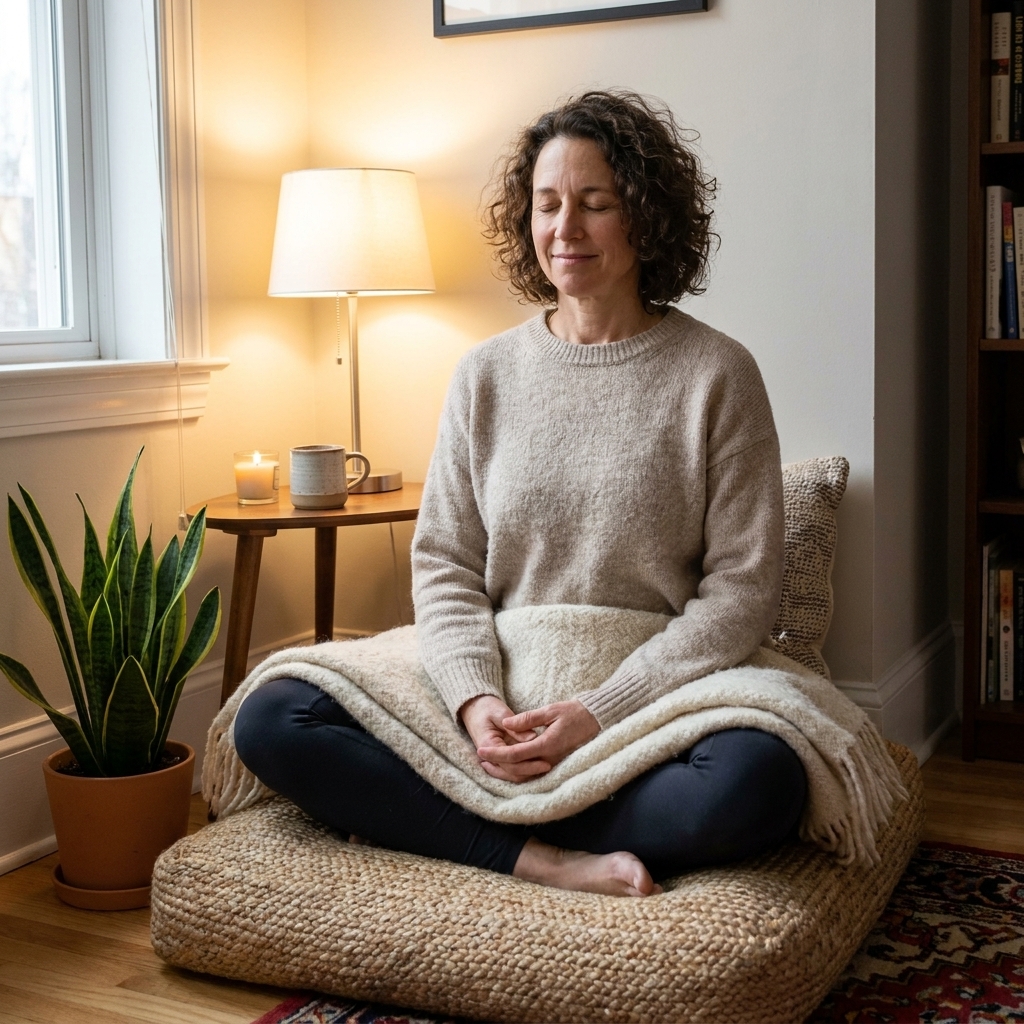
Start with the calmest small patch
In a small apartment, the “best” spot is rarely the biggest spot. It is the spot with the least friction. You want a nook you can reach without moving five things first.
Quick location ideas
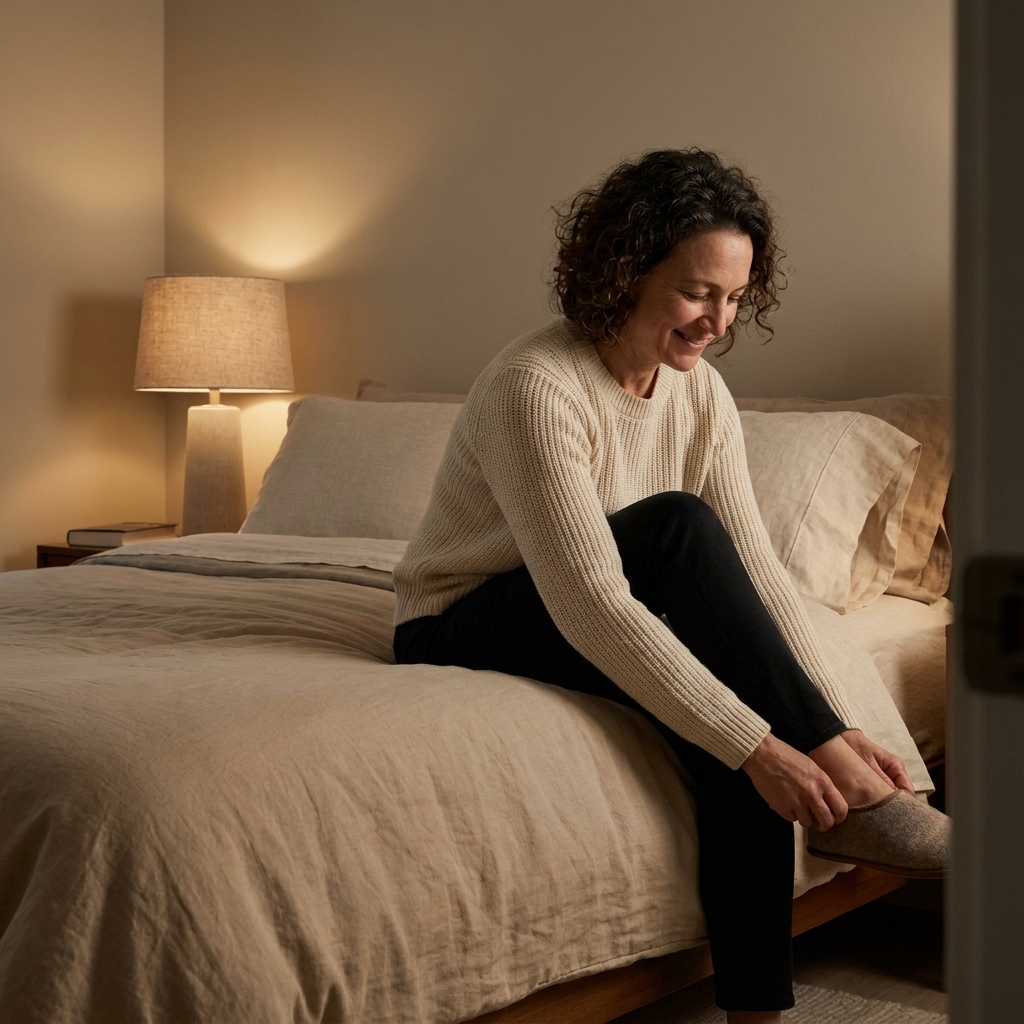
- Beside your bed: Perfect for a 3-minute morning sit before your phone steals your attention.
- Near a window: Natural light can feel especially calming and supportive, even if your view is just a slice of sky.
- In a living room corner: Choose the farthest point from the TV if possible. Your eyes will thank you.
- Closet doorway or alcove: Not glamorous, very effective. A little “cave” energy can feel deeply settling.
- End of a hallway: If it is quiet and out of the main traffic lane, it can feel surprisingly private.
Maya tip: Pick a spot where you can sit and face something neutral or soothing. Staring directly at your to-do zone (kitchen counters, work desk) is like meditating in a meeting.
Define the space
The secret to making a corner feel like a “place” is gentle boundaries. Not walls. Not construction. Just a few cues that tell your brain: this area has a different purpose.
Small-space boundaries
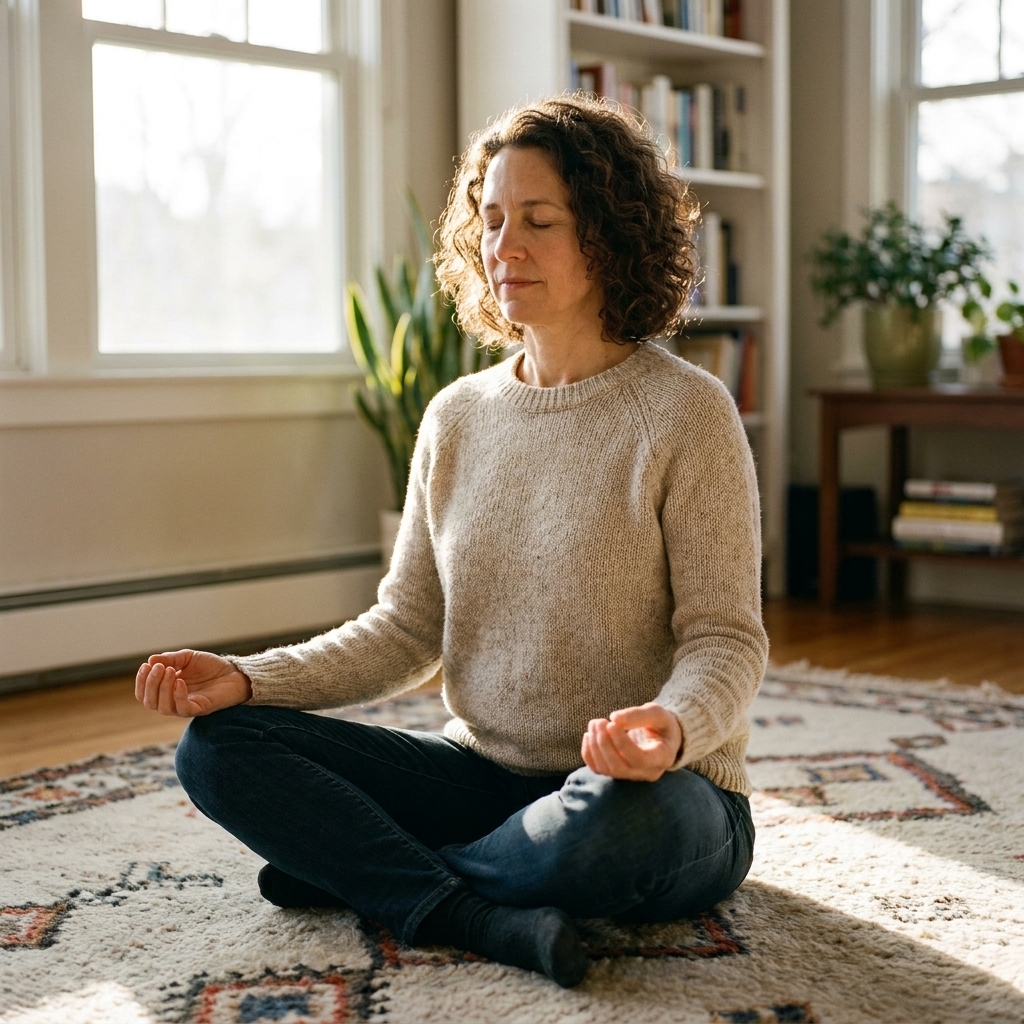
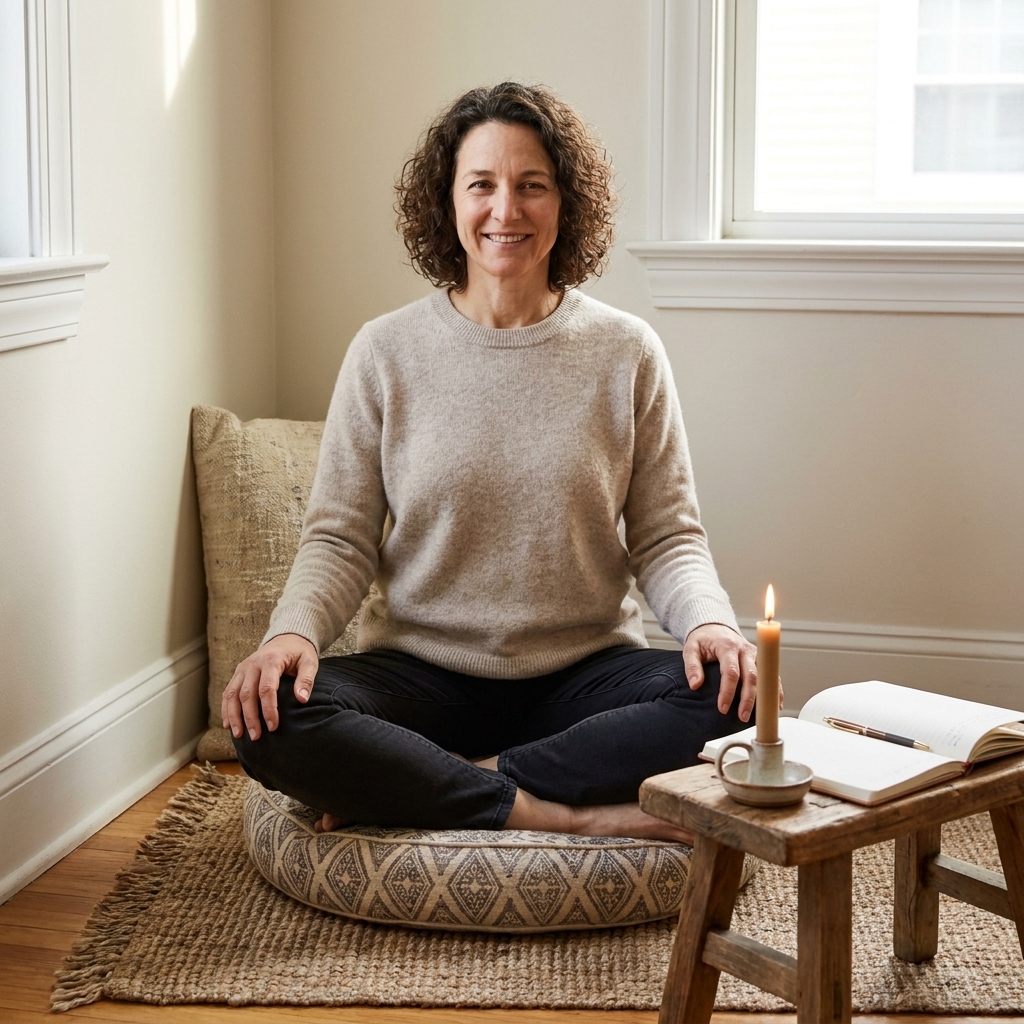
- A rug: Even a 2x3 or 3x5 rug can visually anchor the corner. Check discount home stores, Facebook Marketplace, or washable options if you have pets.
- A floor cushion or folded blanket: A single “landing pad” is enough. The goal is consistency, not a full lounge.
- A low table or crate: A simple surface for a candle, a timer, tissues, or a journal.
- A screen substitute: Try a tall plant, a slim bookshelf, or a curtain panel on a tension rod if you want more separation.
Choose comfortable seating
If sitting cross-legged hurts, you are not “bad at meditation.” You are human with hips and knees and a nervous system that likes comfort.
Budget-friendly options
- Folded blanket stack: Fold into a firm rectangle and sit on the front edge to tilt your hips slightly forward.
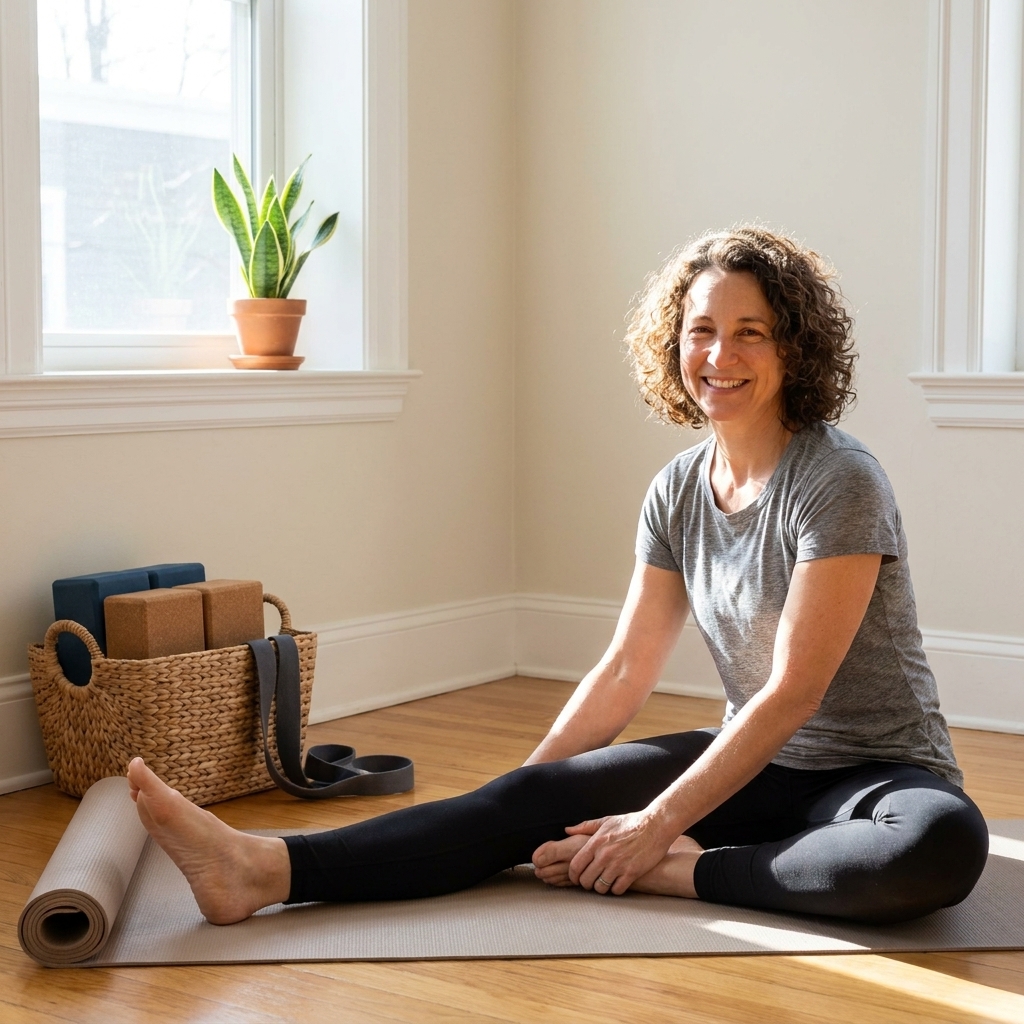
- Bed pillow plus a yoga block: Put the block under one side of the pillow to create a supportive wedge. Give it a quick stability check so you feel steady, not perched.
- Dining chair: Truly underrated. Feet flat, sit toward the front of the seat, hands resting softly. Done.
- Back support against a wall: If you are tired or anxious, a wall can help your body feel held.
Posture cue I love: Let your spine be tall like a plant, not rigid like a flagpole.
Maya tip: If you have tight hips, knee pain, or mobility limits, start with a chair-only practice. You can even place a pillow behind your low back or rest your forearms on armrests. Comfort counts.
Use softer lighting
Overhead lighting can feel like being interrogated by your own ceiling. If you want calm, go low and warm.
Easy lighting upgrades
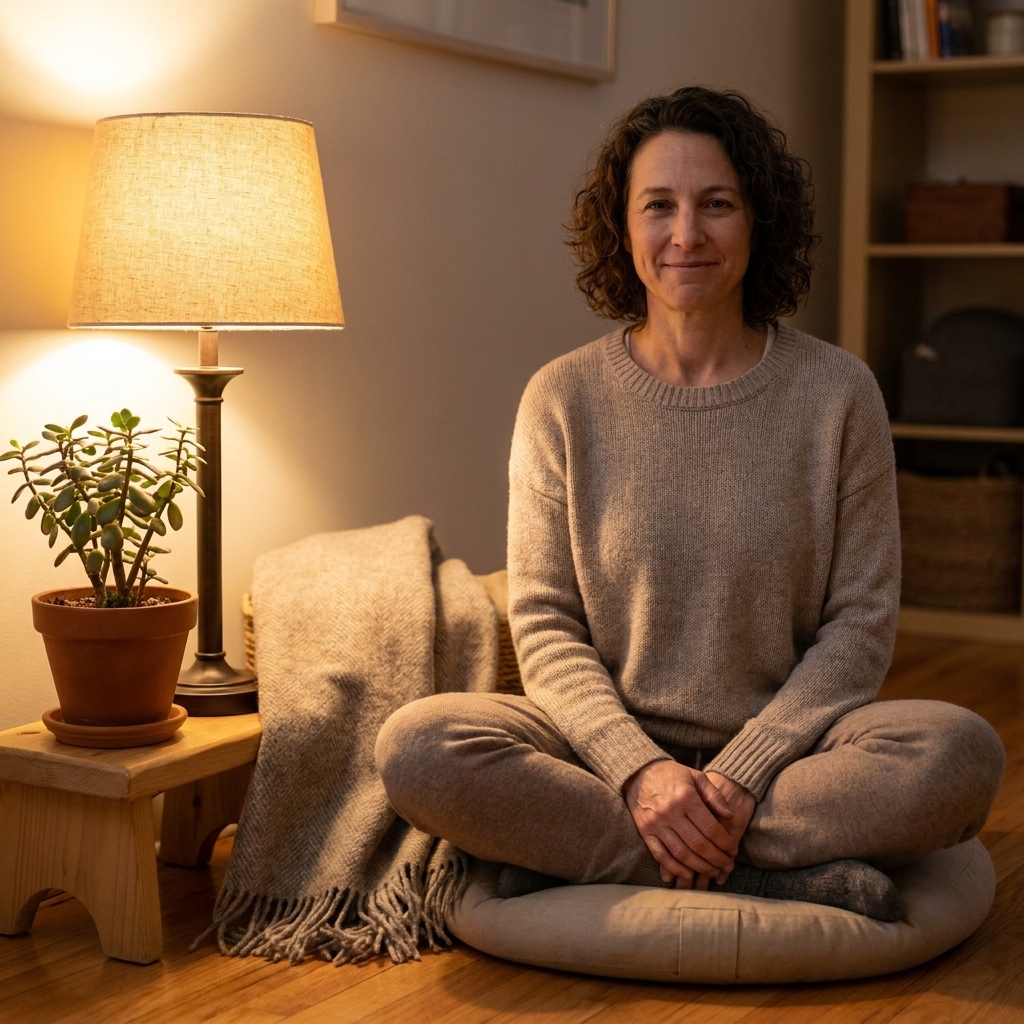
- Use a small lamp with a warm bulb: Aim for “soft white” or around 2700K for a cozy glow.
- Battery LED candles: Great if you have pets, kids, or a landlord who makes open flames stressful.
- Salt lamp or small accent light: Not required, but it can create a gentle ritual vibe. Think aesthetic, not magic.
- String lights sparingly: One strand behind a plant or along a shelf can be lovely. Keep it minimal so it stays soothing, not visually noisy.
Keep it simple
A meditation corner should make your brain quieter, not give it new decisions. If you are not sure what to include, start with five items max.
The 5-item rule
- Something to sit on (cushion, folded blanket, chair)
- Something soft (throw, shawl, or cozy socks nearby)
- Something grounding (a small stone, a meaningful object, or a plant)
- Something to support your practice (timer, journal, or a meditation app on airplane mode)
- Something that signals “begin” (candle, essential oil, or a single deep breath you always take first)
If you love crystals, keep one or two. If you love incense, use it. The point is not to strip away your personality. The point is to avoid turning your nook into a wellness thrift store shelf.
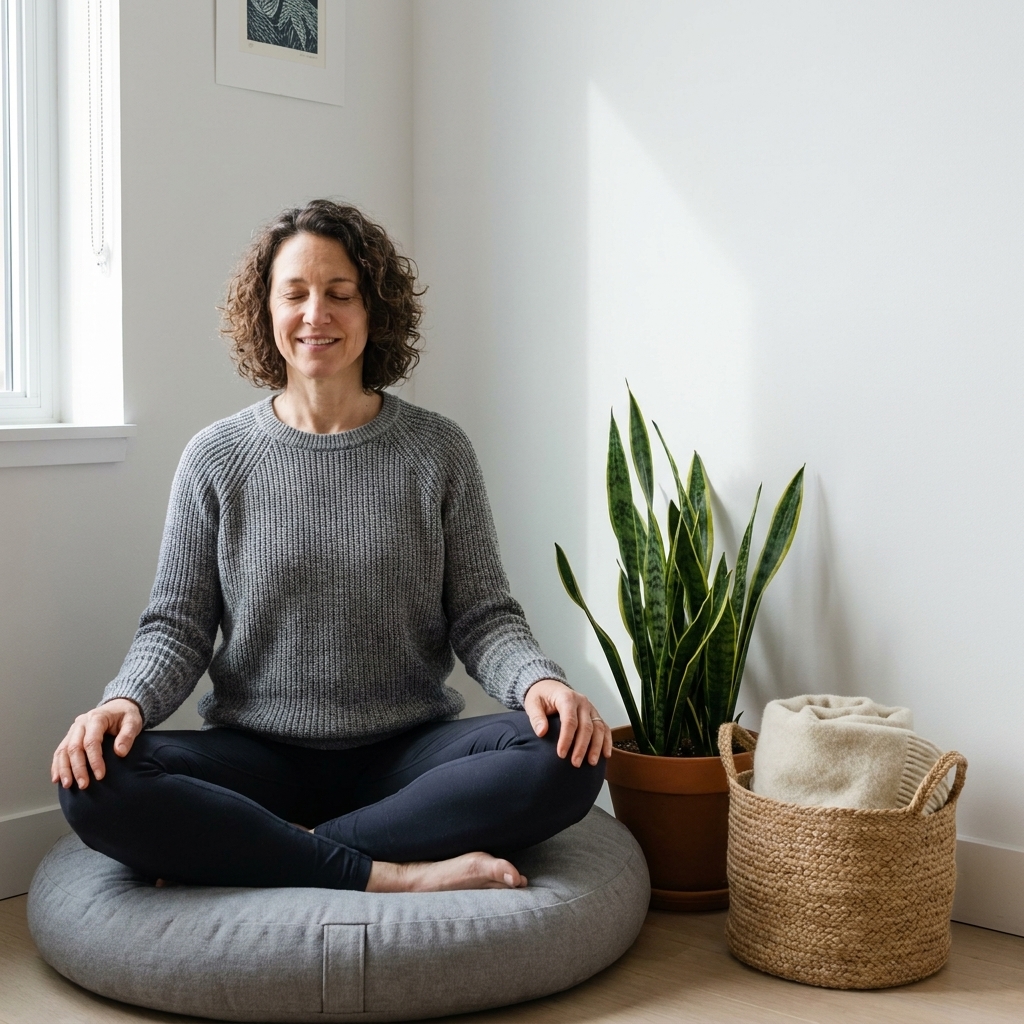
Maya tip: A good rule is “everything fits in one basket.” If it cannot be reset in 30 seconds, it is too much for most small apartments.
Make it apartment-friendly
Small apartments come with real-life constraints: neighbors, roommates, pets, thin walls, and limited storage. Your spot can still feel sacred without being precious.
Sound and privacy
- Soft sound: A small white noise machine, a gentle playlist, or a fan can help mask neighbor noise.
- Headphones: Noise-canceling if you have them, regular if you do not. Both count.
- A “do not disturb” cue: If you live with someone, agree on a simple sign like headphones on means quiet moment.
Scent and airflow
- Ventilate if you burn anything: If you use incense or a real candle, crack a window or keep it brief. Small spaces hold scent fast.
- Skip fragrance if it bothers you: Unscented is still a ritual, especially when you use a consistent “begin” cue like a specific scarf or playlist.
Pet-proofing
- Choose flameless candles if curious tails are involved.
- Store small objects in a lidded basket so your corner can reset in 30 seconds.
- Use washable textiles because real calm includes not panicking about fur.
- Essential oils note: If you diffuse oils, double-check pet safety first. Cats in particular can be sensitive. When in doubt, go unscented.
Bring in nature
There is research suggesting that even brief exposure to nature can support stress reduction and improved mood. In a small apartment, you can borrow that feeling with tiny, doable touches.
Easy nature cues
- A low-maintenance plant: Pothos, snake plant, or ZZ plant are famously forgiving.
- A small bowl of water: Refresh it daily and let it be part of your ritual.
- Natural textures: Linen, cotton, wood, rattan, or stone feel quietly grounding.
Keep it usable
The biggest reason meditation corners stop getting used is because they quietly become a dumping ground. (If I had a dollar for every time a “calm space” became a mail pile, Barnaby and I would be on a permanent vacation.)
Your 2-minute reset
- Put away anything that does not belong (mail, chargers, random socks).
- Fold your blanket and place it on your cushion or chair.
- Wipe the surface of your little table.
- Set your timer or journal out so tomorrow-you has fewer steps.
Make it easy to return to. Calm is a habit, not a heroic act.
Sample setups
1) Studio apartment
- A small rug to define the area
- A floor cushion that slides under the bed
- A low crate or stool as a side table
- A clip-on reading lamp or small warm lamp
2) Shared apartment
- A chair in your bedroom corner
- Headphones or a white noise app
- A lidded basket for your items
- A “begin” ritual like one drop of lavender on your wrists (skip if sensitive or if pets are impacted)
3) No extra space
- Sit on the edge of your bed or a single kitchen chair
- Face a blank wall or a plant instead of your work zone
- Use one object as a cue (a scarf you only wear for quiet time)
A tiny practice
Once your space is set, try this gentle 4-step sit. It is beginner-friendly and works even when your mind is loud.
- Sit: Get comfortable. Let your shoulders drop.
- Exhale: One slow exhale like you are fogging up a mirror.
- Notice: Name three things you can hear, two things you can feel, one thing you can see.
- Choose: Set a timer for 2 to 5 minutes and simply follow your breath.
When the timer ends, place a hand on your chest and say, “Nice job showing up.” Corny? Maybe. Effective? Absolutely.
Your meditation corner is not a monument to discipline. It is an invitation to come home to yourself, one small sit at a time.
FAQ
What if my apartment is messy and I feel like I cannot meditate?
You can meditate in a messy room. Start by clearing only the square around your cushion or chair. A “clean enough” zone is plenty. The practice is meeting your life, not waiting for it to be perfect.
How much should I spend to set up a meditation corner?
You can start for $0 using a folded blanket and a chair. If you want to spend a little, prioritize comfort (cushion or supportive seat) and lighting (warm bulb or small lamp). Those two often make the biggest difference.
What is the best scent for a calming space?
Lavender is a classic for relaxation, but the best scent is the one your body associates with safety. If you are sensitive, skip fragrance entirely and use a “signal” object instead, like a specific blanket or candle. If you have pets, especially cats, keep scent subtle and pet-safe.
How do I keep this from becoming another abandoned self-care project?
Make the goal comically small. Two minutes, three times a week, in the same spot. Attach it to something you already do, like after brushing your teeth or right when you get home from work.