Some days, “rest” means a nap . Other days, it means staring at your ceiling while your mind hosts a full corporate meeting without your consent. If you have ever tried to relax and somehow ended up more tense, you are not alone.
Two of my favorite tools for truly intentional downtime are guided meditation and Yoga Nidra. They can look similar on the surface because both involve listening and resting. But the experience, the goals, and the way they tend to land in your body can feel very different.
Let’s break it all down in a way that makes choosing feel simple, not like another wellness test you have to pass.
What guided meditation is
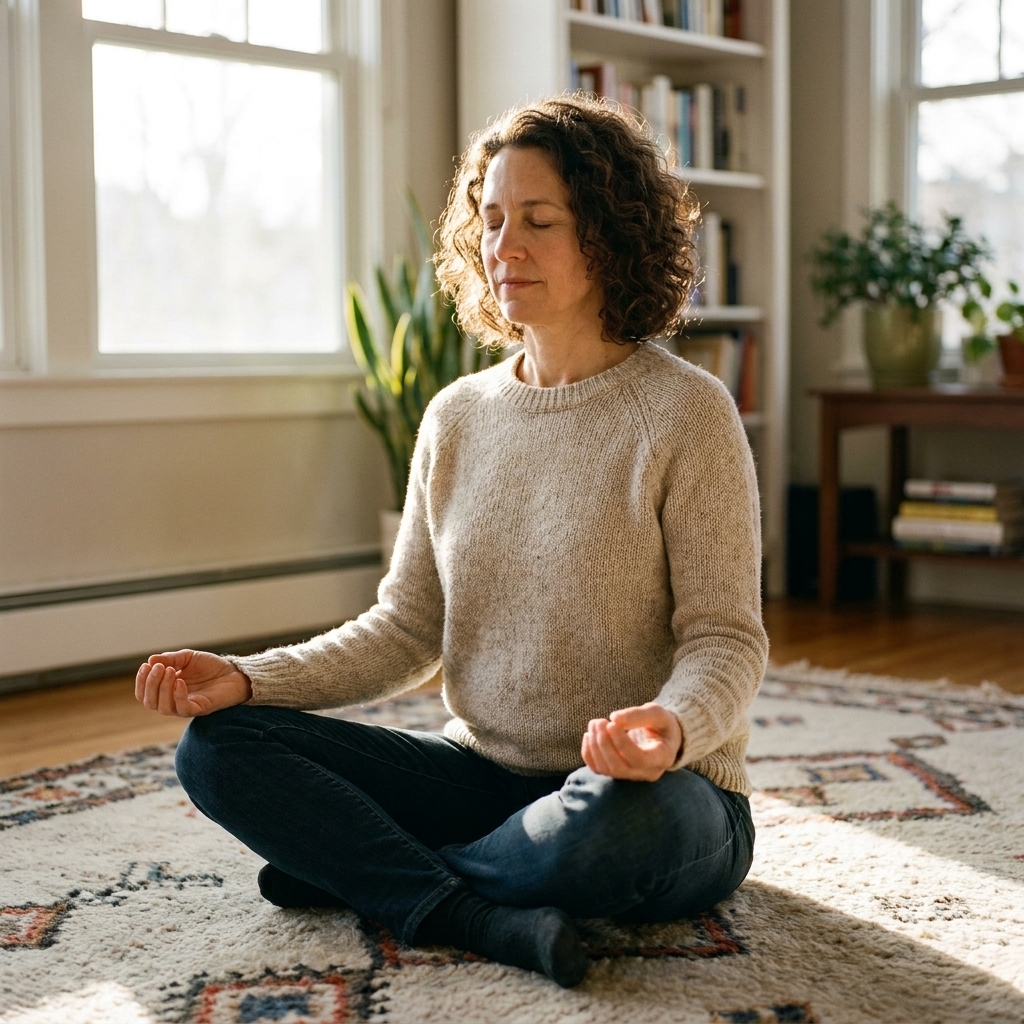
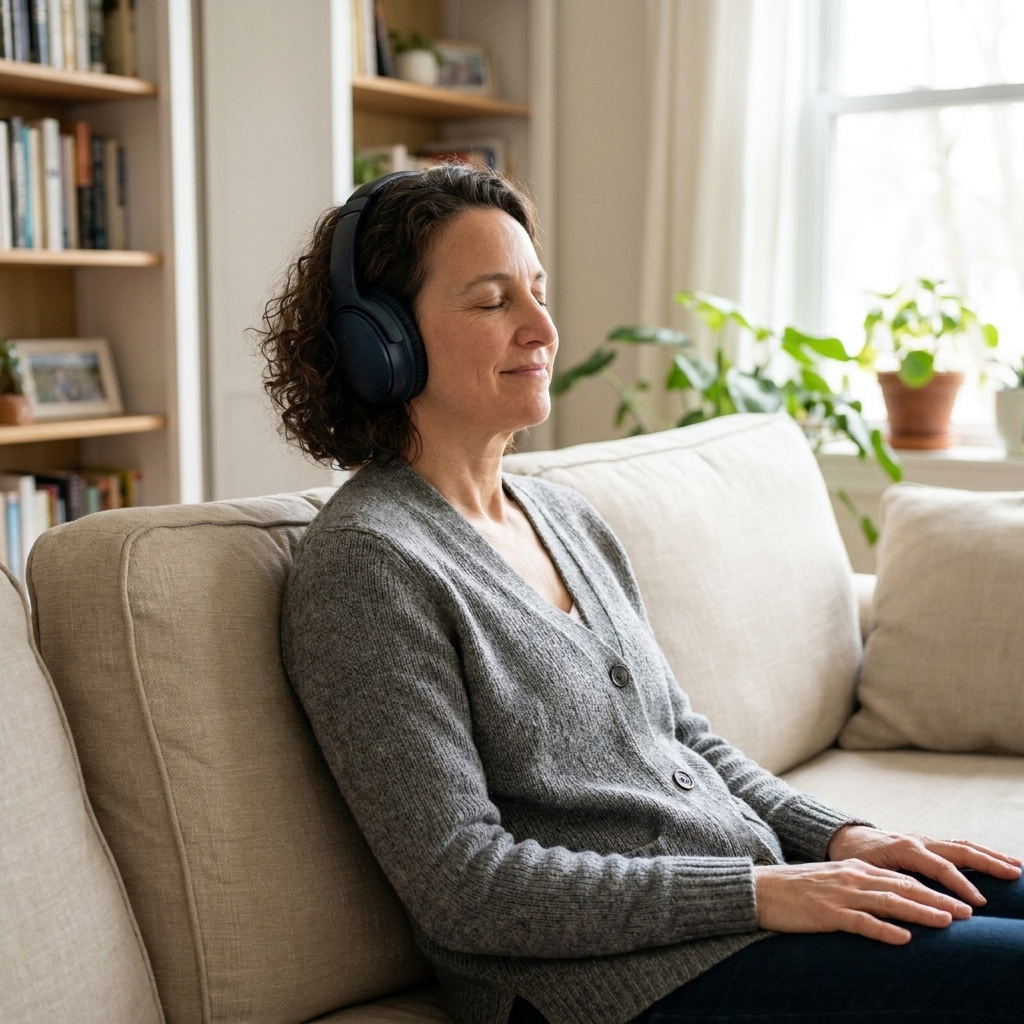
Guided meditation is a broad umbrella. It simply means someone is leading you through a meditative experience with spoken cues. Those cues might include breath awareness, relaxation prompts, visualization, loving-kindness phrases, or gentle coaching to notice thoughts and come back to the present moment.
The goal
Most guided meditations are designed to build mindfulness , focus, emotional regulation, and a calmer relationship with your thoughts. Rest can absolutely happen, but the aim is often more about awareness than sleep-like restoration.
What it feels like
- Mentally engaged in a soft way, like you are steering your attention
- More awake than sleepy, especially with breath-focused or mindfulness styles
- Spacious, like you have a little more room between you and your thoughts
Common formats
- Breath meditation: attention on inhales and exhales
- Body scan: noticing sensations from head to toe
- Visualization: imagining calming scenes or outcomes
- Loving-kindness: offering kind phrases to yourself and others
- Walking meditation: mindful movement with cues
What Yoga Nidra is
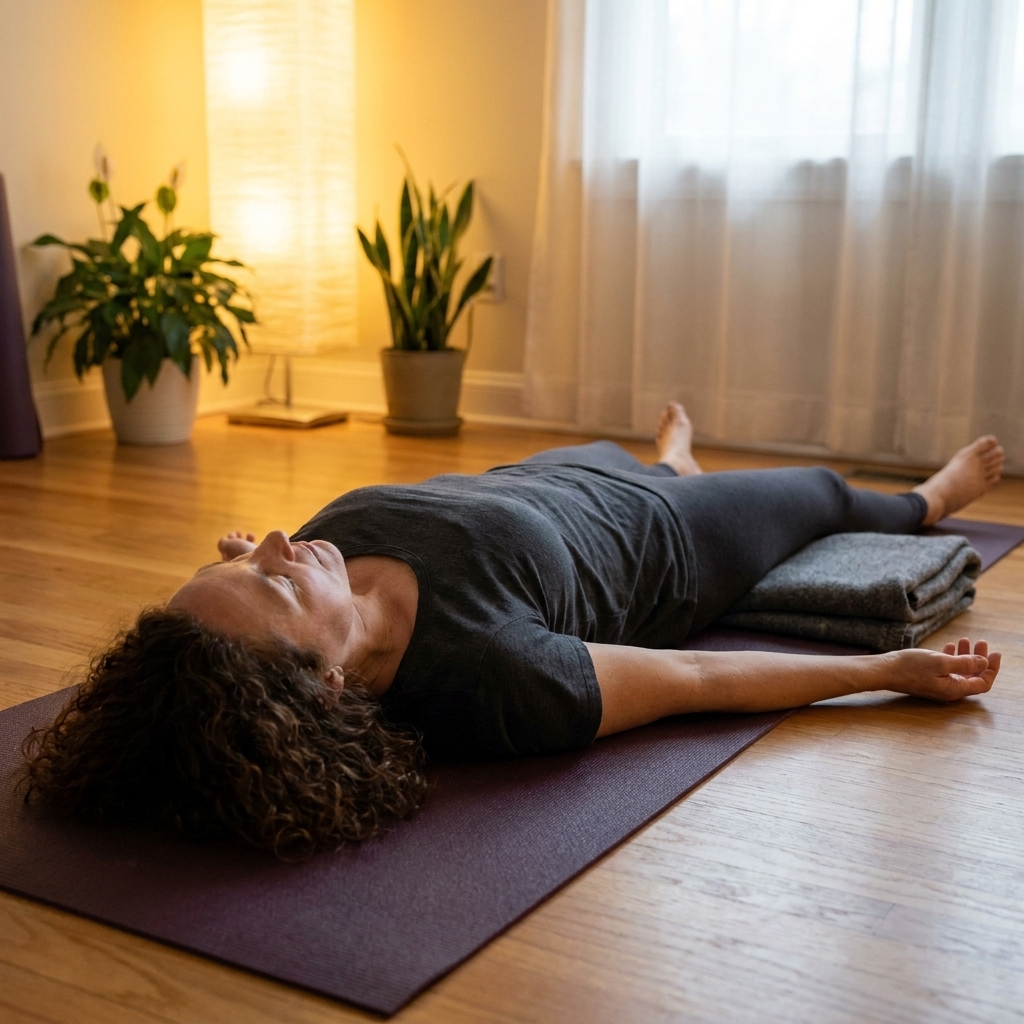
Yoga Nidra is often called “yogic sleep,” but I like to describe it as guided rest that aims for a deeply relaxed, in-between state. You typically lie down, fully supported and cozy encouraged, while a teacher guides you through a structured sequence that is often used to help the body settle.
Unlike many seated meditations, Yoga Nidra intentionally invites you toward the edge of sleep while keeping a thread of awareness. It can take you into that drowsy doorway between waking and sleep (the transition is sometimes called hypnagogic, which is just a technical way of saying “sleep-adjacent”). Many people feel like they “checked out” for parts of it, and that can be completely normal.
Small clarity note: Yoga Nidra is usually guided, but it is not just another guided meditation. It follows a more specific protocol and is typically more rest-forward than attention-training.
The goal
Yoga Nidra tends to emphasize deep relaxation and downshifting when your system feels revved up. In some lineages, it also includes intention-setting (often called a sankalpa) and practices that explore sensation, breath, and imagery to support inner steadiness and healing.
What it feels like
- Heavy and grounded, like your body is melting into the floor
- Dreamy, with drifting attention and vivid inner imagery
- Restorative, like you got a “reset” without having to do much
A typical structure
Sequences vary, but many include:
- Settling and body positioning (props, comfort, stillness)
- Intention (a short phrase that reflects how you want to feel or live)
- Body rotation (systematically placing attention on body parts)
- Breath awareness
- Opposites (exploring sensations like heavy and light, warm and cool)
- Imagery or visualization
- Reorientation back to waking awareness
Key differences
If you are deciding between the two, here are the differences that tend to show up in real life, not just in definitions.
1) Position and effort
- Guided meditation: often seated, sometimes lying down, sometimes walking. You are usually practicing returning attention again and again.
- Yoga Nidra: almost always lying down. The “effort” is mainly staying comfortable and receptive.
2) Your level of alertness
- Guided meditation: typically more alert and aware of thoughts as they arise.
- Yoga Nidra: often invites a sleep-adjacent, floaty state where awareness can come and go.
3) What it trains over time
- Guided meditation: attention, clarity, emotional balance, non-reactivity, compassion.
- Yoga Nidra: deep relaxation, recovery skills, and for many people, a stronger sense of internal safety.
4) Maintenance vs. recovery
This is not a strict rule, but it is a helpful way to think about it:
- Guided meditation can be like daily mental hygiene. Great for steadying your mind.
- Yoga Nidra can be like a nervous system reset. Great for recovery when you feel fried.
Realistic benefits
Here is what tends to shift when you practice consistently. Not as a promise, but as the kind of change many people notice over time, and what early research often explores around stress and sleep.
Guided meditation benefits
- Less mental clutter and a calmer response to stress
- Improved focus for work, parenting, studying, or simply being present
- Better emotional awareness, including noticing patterns before they spiral
- More self-compassion, especially with loving-kindness practices
Yoga Nidra benefits
- Deep physical relaxation without needing to “do” anything
- Support for sleep routines , especially as a wind-down practice (results vary, but many people find it helpful)
- Downshifting after stress or overstimulation, when your body has not gotten the memo that the day is over
- Restoration during burnout feelings, when you are exhausted but cannot quite settle
Gentle note: Neither practice is a replacement for medical care. And if you are navigating trauma, panic, or intense anxiety, it can help to choose trauma-informed teachers and go at a pace that feels safe. Keeping your eyes open, taking breaks, or stopping mid-session is allowed. You are still “doing it right.”
Which one today?
Instead of picking a lifelong practice like you are choosing a college major, try choosing based on what you need today. Here are a few simple prompts.
Choose guided meditation if you want to
- feel more present and less stuck in your head
- build a consistent habit you can do in short bursts
- work with thoughts and emotions instead of avoiding them
- practice focus, especially during busy seasons
Choose Yoga Nidra if you want to
- rest deeply when you are overtired or overstimulated
- help your body downshift after travel, screens, or high stress
- support sleep or build a calming bedtime routine
- feel held by a structured, comforting experience
If you are torn
Ask yourself: Do I need clarity or recovery?
- If you need clarity, start with guided meditation.
- If you need recovery, start with Yoga Nidra.
Set yourself up
These practices work best when your environment is not quietly yelling at you. Here are my go-to, low-effort upgrades.
For guided meditation
- Choose a realistic length. Five minutes counts. Truly.
- Sit comfortably. A chair is valid meditation furniture.
- Pick one cue to return to, like the breath or sounds in the room.
- Expect distraction. The practice is returning, not being perfectly focused.
For Yoga Nidra
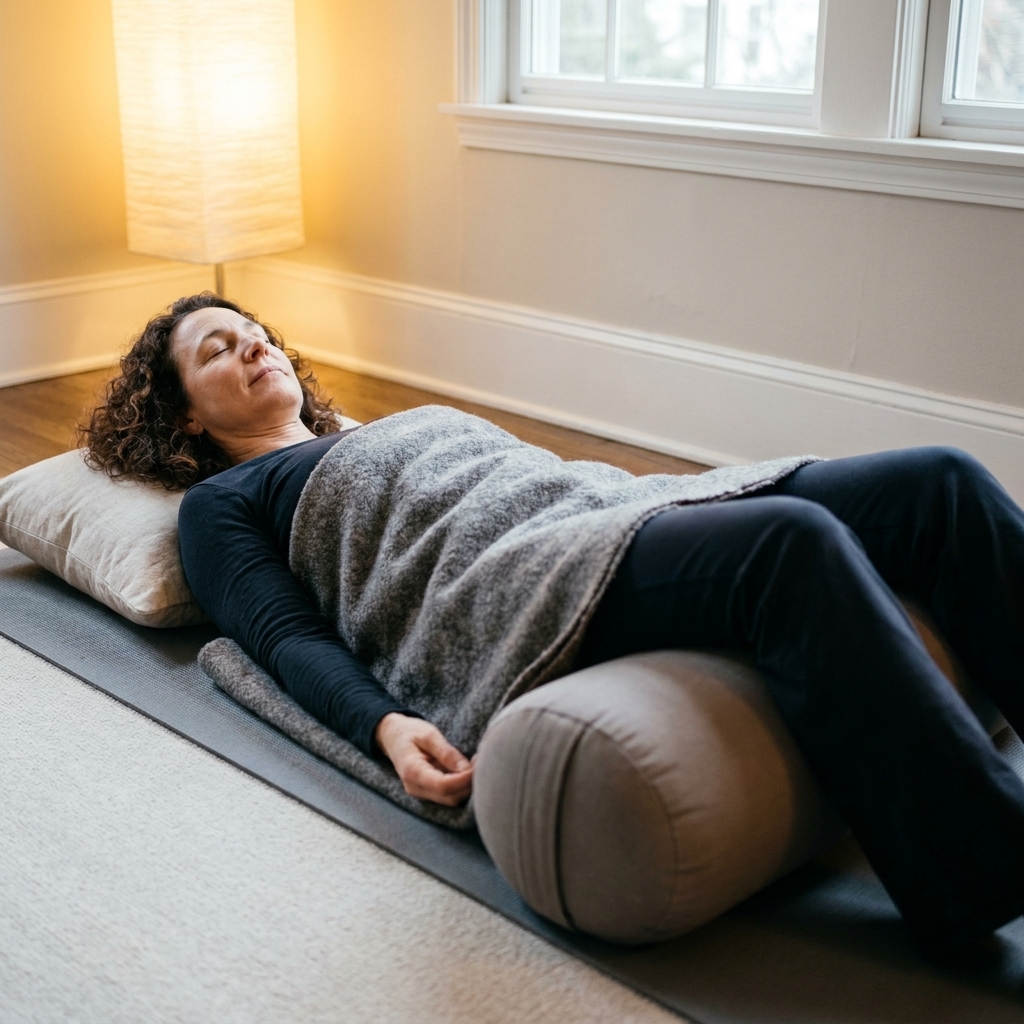
- Get cozy on purpose. Blanket, pillow, maybe an eye mask.
- Support your knees with a bolster or folded blanket to ease your low back.
- Warmth matters. Your body temperature can drop as you relax.
- Try alternatives if stillness is hard. Side-lying is great. A slightly propped position is great. Keeping your eyes open is also allowed.
- Set a gentle boundary, like silencing notifications and letting housemates know you are resting.

Common questions
Is Yoga Nidra just a nap?
It can feel nap-like, and some people do fall asleep. The difference is that Yoga Nidra is usually guided in a way that encourages a particular relaxation pathway. And if you drift off, many people still report feeling calmer or more refreshed afterward.
What if I fall asleep every time?
You are not failing. You are tired. If you want to stay a bit more aware, try practicing earlier in the day, shortening the session, or propping yourself slightly (for example, a pillow behind your upper back). But if sleep is what happens, it can still be a supportive rest practice.
Is guided meditation better for beginners?
Both can be beginner-friendly. If sitting still feels impossible, Yoga Nidra may actually be easier because you are lying down and the goal is rest, not “emptying your mind.” If you like structure and gentle mental engagement, guided meditation can feel more straightforward.
Can I do Yoga Nidra if I have trouble lying on my back?
Yes. You can lie on your side with a pillow between your knees, or recline with support behind your back. Comfort is not cheating. It is the point.
How long should a session be?
- Guided meditation: 5 to 20 minutes is a great range for daily life.
- Yoga Nidra: 10 to 45 minutes is common. Even 10 minutes can feel surprisingly deep.
Can I do both?
Absolutely, and they can complement each other beautifully. Many people enjoy guided meditation in the morning for clarity, then Yoga Nidra in the afternoon or evening for recovery.
A simple weekly plan
If decision fatigue is part of your stress, here is a gentle rhythm you can borrow. No perfection required.
- 2 to 4 days a week: 5 to 15 minutes of guided meditation for steadiness
- 1 to 3 days a week: 10 to 30 minutes of Yoga Nidra for deep rest
- One wild card day: choose based on how you feel in your body that day
And if you only do one session this week, that still counts as care. Mindful rest is not an all-or-nothing lifestyle. It is a practice of coming home to yourself, one small exhale at a time.