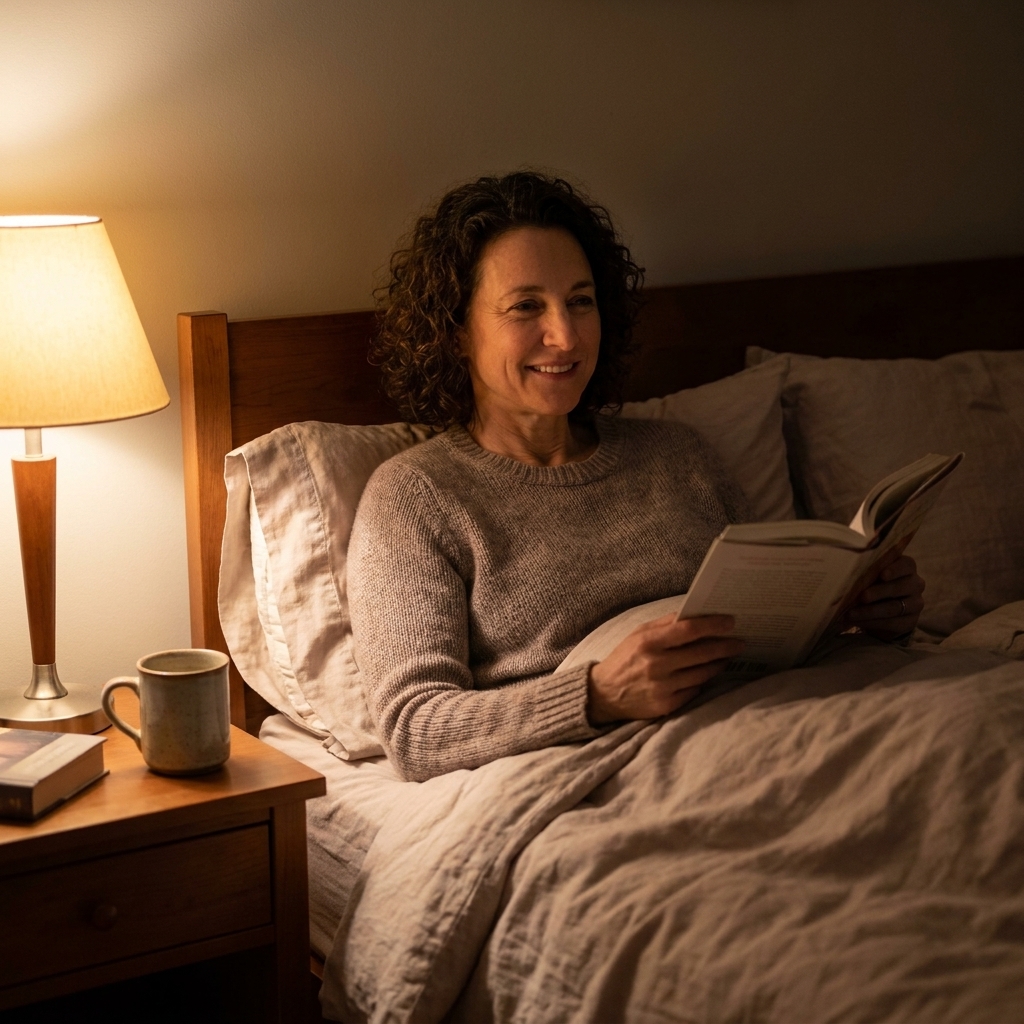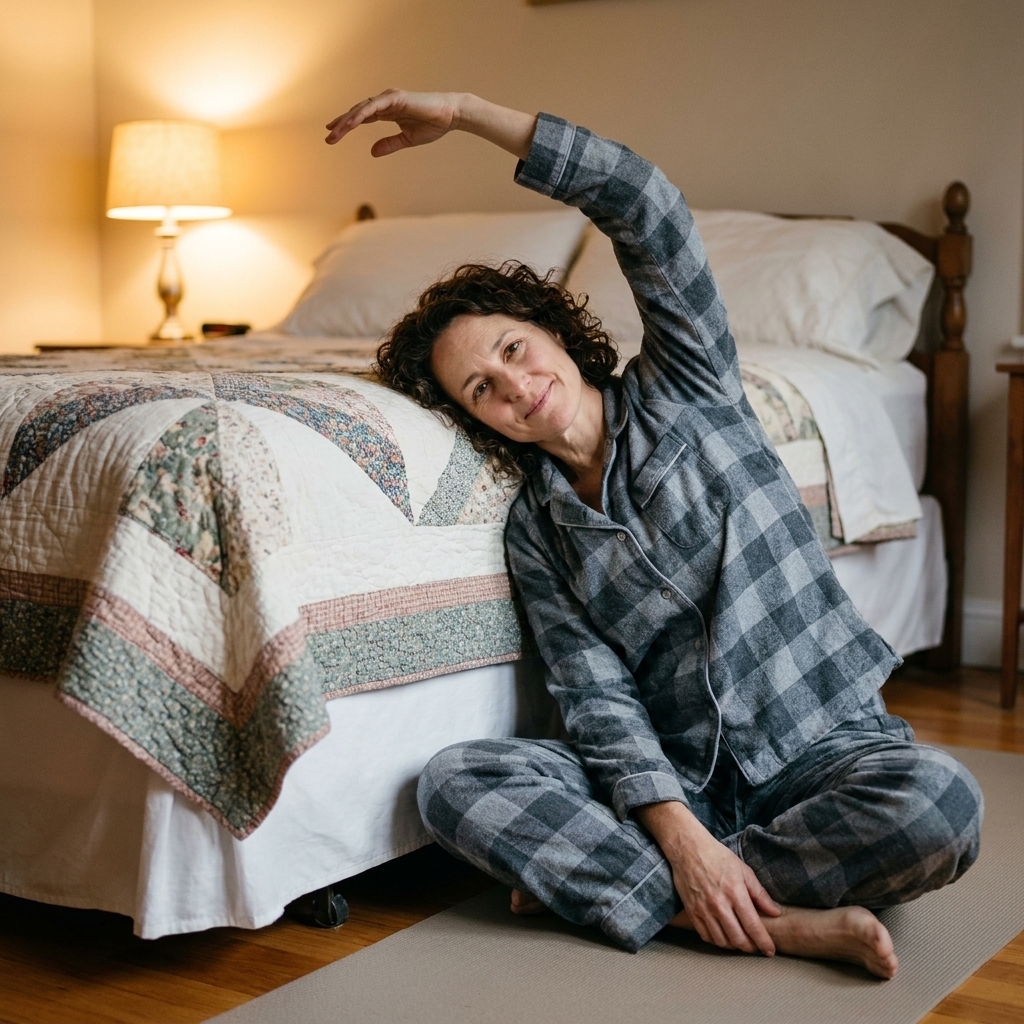
Some nights, your body is tired but your mind is hosting a full-blown staff meeting. Been there. The good news is you don't need a perfect nighttime routine to feel calmer. You just need a simple cue that tells your nervous system, “We're safe. We can soften now.”
Breathwork is one of my favorite before-sleep tools because it's free, quiet, and you can do it lying down without turning on a single light. Below are five gentle techniques you can rotate through depending on the kind of day you had.
Before you start
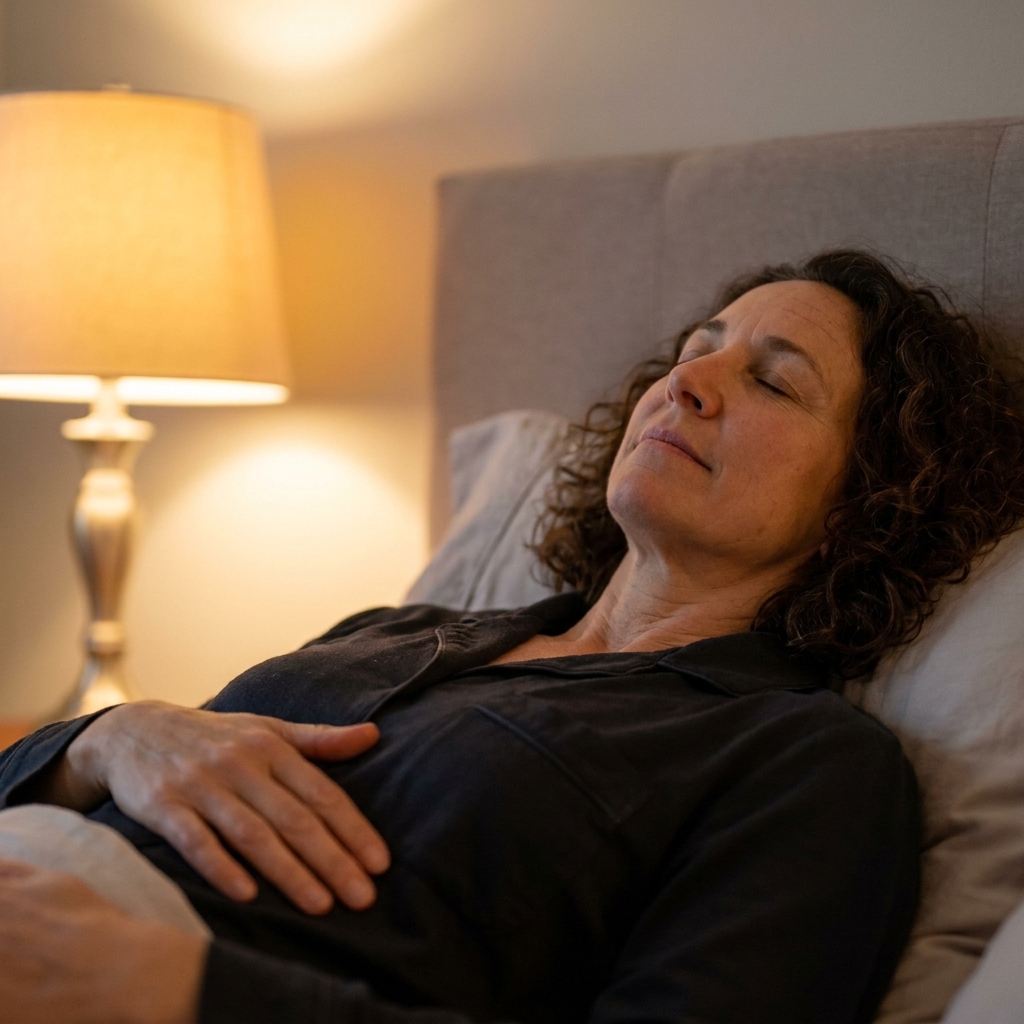
Pick one technique and do it for 2 to 5 minutes, or about 8 to 10 slow breaths. For many people, that's enough to help shift into a calmer state. You can sit up against your headboard or lie on your side or back. If you feel lightheaded at any point, return to your normal breath and keep it easy.
- Set the vibe: Dim lights, put your phone face down, and unclench your jaw.
- Try nose breathing if you can: It often slows the breath naturally. If your nose is stuffed, mouth breathing is totally fine.
- Let “good enough” win: A slightly calmer mind is a win, even if sleep isn't instant.
1) Box Breathing (4-4-4-4)
This is the technique I used back in my event-planning days when my brain wouldn't stop running through tomorrow’s to-do list. It's steady, structured, and grounding.
How to do it
- Inhale gently for a count of 4.
- Hold for a count of 4.
- Exhale slowly for a count of 4.
- Hold for a count of 4.
Repeat for 4 rounds, which is usually about 1 to 2 minutes. If you want more, keep going up to 5 minutes.
Make it more soothing
- On your exhale, imagine your shoulders melting into the mattress.
- If holding feels stressful, shorten the holds to 2 counts and keep the rhythm.
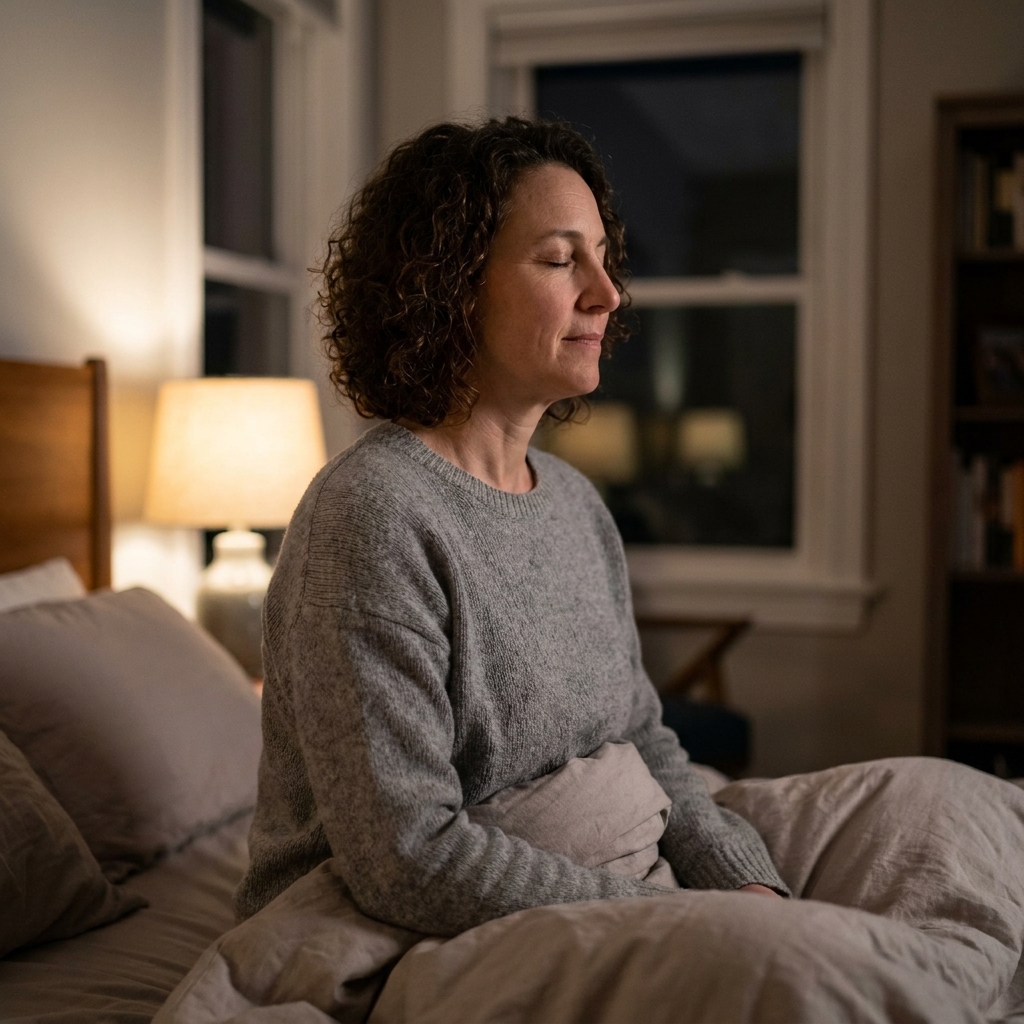
2) 4-7-8 Breathing
4-7-8 is popular for a reason. A longer exhale can help nudge your body toward rest mode. If you tend to feel anxious at night, this one can feel like a gentle off switch.
How to do it
- Inhale through your nose for 4.
- Hold for 7.
- Exhale slowly through your mouth for 8, like you're fogging a mirror. Keep it gentle, not forceful.
Start with 3 to 4 rounds. If the hold feels like too much, try 4-4-6 instead and keep the spirit of the practice: slower out than in.
Best for
- Racing thoughts
- Pre-sleep anxiety
- That wired-but-tired feeling
3) Extended Exhale (In 4, Out 6 to 8)
If you want the simplest option with the biggest “ahh” factor, try this. Extending the exhale is a classic way to invite calm, and you don't need to hold your breath at all. Many people find longer exhales feel settling because they support the body’s natural relaxation response.
How to do it
- Inhale through the nose for 4.
- Exhale through the nose or mouth for 6 to 8.
Repeat for 2 to 5 minutes. Keep it smooth, not forced.
A tiny mindset cue
On every exhale, silently think: “Let go.” Not of your whole life. Just of the last 10 seconds.

4) Belly Breathing
This one is especially helpful if stress has you breathing high in your chest. Belly breathing encourages fuller, slower breaths and can feel very reassuring, like your body is rocking itself to sleep.
How to do it
- Place one hand on your chest and one on your belly.
- Inhale slowly and try to let the belly hand rise more than the chest hand.
- Exhale gently and feel the belly fall.
Try 8 to 10 slow breaths, or about 2 minutes.
If you feel stuck
Imagine your breath traveling all the way down to your waistband on the inhale. No strain, just a visual.
5) Alternate Nostril (Gentle)
This is a classic yogic breath practice that can feel like tidying up mental clutter. For bedtime, we're keeping it soft and simple. Skip it if it feels too activating or if you're congested. Also, quick note: there are a few common variants out there. This is one simple, bedtime-friendly sequence.
How to do it
- Use your right hand. Gently close your right nostril with your thumb and inhale through the left.
- Close the left nostril with your ring finger, release the right, and exhale through the right.
- Inhale through the right.
- Close the right, release the left, and exhale through the left.
That's 1 round. Do 3 to 6 rounds at an easy pace.
Keep it bedtime-friendly
- No breath holds tonight. Smooth in, smooth out.
- If your shoulder starts to tense, lower your elbow onto a pillow.

Quick 3-minute plan
If decision fatigue hits at night, here's a tiny plan you can repeat:
- Minute 1: Belly breathing, slow and easy.
- Minute 2: Box breathing (4-4-4-4) for structure.
- Minute 3: Extended exhale breathing (in 4, out 6 to 8) to soften into sleep.
Then let yourself stop trying. Sometimes the most restful move is giving your body permission to be exactly where it is.
Troubleshooting
- If counting stresses you out: Drop the numbers. Just aim for a slightly longer exhale than inhale.
- If you get dizzy: Breathe less deeply, slow things down, and skip holds. Gentle is the goal.
- If lying down makes you feel worse: Sit up against your headboard, or lie on your side with a hand on your belly.
Breathwork FAQ
How long should I do breathwork before bed?
Most people feel some kind of shift in 2 to 5 minutes, or around 8 to 10 slow breaths. If you love it, you can keep going, but don't turn it into a performance. A short, consistent practice tends to work better than an occasional 20-minute marathon.
What if I can't stop thinking while I breathe?
Totally normal. The goal isn't “no thoughts.” The goal is giving your attention a simple job: counting, feeling the belly rise, noticing the exhale. When your mind wanders, you just come back. That return is the practice.
Is it better to breathe through my nose or mouth?
Nose breathing is often naturally slower and steadier. But if you're stuffy or a mouth exhale feels more calming (hello, 4-7-8), go with what helps your body relax.
When should I be cautious with breathwork?
If you have a respiratory or cardiac condition, panic disorder, asthma or COPD, are pregnant, have uncontrolled high blood pressure, or have a history of fainting, keep everything very gentle and be cautious with breath retention. If you ever feel dizzy or unwell, return to your normal breath and stop. This article isn't medical advice, and it's always okay to check in with a healthcare professional if you're unsure.
A sweet reminder
You don't have to earn rest by being perfectly calm first. Breathwork is simply a way to meet yourself where you are and offer your nervous system a little kindness. Try one technique tonight. If it helps even 5 percent, that's progress worth noticing.