In my corporate event planner era, I treated bedtime like a finish line. I’d tumble into bed with my brain still running a full production schedule. If that sounds familiar, here’s the good news: you don’t need a perfect, Pinterest-worthy routine to sleep better. You just need a few consistent cues that tell your body, “We’re safe. We’re done for today.”
This is your gentle, no-pressure guide to building an evening routine that helps you shift from busy to calm, so you can fall asleep a little easier and wake up feeling more like yourself.
Start with one goal
A relaxing evening routine is less about doing a long list of “right” things and more about creating a predictable downshift. Think of it like landing an airplane, not slamming on the brakes.
Pick one primary intention:
- Quiet the mind (racing thoughts, mental to-do lists)
- Relax the body (tension, restlessness, tight jaw or shoulders)
- Protect the sleep window (late scrolling, second wind, drifting bedtime)
You can absolutely support all three, but choosing a main focus keeps the routine realistic. And realistic is what becomes repeatable.
Routine building blocks
Most calming routines are made of the same ingredients. You get to choose what feels good and skip what feels like homework.
1) A clear “closing time”
Many people find it easier to fall asleep when the day feels “closed.” Try one of these simple closures:
- The 3-minute reset: Put away obvious clutter, start the dishwasher, or set out tomorrow’s essentials.
- Tomorrow parking lot: Write down anything you’re afraid you’ll forget. No solving, just capturing.
- One tiny completion: Reply to one email, fold one basket, or choose tomorrow’s outfit. Small win, closed loop.
If you can, do this 60 to 90 minutes before bed so your nervous system has time to settle.
2) Light cues for nighttime
Light is one of your biggest sleep signals. You don’t have to live like a candle-only pioneer, but you can get strategic:
- Dim overhead lights after dinner, especially bright white bulbs.
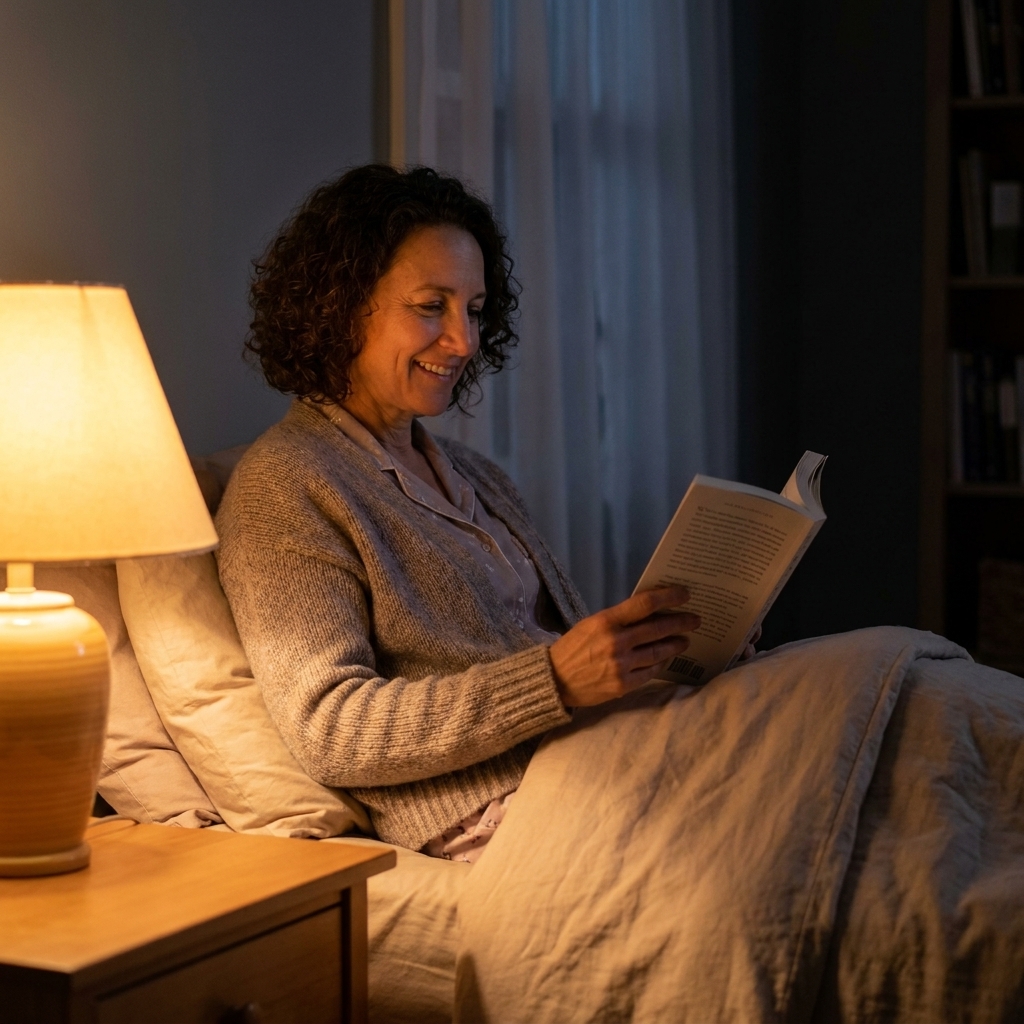
- Use warm lamps in the evening when possible.
- Lower screen brightness and turn on night mode.
- If you’re sensitive to screens, choose a screen curfew you can keep, even if it’s just 20 minutes.
Think of it as creating “sunset indoors.”
3) Temperature and comfort
Many people sleep best in a slightly cool room with a warm body. A few easy experiments:
- Take a warm shower about 1 to 2 hours before bed. The cool-down afterward can help nudge sleepiness for some people.
- Try breathable bedding and a light layer you can adjust.
- If your feet get cold, wear socks to bed or use a light blanket folded at the foot of the bed.
4) Gentle body release
This is where you teach your body that it can stop bracing. Choose one:
- 5-minute stretch: neck circles, shoulder rolls, a seated forward fold, or a simple hip opener on the floor
- Legs up the wall: 3 to 8 minutes, breathe slowly
- Restorative movement: slow cat-cow, child’s pose, reclined twist
Keep it easy. If it feels like a workout, your body may interpret it as go time.

Pick your routine length
Your routine should match your actual life. Here are three templates you can copy and personalize.
The 10-minute routine
- 2 minutes: set a tomorrow list on paper
- 3 minutes: wash face, brush teeth, apply moisturizer slowly
- 3 minutes: legs up the wall or a quick stretch
- 2 minutes: lights low, three slow breaths in bed
The 30-minute routine
- 5 minutes: quick tidy and set coffee or water for tomorrow
- 10 minutes: warm shower or face and body care
- 10 minutes: read a few pages or do a simple journal prompt
- 5 minutes: stretch, then into bed with low light
The 60-minute routine
- 10 minutes: kitchen reset or home close-down
- 15 minutes: shower, body lotion, hair care
- 15 minutes: screen-free hobby like reading, knitting, or a puzzle
- 10 minutes: journaling or guided relaxation
- 10 minutes: restorative movement, then bed
Notice what’s missing: pressure. You’re not earning sleep. You’re inviting it.
My favorite rituals
Rituals work because they create repetition and safety. If you tend to overthink, these can help a lot. Pick two to start.
Journaling that won’t spiral
If journaling turns into a late-night therapy session, keep it structured:
- Brain dump: “Here’s everything in my head.” Stop after one page.
- Three good things: small counts, like “saw a pretty sunset.”
- One intention: “Tomorrow I’ll make it easier by…”
A drink that says “night”
Warm drinks can be soothing. Choose something caffeine-free, and if you have reflux, keep it light and not too close to lying down.
- Herbal tea like chamomile or peppermint
- Warm milk or a milk alternative
- Warm water with a little honey
A scent cue
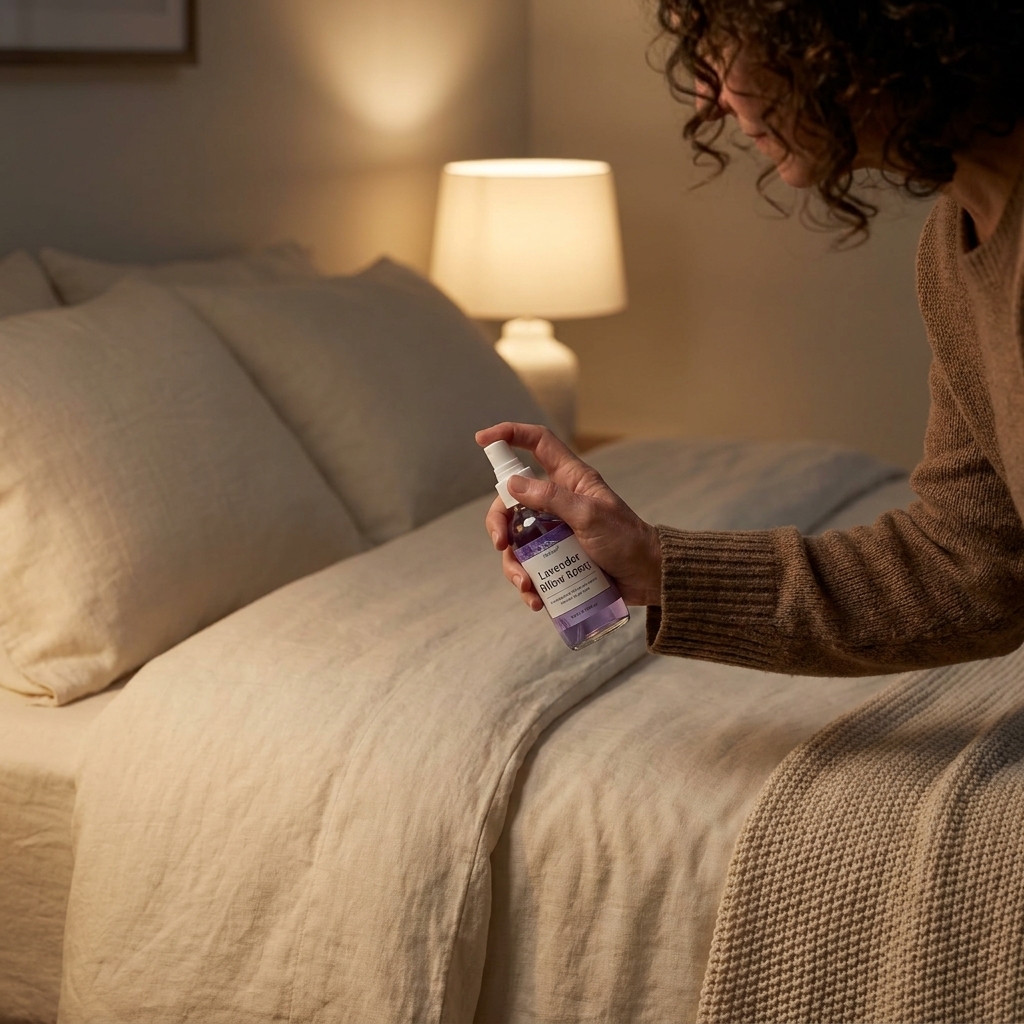
Our brains love association. A consistent scent can become a sleep anchor. Lavender is common, but pick what you genuinely like. Use a light touch: a lotion, pillow spray, or diffuser with a short timer.
Make your bedroom recovery-friendly
You don’t need a complete home redesign. A few small shifts can change the whole vibe.
Keep it dark and quiet
- Use blackout curtains or a comfortable sleep mask.
- If noise wakes you up, try a fan or white noise.
- Cover tiny LEDs if they bother you.
Make the bed easy to love
- Choose bedding you actually enjoy touching.
- Try one comfort upgrade: a supportive pillow, a softer duvet cover, or an extra throw for warmth.
Reduce visual stress
If your room is full of laundry piles or work papers, your brain may stay in problem-solving mode. Even one basket and a quick surface clear can help.
Food and alcohol
There’s no moral grade for what you eat at night. But timing and choices can affect sleep quality.
If hunger hits at night
If hunger wakes you up or makes it harder to fall asleep, a small snack can help some people. Aim for carbs plus protein or fat:
- Greek yogurt with a drizzle of honey
- Banana with peanut butter
- Whole grain toast with cottage cheese
- A small bowl of oatmeal
If you love a late dessert
Enjoy it, just notice how it lands. If sugar makes you wake up, try having dessert earlier in the evening, or keep the portion smaller and pair it with something steadying like yogurt or nuts.
If alcohol is part of your evenings
Alcohol can make you feel sleepy, but it can disrupt sleep quality, especially in the second half of the night, for many people. If you notice restless nights, experiment with a simple shift: stop drinking about 3 hours before bed and add water. No judgment, just information.
If you can’t fall asleep
This is the part where people panic, and panic is basically espresso for the nervous system. Try this instead:
- Drop the storyline: you’re not bad at sleeping. You’re just awake.
- Try a body scan: relax forehead, jaw, shoulders, belly, hips, legs.
- If you’re awake for a while: get out of bed and do something quiet in low light until you feel sleepy again. Keep it boring, like a calm book or gentle breathing.
And if your mind loves math at 2 a.m., you can give it a job: count your breaths from 1 to 10 and start over. It’s oddly effective.
Troubleshooting
You fall off after three days
Make it smaller. Choose two steps only. Consistency beats complexity every time.
Your schedule is unpredictable
Create an anchor habit you can do no matter what, like brushing teeth plus 10 slow breaths, or a 2-minute journal note. Let that be enough on chaotic nights.
You do everything and still feel wired
Consider what’s happening earlier in the day. Afternoon caffeine, late intense workouts, doomscrolling, or chronic stress can keep your nervous system on alert. Your evening routine can help, but it isn’t meant to carry the entire load alone.
You wake up at 3 a.m.
This can be stress, temperature, blood sugar swings, alcohol, or a habit loop. Try one change at a time for a week so you can actually learn what helps. If sleep trouble is persistent, it’s worth talking with a healthcare professional.
Two daytime habits that help
If you want your evenings to feel easier, these two are surprisingly powerful.
Keep a steady wake time
A consistent wake time is often just as important as a consistent bedtime for your circadian rhythm. If you’re trying to reset your sleep, start by keeping your wake time steady most days and let bedtime follow when you get sleepy.
Be mindful with naps
Naps can be helpful, but long or late naps can make it harder to fall asleep at night. If you’re struggling with bedtime, try keeping naps short and earlier in the day, or skip them for a week and see what changes.
When to get extra support
If your sleep issues are lasting more than 3 months, or they’re affecting your mood, safety, or daily functioning, it’s worth reaching out to a clinician. Also consider getting help sooner if you suspect something like sleep apnea (loud snoring, gasping), restless legs symptoms, or significant anxiety or depression. You deserve support that goes beyond tips.
A simple 7-night plan
If you want an easy way to start, try this:
- Nights 1 to 2: Pick a bedtime window and dim lights 30 minutes before.
- Nights 3 to 4: Add a 3-minute tomorrow list to unload your brain.
- Nights 5 to 6: Add 5 minutes of stretching or legs up the wall.
- Night 7: Add one cozy ritual you love, like reading or tea.
By the end of the week, you’ll have a routine that feels like yours, not a routine you’re forcing.
One last reminder
You don’t need to optimize your life into a spreadsheet to sleep well. You deserve rest because you’re a human, not because you completed every checkbox. Start small, make it comforting, and let your evening routine be a soft place to land.
If you try one change tonight, make it this: lower the lights, lower the noise, and do one kind thing for tomorrow-you. That counts.