
Your bedroom doesn’t need to look like a luxury hotel suite to support great sleep. It just needs to feel safe, calm, and predictable to your nervous system. Think of this as elective wellness at its best: small choices that quietly add up, night after night.
I like to start with the biggest sleep levers first: light, temperature, and clutter. Then we sprinkle in comfort details that make you actually want to get into bed.

Step 1: Set the vibe with lighting
Light is one of the strongest signals for your body clock. Bright, cool light tells your brain it’s go time. Warm, dim light tells your brain it’s safe to wind down.
Do a 5-minute light audit
- Overhead lights: If your main ceiling light is very bright, try to avoid using it after dinner. Overhead glare can feel activating right when you’re trying to soften.
- Bedside lighting: Aim for warm bulbs in the 2200K to 2700K range. Lower numbers look warmer. If you don’t want to think about numbers, look for packaging that says “warm” or “soft white,” not “daylight.” Brightness matters too, so if the bulb feels intense, go a step dimmer.
- Brightness control: A dimmer switch is amazing, but a simple plug-in lamp dimmer or a smart bulb on a low setting works too.
Make a low-light landing path
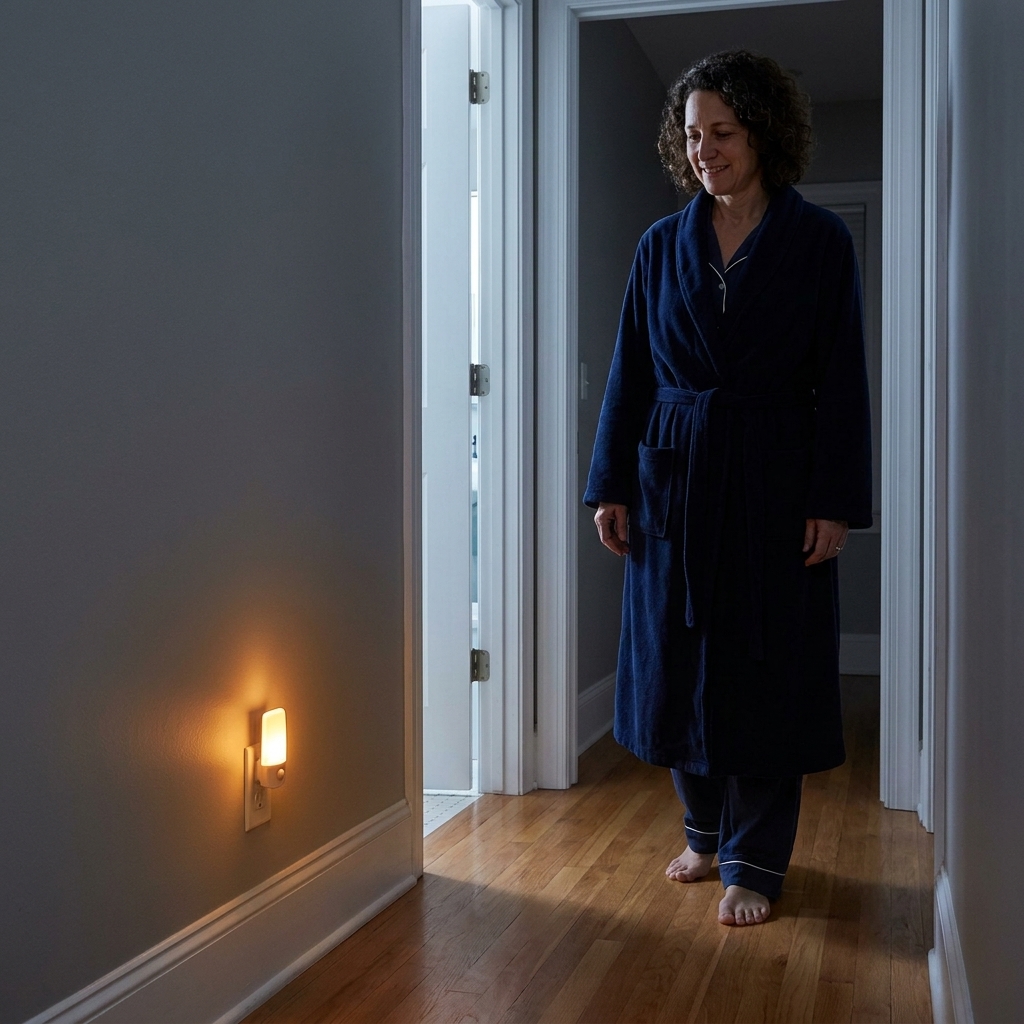
If you wake up to use the bathroom, harsh light can fully wake your brain. Try a motion-activated night light in the hallway or bathroom, or a small amber night light near the floor.
Step 2: Dial in the temperature and air
Most people sleep best in a slightly cool room. Your body naturally drops its core temperature at night, and a cooler environment can help that process along.
Find your comfort range
A commonly cited sweet spot is 60 to 67°F (about 15.5 to 19.5°C), but it’s not universal. Some people sleep better a little warmer, especially depending on age, bedding, and health factors. If 60°F sounds freezing, start by nudging the thermostat 1 to 2 degrees cooler for a week and see how you feel.
Try these easy cooling tools
- Fan for airflow: Even without changing the thermostat, moving air can make the room feel more comfortable.
- Breathable bedding: Cotton percale and linen tend to sleep cooler than heavy microfiber. If you’re a hot sleeper, a crisp percale can feel airier than sateen.
- Layer your bed: Instead of one super-thick blanket, use layers so you can adjust easily at 2 a.m.
Give your nose a win
Stuffy air can sabotage sleep. If you wake up congested or dry, consider a humidifier in dry seasons or an air purifier if allergies are part of your story. Keep it simple: clean filters, clean water, and a settings level you’ll actually maintain.

Step 3: Make your bed the main character
If you only upgrade one thing, make it the part you physically touch for 7 to 9 hours.
Start with what’s underneath you
- Pillows: If yours are lumpy, flat, or making your neck feel cranky, it’s time. Side sleepers often prefer a higher loft, back sleepers medium, stomach sleepers low. As a loose guideline, many pillows do better replaced every 1 to 2 years, especially if allergies are in the mix.
- Mattress comfort: If a whole new mattress isn’t in the budget, a quality topper can change everything. Pick based on your main complaint: pressure points, heat, or overall firmness.
- Sheets: Fresh, comfortable sheets aren’t just aesthetic. They can feel smoother and less irritating, which helps your body settle.
Choose bedding that cues calm
I love a simple, soothing palette in the bedroom because it gives your brain fewer things to process. That said, if a sunny color makes you happy, that’s also wellness. The rule is: does it help you exhale?
If allergies are part of your reality, a washable pillow protector and regular laundering can be a quiet game changer.

Step 4: Declutter like you’re clearing mental tabs
Clutter isn’t a moral failure. It’s usually just delayed decisions. But visually, a messy room can keep your brain in unfinished business mode.
Try the 3-zone reset
Set a timer for 15 minutes and move through these zones only:
- Zone 1: The bed surface. Remove anything that doesn’t belong on the bed. Your bed should look like it’s ready for sleep, not like it’s hosting a meeting.
- Zone 2: The nightstand. Keep only the essentials: lamp, water, book, glasses, charger. Everything else gets a home elsewhere.
- Zone 3: The floor. Clear pathways. Your nervous system loves not having to navigate obstacles in the dark.
Create a tiny not tonight basket
One of my favorite tricks is a small basket in the closet or under a chair. If you don’t have the energy to put everything away, you can sweep stray items into the basket and deal with it tomorrow. You get the calm now, without perfection pressure.

Step 5: Organize for mornings you will love
Your bedroom isn’t just where you end the day. It’s where you begin it. A few thoughtful setups can make mornings feel gentler, even on busy weekdays.
Make getting ready boring in the best way
- Prep a soft start outfit: One outfit hung and ready removes a decision when your brain is still warming up.
- Corral cords: Use a small cable clip or a charging station so you’re not hunting for a charger at night.
- Keep a laundry plan: A hamper with a lid (or a prettier one you don’t hate looking at) can instantly reduce visual clutter.
Keep work out of the bed zone
If you can, avoid working from bed. Your brain learns by association. The more your bed equals emails and problem-solving, the harder it can be to flip into sleep mode. Even a small shift helps, like sitting at a desk or using a chair for laptop time.
Step 6: Add a wind-down ritual
This is the part where people overcomplicate things. Your routine doesn’t need to be 12 steps and involve a rare herbal tincture. A good wind-down ritual is simply repeatable.
Pick a 10-minute ritual
- Light: Dim the room or switch to lamp-only lighting.
- Body cue: Wash your face, apply lotion, or do a two-minute stretch. Physical cues are powerful.
- Mind cue: Write down three lines: what went well, what’s on your mind, and what can wait until tomorrow.
If your brain loves a late-night to-do list, try a parking lot note. Write the thought down, then literally tell yourself: “Noted. I can pick this up tomorrow.”
One more gentle upgrade: keep screens out of the bed zone if you can. If your phone has to be nearby, put it on Do Not Disturb, lower the brightness, and charge it across the room or on a dresser so you’re not tempted into an accidental scroll spiral.

Step 7: Quiet the sound, calm the senses
Your sleep sanctuary should feel like it has boundaries. Sound and sensory input can sneak in and disrupt sleep, leading to more awakenings or lighter sleep.
Sound solutions (choose one)
- White noise: A fan, a white noise machine, or a simple app can smooth out random street noise.
- Earplugs: Great for light sleepers or apartment living. Comfort matters, so experiment gently.
- Door draft stopper: It can reduce hallway light and some sound at the same time.
Scent, but make it subtle
If fragrance helps you relax, keep it light. A linen spray or a diffuser on a timer can be soothing, but skip anything that feels overpowering or irritates your sinuses. If you have asthma, migraines, or pets that are sensitive to scents, it’s totally okay to keep the bedroom fragrance-free. More isn’t more here.
A simple weekend plan
If you want a clear path, here’s a realistic sequence you can knock out in small pockets of time.
Friday night (10 minutes)
- Switch to lamp lighting after dinner
- Clear the nightstand and make a home for essentials
Saturday (30 to 60 minutes)
- Wash sheets and reset the bed
- Do the 3-zone reset: bed, nightstand, floor
- Set the thermostat 1 to 2 degrees cooler before bed
Sunday (20 minutes)
- Swap bulbs to warm light where needed
- Add one supportive upgrade: night light, basket, or breathable pillowcase
If you’re doing everything
If your room feels peaceful but sleep is still elusive, you’re not broken. Sleep is affected by stress, hormones, caffeine, medications, sleep schedules, and health conditions like sleep apnea. And if anxiety or past experiences make it hard for your body to feel safe at night, environmental tweaks can be supportive, but they may not be the whole solution.
- Start with consistency: Try waking up at roughly the same time daily for two weeks.
- Watch caffeine timing: Many people do better cutting off caffeine 6 to 10 hours before bed. If you’re sensitive, aim earlier.
- Talk to a professional: Loud snoring, gasping, persistent insomnia, or extreme daytime sleepiness are worth discussing with a clinician.
Your sleep sanctuary is support, not a cure-all. But support is powerful. You deserve a room that helps you rest like it’s your job.