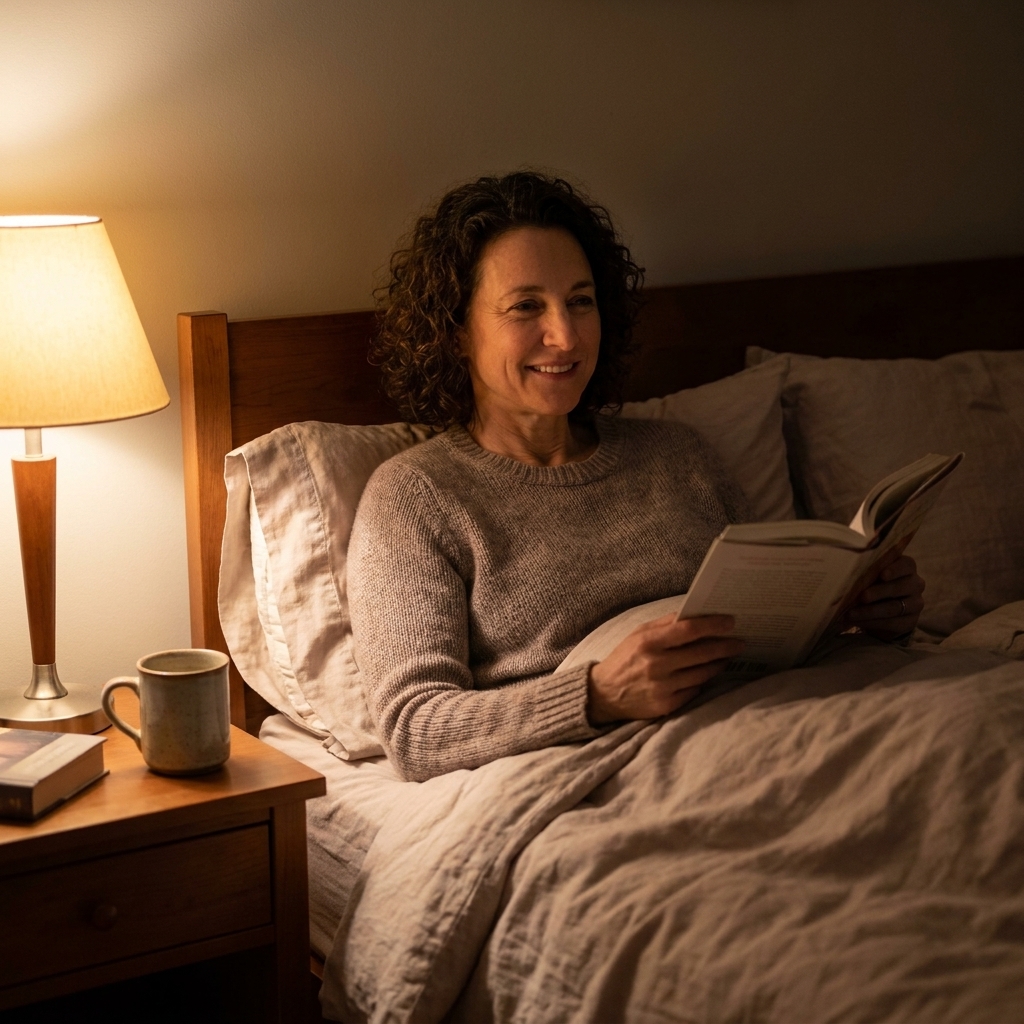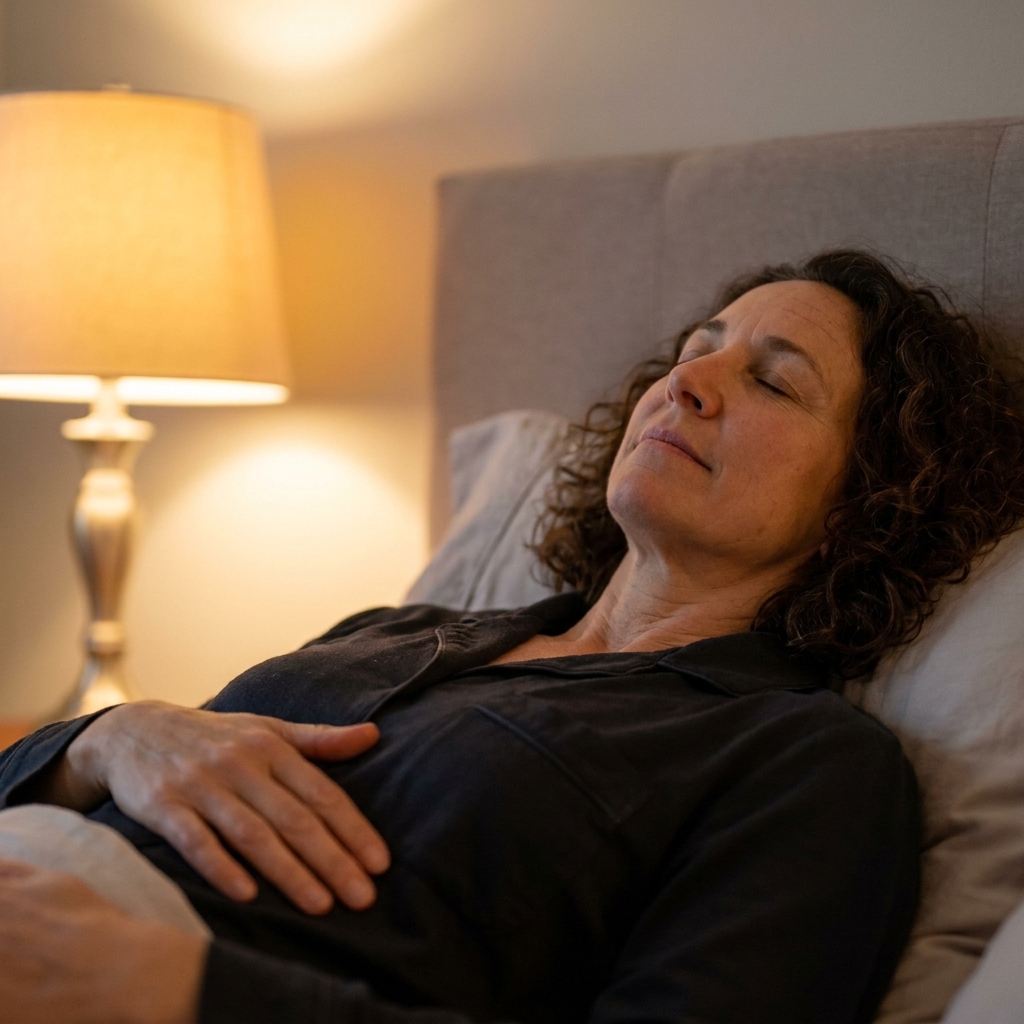
Some nights, your body’s technically in bed but your shoulders are still in tomorrow’s meeting. I get it. When I was deep in my corporate event planning era, I’d lie down exhausted and still feel like my nervous system was wearing heels.
Pre-bed stretching is one of the gentlest ways I know to tell your body, “Hey, we’re safe. We’re done for today.” This isn’t about flexibility or performance. It’s about releasing the little pockets of tension you collected all day so sleep can feel easier, softer, and more natural.
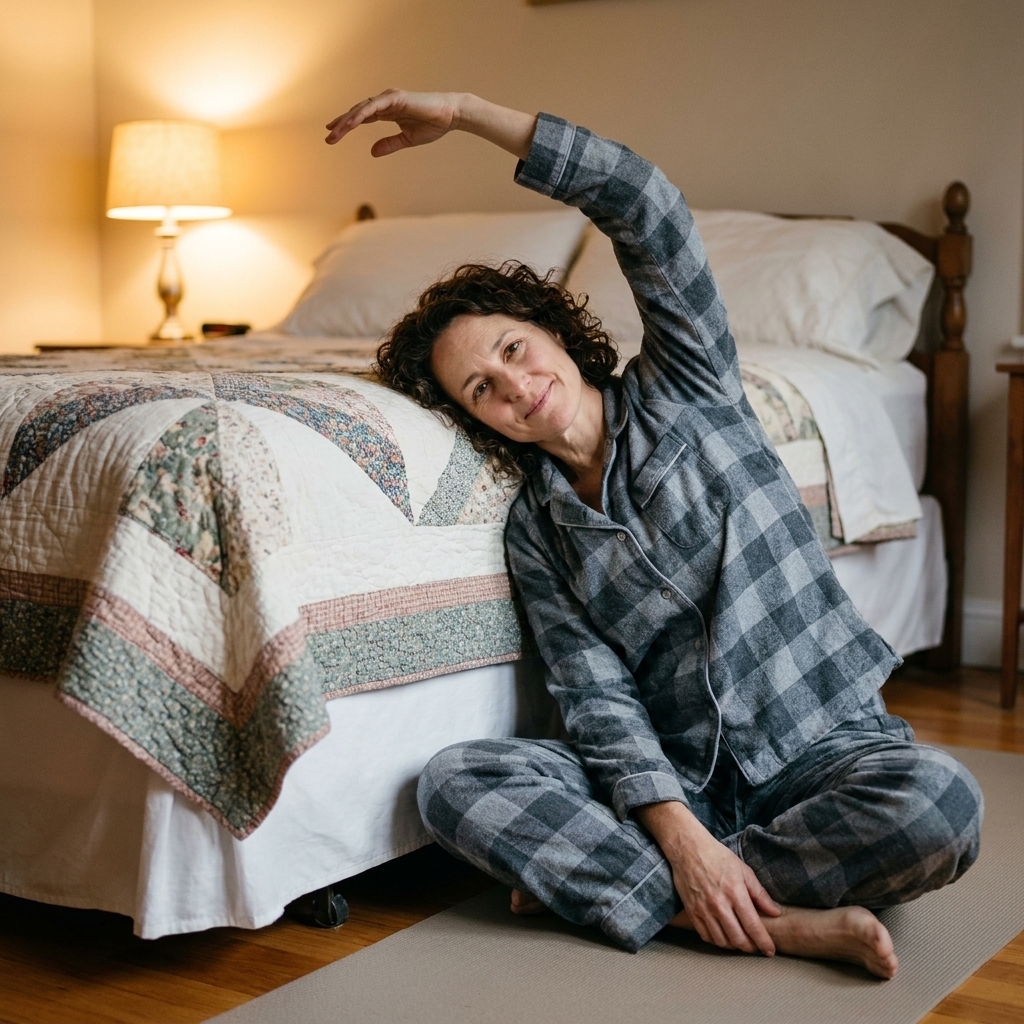
Why stretching helps you unwind
Nighttime stretching works because it supports the shift from “go mode” to “rest mode.” In simple terms, gentle movement can help your body downshift into a calmer state, especially when you pair it with slow breathing.
- It releases built-up muscle tension: Desk posture, driving, and stress love to camp out in your neck, hips, and low back.
- It signals closure to your brain: A repeatable routine becomes a cue that the day’s ending.
- It pairs well with slower breathing: Gentle holds give you a natural moment to practice longer exhales, which many people find settling before sleep.
- It reduces “bedtime fidget energy”: You know that feeling when you can’t get comfortable, you keep adjusting pillows, or you notice your jaw’s been clenched for hours? Gentle stretching can help you arrive in your body.
Think of it as turning down the volume, not forcing the power off.
Before you start
The goal is calm. If you do a bunch of intense stretching or deep, aggressive holds, it can feel energizing for some people. Here are the guidelines I use with beginners.
Your bedtime stretching rules
- Intensity: Aim for 3 to 5 out of 10. You should feel sensation, not pain.
- Breath: If you can’t breathe smoothly, you’re pushing too far.
- Time: 8 to 15 minutes is plenty. Consistency beats duration.
- Timing: Try it about 10 to 30 minutes before bed. Keep the lights low if you can. If you’ve just eaten a heavy meal, give yourself a little buffer so you’re not stretching on a too-full stomach.
- Heat: A warm shower earlier in the evening can make stretching feel amazing, but it’s optional.
- Support: Use pillows, a folded blanket, or a yoga block if you’ve got one. Cozy is the assignment.
Safety notes
Skip or modify anything that causes sharp pain, numbness, tingling, or joint pinching. If you’ve got an injury, you’re pregnant, or you have a medical condition that affects mobility, check with a clinician or qualified professional for personalized guidance. And just a gentle note: stretching can support better sleep, but it isn’t a cure for insomnia. If sleep has been consistently hard for weeks, you deserve real support, so consider talking with a healthcare professional.
The 8 to 15 minute routine
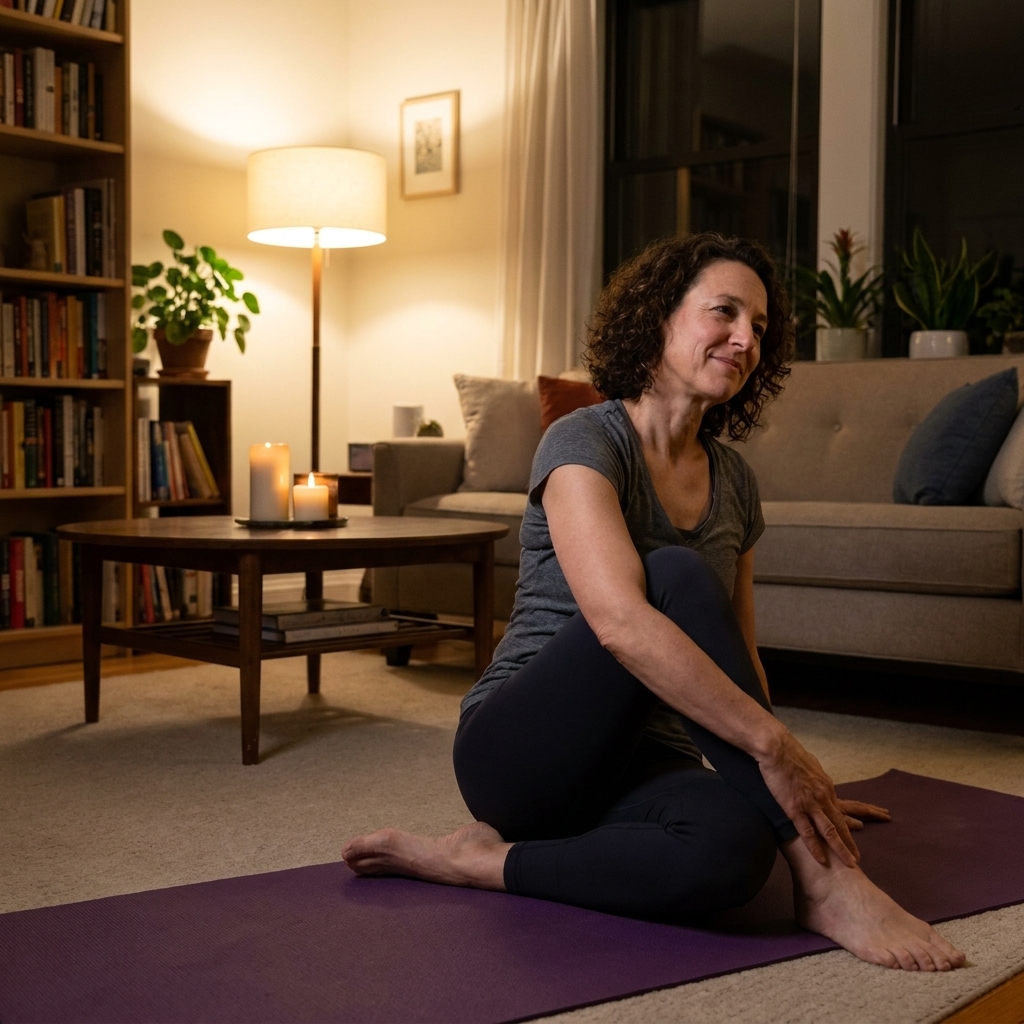
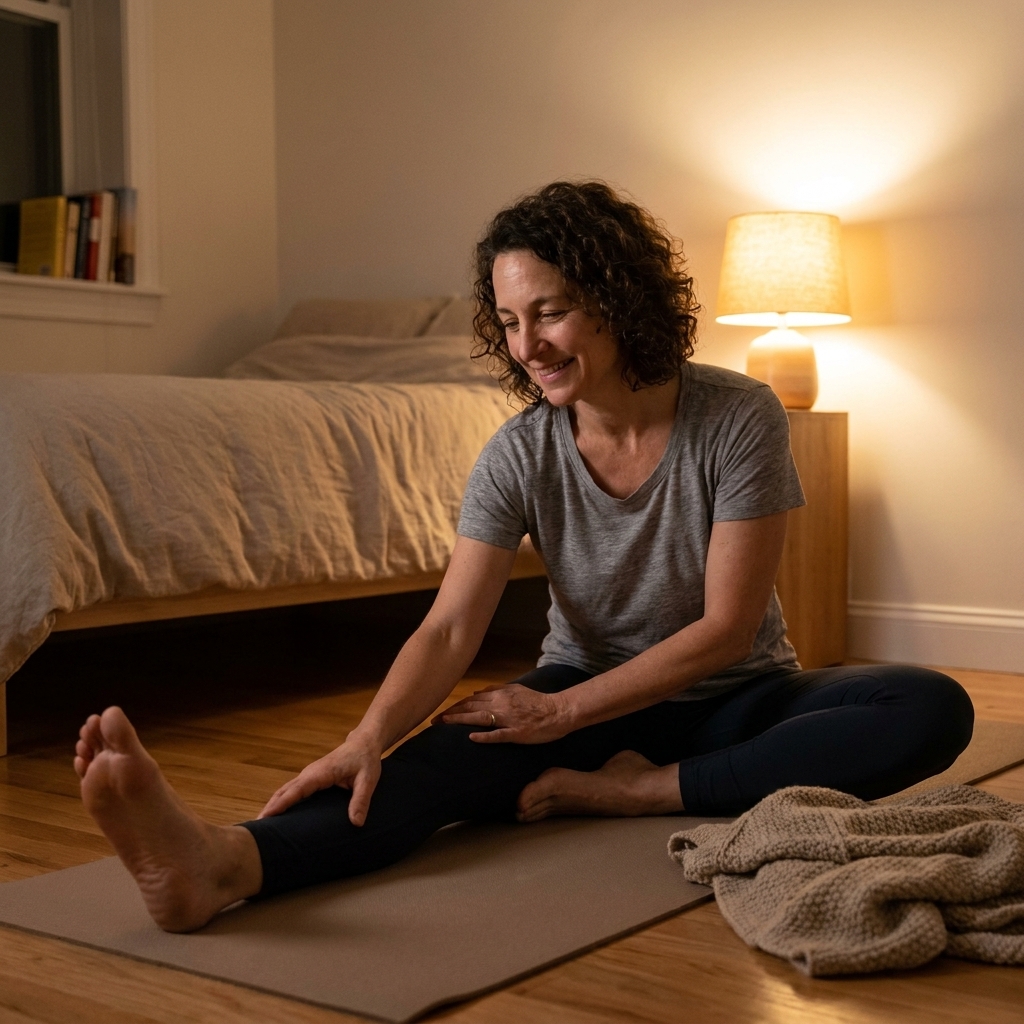
You can do this on a yoga mat, a carpet, or even on your bed if that’s what makes it happen. Move slowly, breathe gently, and treat every stretch like a soft landing.
1) Breathing reset (60 to 90 seconds)
How: Sit comfortably or lie on your back with knees bent. Place one hand on your belly and one on your chest. Inhale through your nose for 4 counts, exhale for 6 counts. Counts can be seconds or just a steady rhythm, whatever feels easiest.
If you get lightheaded: Try inhale for 3 to 4 counts and exhale for 4 to 5 counts, or simply breathe normally and focus on a softer exhale.
Why it helps: Longer exhales often help nudge your system toward a calmer rhythm.
2) Neck and shoulder melt (60 seconds)
How: Sit tall. Gently tilt your right ear toward your right shoulder. Keep shoulders relaxed. Take 3 to 4 slow breaths, then switch sides.
Optional: Add small shoulder rolls, slow and easy, like you’re smoothing wrinkles out of the day.
3) Child’s pose (60 to 90 seconds)
How: Kneel, sit hips back toward heels, and fold forward.
Knee comfort options: Place a pillow between thighs and calves, tuck a folded blanket behind your knees, or widen your knees for space.
Tip: Rest your forehead on stacked hands or a pillow to make it extra grounding.
4) Cat-cow (6 to 8 slow rounds)
How: On hands and knees, inhale as you gently arch your back (cow), exhale as you round (cat). Keep it smooth, not dramatic.
If wrists are sensitive: Come down to forearms, make fists instead of flat palms, or do a seated version by holding your knees and gently arching and rounding your spine.
Why it helps: It can release spine stiffness from sitting and helps your breath find an easy cadence.
5) Thread-the-needle (30 to 45 seconds per side)
How: From hands and knees, slide your right arm under your left and rest on your right shoulder and the side of your head. Breathe into the back of your shoulder. Switch sides.
Modify: If your shoulder feels cranky, reduce the depth or skip.
If wrists are sensitive: You can also do a gentle upper-back twist seated in a chair: hold the chair sides and rotate softly, then switch.
6) Figure-four hip stretch (60 seconds per side)
How: Lie on your back, knees bent. Cross right ankle over left thigh. Stay here or gently draw the left thigh toward you. Switch sides.
Modify: If your hips feel pinchy, keep the left foot down and just breathe, or place a pillow under your head so your neck stays relaxed.
Why it helps: Hips hold a lot of “just sitting here all day” tension. This is my personal favorite for that.
7) Supine twist (45 to 60 seconds per side)
How: Lie on your back. Hug knees in, then let them fall to the right while you look left. Keep shoulders heavy. Switch sides.
Tip: Place a pillow under the knees if your low back wants extra support.
8) Legs up the wall (optional, 2 to 4 minutes)
How: Sit beside a wall and swing legs up as you lie back. Knees can be softly bent. Arms relax by your sides.
Why it helps: Many people find this position deeply calming after a long day on their feet.
Skip if: It aggravates your back, you feel pressure in your head or eyes, inversions aren’t recommended for you, or it doesn’t fit your health situation.
9) Final rest (30 to 60 seconds)
How: Lie still. Let your jaw unclench. Let your tongue rest. Take 3 slow breaths and mentally say, “Done.”
Make it a nightly habit
If you’re thinking, “This sounds lovely, but will I actually do it?” You can. The trick is to make it frictionless.
- Attach it to something you already do: After you brush your teeth, you stretch. No debate.
- Keep a tiny setup: Leave a folded blanket or mat visible so your brain gets the cue.
- Use a minimum baseline: On tired nights, do just 2 minutes: child’s pose + twist.
- Choose a vibe: Low light, one lamp, and quiet. If music helps, keep it slow and non-energizing.
- Celebrate the win: You’re not training for the Stretch Olympics. You’re practicing care.
Common questions
Will stretching before bed make me more awake?
Gentle stretching usually helps people feel calmer, but intense stretching can feel energizing. Keep it slow, supported, and breath-led. If you notice you feel keyed up, shorten the routine and avoid anything intense like long, deep hamstring holds.
How long should I hold each stretch?
For pre-bed stretching, 30 to 60 seconds per position is a sweet spot for most beginners. Focus on smooth breathing and a “softening” feeling instead of chasing depth.
What if I’m not flexible?
Perfect. You don’t need flexibility to benefit. Use pillows, bend your knees, and choose the version of the stretch that feels kind to your body. Comfort’s the goal.
Can I do this in bed?
Absolutely. Figure-four, twists, and breathwork are especially bed-friendly. If your mattress is very soft, cat-cow may feel awkward, so feel free to skip that one.
What if I have tight hips or low back tension?
Try the figure-four stretch, a supported child’s pose, and a supine twist with a pillow under your knees. Go slowly and keep your breath easy. If pain persists or worsens, consider checking in with a physical therapist or clinician.
A simple bedtime script
If your brain loves to narrate your life right as you’re trying to sleep, this can help:
Inhale: I did enough today.
Exhale: I get to rest now.
You can repeat it for three breaths during your final rest. It’s small, but it lands.
Your next step
Tonight, pick just three: breathing reset, figure-four, and supine twist. Set a timer for 6 minutes. Then slide into bed like you’re arriving at a hotel you actually deserve.
Little by little, your body learns the pattern: stretch, soften, sleep.