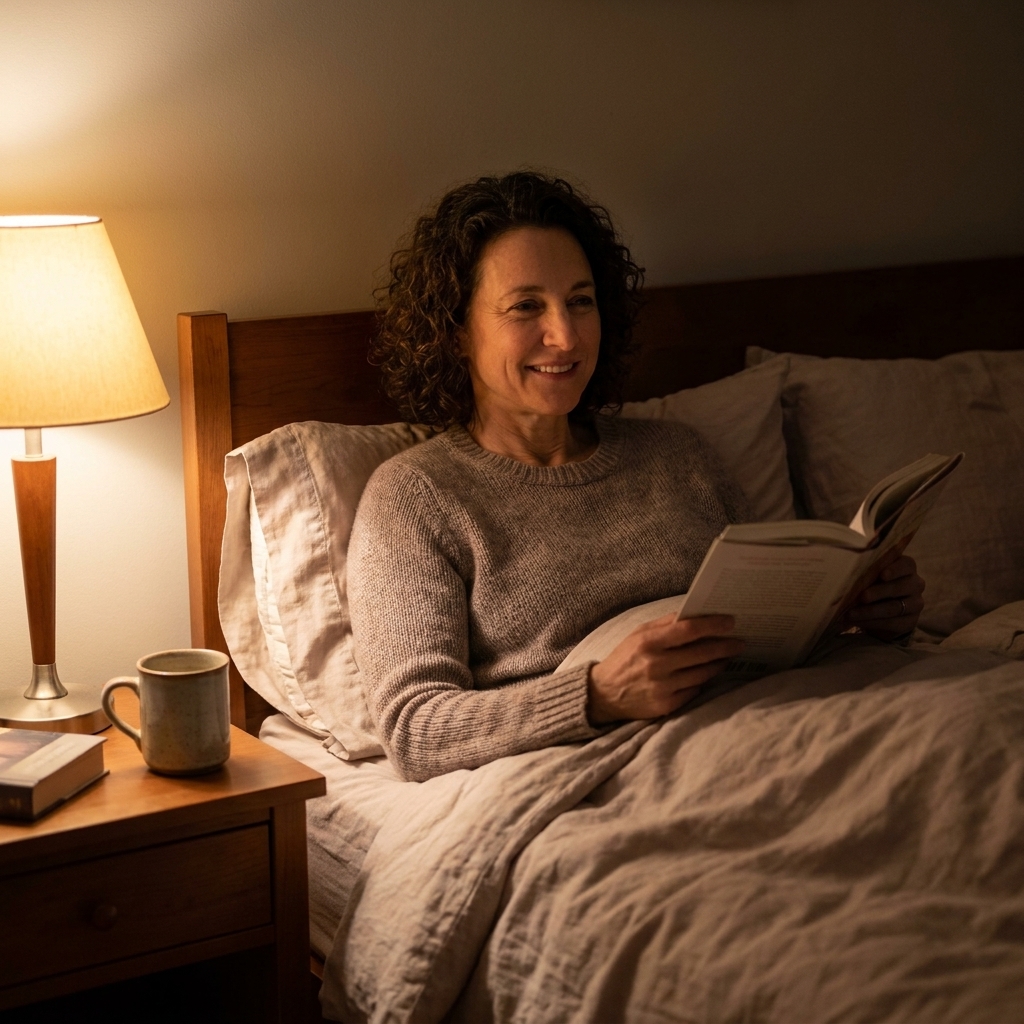
After years of high-stress event planning, my nights used to look like this: laptop balanced on a pillow, brain still scheduling tomorrow, and a random doom scroll that somehow felt “relaxing” until it absolutely didn’t. If you’ve ever climbed into bed exhausted but still wired, you’re not broken. You may just be missing a clear signal to your nervous system that the day’s over.
A solid wind-down routine isn’t a strict regimen. It’s a gentle sequence of cues that tells your brain, “We’re safe, we’re done, we can power down now.” Let’s build one that feels doable, cozy, and genuinely helpful.

What it actually does
Your body runs on rhythm. In the evening, you’re supporting your natural shift toward sleepiness by reducing stimulating inputs and increasing calming ones. Practically, that means fewer bright lights and alerts, and more warmth, quiet, and predictability.
Think of it like landing a plane. You don’t cut the engine midair. You descend gradually, with a consistent sequence, so your whole system can adjust.
- Consistency helps your brain anticipate sleep.
- Low stimulation reduces that “wired” feeling.
- Comfort cues help your nervous system move into rest mode.
Pick a simple runway
If you only take one thing from this article, let it be this: start earlier than you think you need to. Most of us try to go from full-speed life to instant sleep, and it’s a rough transition.
The easy structure
- T minus 90 to 60 minutes: start dimming and simplifying.
- T minus 30 minutes: near-bed calming activities.
- Lights out: a consistent final cue (same song, same phrase, same breathing pattern).
If 60 to 90 minutes feels unrealistic, start with 20 minutes. A tiny routine done consistently beats a perfect routine you resent.
Step 1: Dim the lights
Light is one of your strongest “time signals.” Bright overhead lighting late in the evening can delay that natural “sleepy” feeling by telling your brain it’s still daytime. I love a lamp-only rule after dinner when possible.
Try this tonight
- Turn off overhead lights and use table lamps instead.
- If you’ve got smart bulbs, switch to a warmer tone in the evening.
- Keep your bedroom as dim as you safely can.

Step 2: Set a screen boundary
Phones, tablets, and laptops can disrupt sleep in two main ways: they emit bright, blue-leaning light, and they feed your brain information that invites attention. For a lot of us, the bigger issue is the second part: alerts, endless content, and the little adrenaline drip of “just one more.” Even if you can fall asleep after scrolling, your sleep may be lighter or more fragmented.
Choose one boundary (not five)
- Option A: Screens off 60 minutes before bed.
- Option B: Screens off 30 minutes before bed, but lights dimmed earlier.
- Option C: Phone charges outside the bedroom.
- Option D: If you must use a screen, use night mode and keep brightness very low.
My favorite bridge habit is swapping the phone for a physical object that keeps your hands busy: a book, a journal, or even a simple puzzle book.
Step 3: Add soothing input
Wind-down works best when you replace the thing you’re removing. If you take away entertainment and notifications, add something comforting in its place.
Options that feel real
- Read a physical book (novel, essays, poetry, anything that isn’t stressful).
- Listen to something calming like a gentle playlist, ambient sounds, or a sleep story.
- Take a warm shower or bath if it relaxes you.
- Do a low-effort hobby like knitting, coloring, or setting up tomorrow’s coffee station.

Step 4: Do a mind sweep
If your brain spins at night, it’s usually trying to protect you by not forgetting something. Give it a place to put the information so it doesn’t have to rehearse it in bed.
The Mind Sweep (5 minutes)
- Open loop list: write unfinished tasks or worries as bullet points.
- Tomorrow list: pick 1 to 3 priorities for the next day.
- Release line: write one sentence like, “I can return to this tomorrow.”
Keep this notebook in the same spot every night. Consistency is calming.
Step 5: Gentle movement
This isn’t the time for intense stretching or “fix your posture” energy. Think soothing, slow, and easy. You’re inviting your muscles and nervous system to downshift.
Choose one
- Legs up the wall for 2 to 5 minutes (if it feels good for you).
- Child’s pose with slow breathing.
- Neck and shoulder rolls while seated.
- A short walk after dinner if it helps you settle.
If movement makes you feel more awake, skip it. Your routine should be personal, not virtuous.
Step 6: Set up your room
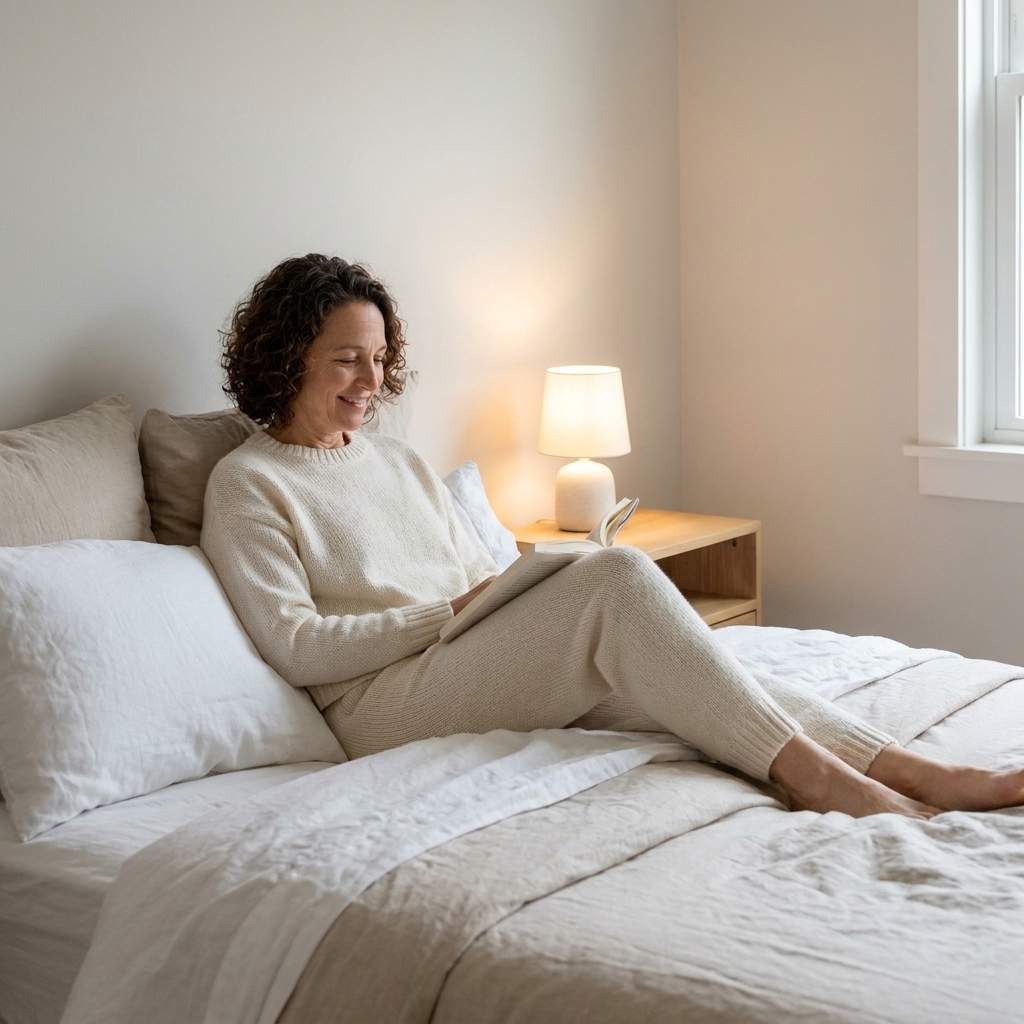
Your brain loves associations. If your bed is where you work, scroll, argue, snack, and pay bills, it gets confusing. You’re aiming for one main message: rest lives here. And if you can’t control everything about your space, that’s OK. A few small cues still count.
Small upgrades, big payoff
- Cooler temperature: many people sleep best in a slightly cool room, often around 60 to 67°F (15.5 to 19.5°C), but comfort matters most.
- Darkness: consider blackout curtains or a comfortable eye mask.
- Quiet: a fan or white noise can help if sound wakes you.
- Clutter reset: a 2-minute tidy so your eyes can relax.
Two sleep helpers people forget
Caffeine and alcohol timing
If your nights feel restless, take a look at what’s happening earlier in the day. Caffeine can linger for hours, so try setting a personal cutoff that works for you (many people do early afternoon). And while alcohol can make you feel drowsy at first, it can also lead to lighter, more fragmented sleep later in the night.
Keep your wake time steady
A consistent wake time is often just as important as a consistent bedtime. If your mornings are all over the place, your body has a harder time building a reliable sleep rhythm at night.
A routine you can copy
Here’s a realistic example that doesn’t require a spa budget or a personality transplant.
60 minutes before bed
- Dim lights, switch to lamp lighting
- Set phone on charge (ideally away from the bed)
- Make a caffeine-free tea or sip water
30 minutes before bed
- Quick mind sweep list
- Skincare or warm shower
- Read a physical book or listen to calm audio
5 minutes before lights out
- Two minutes of slow breathing
- One gratitude note or a simple “what went well” thought
- Lights out at roughly the same time
Reminder: you’re not trying to win sleep. You’re practicing a set of cues that help sleep find you.
Troubleshooting
“I get a second wind at night.”
This is often a sign that your days are packed and nighttime feels like your only “me time.” Try building a tiny joy moment earlier in the day, even 10 minutes after work, so bedtime doesn’t carry the pressure of being your only relief.
“I still wake up thinking about everything.”
Keep a notepad by the bed. If a thought shows up, write one line and tell yourself you handled it. Then return to your breath or a calming audio track.
“Reading makes me sleepy, but I fall asleep with the lights on.”
Perfect. Set a gentle timer: read for 10 pages or 15 minutes, then lights out. The goal is to make the transition predictable.
“My partner’s habits are different.”
Try shared cues where you can (dimming lights, quieter conversation), and separate cues where you need (eye mask, white noise, your own reading light).
“I wake up at 3 a.m.”
First, try not to negotiate with the clock. Keep lights low, avoid scrolling, and skip clock-checking if you can. If you’re awake for what feels like 20 minutes or more, get up and do something quiet and boring in dim light (a few pages of a calm book, a simple stretch, a sip of water), then return to bed when you feel sleepy again.
When to get extra support
If you’ve got persistent insomnia, loud snoring, breathing pauses during sleep, or daytime sleepiness that affects safety or mood, consider talking with a healthcare professional or a sleep specialist. A wind-down routine is powerful, but you deserve deeper support if something medical is in the way.
Your tiny starting point
If you’re overwhelmed, start here for the next seven nights:
- Dim the lights 30 minutes before bed.
- Put the phone on charge out of reach.
- Read a physical book for 10 minutes.
That’s it. Small, repeatable, and genuinely calming. And when you notice even one slightly easier night, let that count. Your nervous system is learning a new language, and you’re teaching it with kindness.