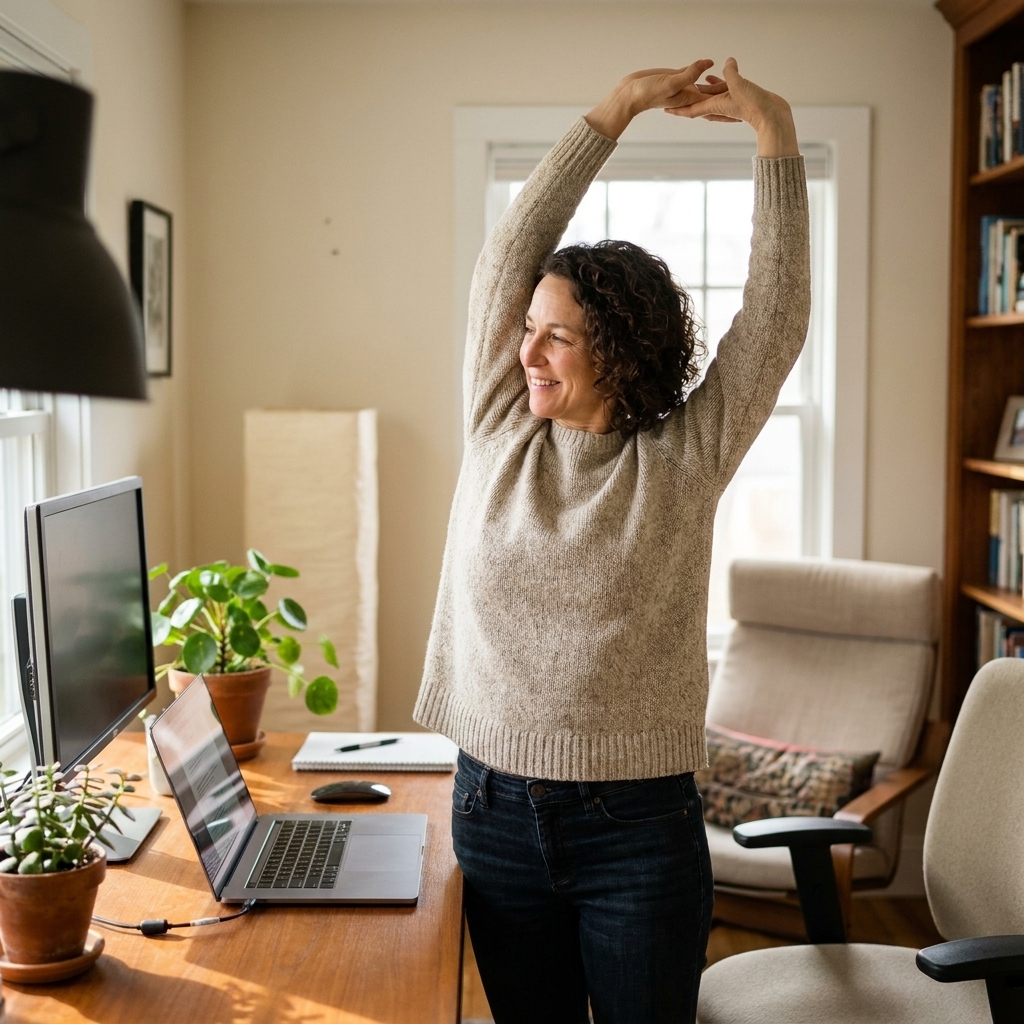
If you have ever started a workout with the energy of “I have to pay for what I ate” or “I need to fix myself,” you are not alone. I lived there for years. Back when I was a corporate event planner, I treated exercise like an overdue invoice. I would squeeze in punishing workouts between deadlines, then wonder why I dreaded moving my body at all.
Here is the good news. You can rebuild your relationship with movement. You can shift from punishment to pleasure without pretending discipline does not matter. You just start leading with kindness, curiosity, and a little mental rewiring.

What punishment workouts look like
Punishment workouts are not defined by the activity. They are defined by the story behind the activity.
- The guilt story: “I have to burn off last night.”
- The worthiness story: “I can relax only after I earn it.”
- The fear story: “If I stop, everything will fall apart.”
- The comparison story: “I should be doing what they do.”
Even “healthy” habits can feel heavy when they are fueled by shame. And for many people, shame is a lousy long-term motivator. It can spike you into action, then drain you into avoidance.
Movement as care
Joyful movement is still movement. It counts. It supports strength, mobility, heart health, and mood. The difference is that you are not trying to correct your body. You are trying to care for it.
Try this reframe
“I move my body to feel more alive, not to make myself smaller.”
If that sentence feels edgy or emotional, that is information. It means you are touching a tender spot. Go gently.
Three quick reframes
- From: “I have to work out.” To: “I get to support my energy today.”
- From: “No excuses.” To: “No abandonment.” (Meaning: I do not ditch myself when it is hard.)
- From: “Go hard or go home.” To: “Go honest and go home proud.”
A 5-minute journal
Let’s make this practical. Journaling can be powerful because it slows the spiral. It moves your thoughts from “truth” in your head to words you can examine, soften, and update.
The Guilt to Grace journal
Set a timer for five minutes. Write quickly. No editing.
- What am I telling myself I should do today?
- What am I afraid will happen if I do not do it?
- Where did I learn that movement has to look like this?
- What would loving support look like instead?
- One tiny movement choice that honors my body today is:
The last line matters most. Joyful movement grows through small, believable promises you keep.

Choose movement by feel
When people tell me they do not enjoy exercise, I usually hear: they have not been given permission to choose. Joyful movement starts with asking a different question.
Ask this first
“What sensation do I want more of today?”
- Calm: restorative yoga, stretching, slow walking, an easy bike ride
- Power: strength training with longer rests, hiking, rowing, Pilates
- Release: dancing in your living room, a jog with no pace goals, boxing combos for fun
- Connection: a class with a friend, a neighborhood walk-and-talk, recreational sports
The two yeses rule
If you are rebuilding trust with your body, try choosing movement that earns two yeses:
- Yes, this feels doable.
- Yes, this feels kind.
Some days your kind choice is a sweaty workout. Some days it is mobility on the floor while your dog watches like a confused lifeguard. Both are real wins.
What counts: a menu
One of the fastest ways to drop workout guilt is to widen your definition of success. Here is a menu you can pick from without “failing” the day.
Pick one from each
- Comfort (2 to 10 minutes): neck rolls, gentle cat-cow, legs up the wall, breathwork plus stretching
- Strength (5 to 20 minutes): bodyweight squats, wall push-ups, resistance band rows, light dumbbell circuit
- Joy (1 song minimum): dance, hula hoop, bouncing walk, playful shadowboxing
- Fresh air (any time): walk to get a coffee, take a phone call outside, wander a local park
Your only job is to leave the session feeling more like yourself, not less.

Break all or nothing
Punishment thrives on extremes. Joy thrives on consistency that fits your real life.
Trade outcome for experience
- Outcome goal: “Burn 400 calories.”
- Experience goal: “Finish feeling energized, not depleted.”
- Outcome goal: “Work out 6 days a week.”
- Experience goal: “Move 3 days, then add a bonus day if my body wants it.”
The 70 percent promise
Make a commitment you can keep even on a messy day. Something like:
- “I will do 10 minutes of movement after lunch.”
- “If I want more, I can keep going. If not, I stop without guilt.”
This is how trust is rebuilt: not with intensity, but with follow-through.
How to build progress gently
If you want structure without sliding into punishment, use a slow-and-steady progression. Pick one small lever and turn it up gradually:
- Time: add 5 minutes per week to one session
- Strength: add one set, or add 1 to 2 reps per exercise
- Frequency: add one extra day only after your baseline feels easy to keep
The goal is capacity, not payback.
When guilt shows up
Even with all the reframes, guilt can still pop in like an uninvited party guest. Here is a quick script you can borrow.
The 30-second reset
- Name it: “This is guilt. This is old programming.”
- Soften: relax your jaw, drop your shoulders, exhale longer than you inhale if it feels comfortable. If it makes you dizzy or anxious, return to normal breathing.
- Choose: “I am here for care. I can adjust the intensity.”
Then ask: “What would feel supportive right now?” Maybe you slow down. Maybe you take water. Maybe you stop. Stopping is not failure. Sometimes it is wisdom.
Identity prompts
Identity is the secret sauce. When you stop seeing yourself as someone who “needs to work out,” and start seeing yourself as someone who “moves to feel good,” your habits get lighter.
Use weekly
- “The kind of mover I want to be is someone who…”
- “When I move in a way that feels good, I notice…”
- “A sign I am overdoing it is…”
- “A sign I am caring for myself is…”
- “This week, joy in movement could look like…”
Keep a tiny evidence list
After you move, write one line:
- “I kept my promise.”
- “I listened to my body.”
- “I felt calmer after.”
This kind of reflection can help your brain start linking movement with safety and reward, not debt and punishment.
A gentle 7-day reset
If you want a simple starting plan, try this one-week experiment. The goal is to feel what it is like to move without earning your right to exist.
- Day 1: 10-minute walk, no pace goals
- Day 2: 5-minute stretch plus one song dance break
- Day 3: Strength snack: 2 rounds of 8 squats, 8 wall push-ups, 20-second plank
- Day 4: Restorative movement: legs up the wall for 5 minutes
- Day 5: Choose-your-own joy: bike, swim, class, or playful movement at home
- Day 6: Nature time: walk somewhere pretty and let that be the workout
- Day 7: Reflection journaling: “What felt best this week and why?”
If you miss a day, you did not fail. You are practicing returning.
Safety note
If you are dealing with pain, injury, dizziness, pregnancy or postpartum changes, or a chronic condition, consider checking in with a clinician or physical therapist before starting a new routine. During movement, sharp pain, numbness, or feeling faint is a stop signal, not a mindset issue.
FAQ
Can joyful movement still help me get stronger or change my body?
Yes. Strength, endurance, and mobility can improve with consistent movement. Body composition may also change over time, especially with enough training stimulus, adequate protein, and recovery. The biggest difference here is motivation: you are building from respect, not shame, which is often more sustainable.
What if I only enjoy gentle movement?
Then gentle movement is your lane. Walking, yoga, Pilates, mobility work, and light strength are incredibly beneficial. You can also build intensity slowly if you ever want to, but you do not need to force it to be “real.”
How do I stop feeling guilty when I rest?
Start by naming rest as part of training, part of recovery, and part of being human. Try journaling: “Rest helps me because…” and list three benefits, even if they are simple like “my mood is better.”
What if I have a history of disordered exercise or body image struggles?
You deserve extra support. A therapist and a registered dietitian who understand disordered eating and compulsive exercise can be game-changing. Joyful movement should feel safe. If it does not, you do not have to figure it out alone.
Your new definition
Let’s end with a definition you can borrow:
Success is moving in a way that leaves you feeling supported, not punished.
If all you do this week is notice the guilt story and choose one kinder sentence, that is a real shift. That is you building a healthier relationship with your body, one small win at a time.