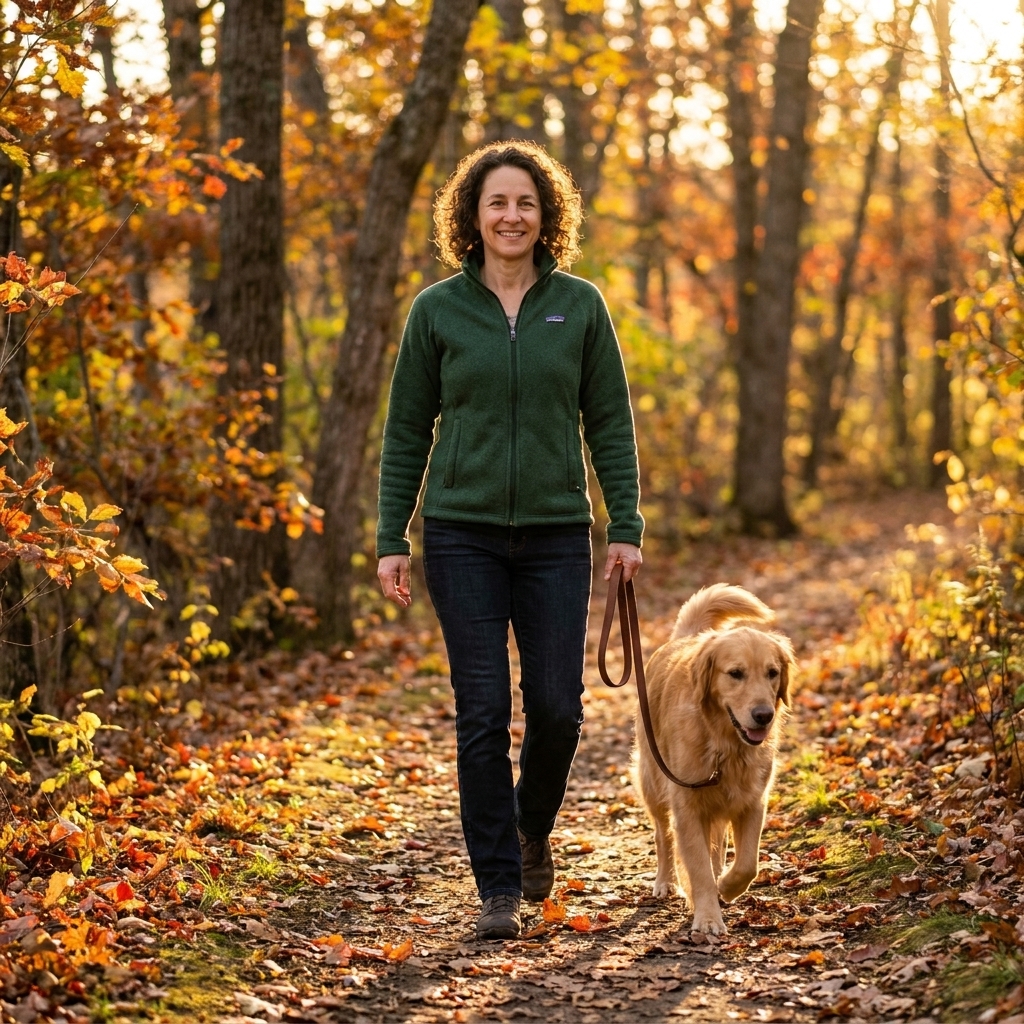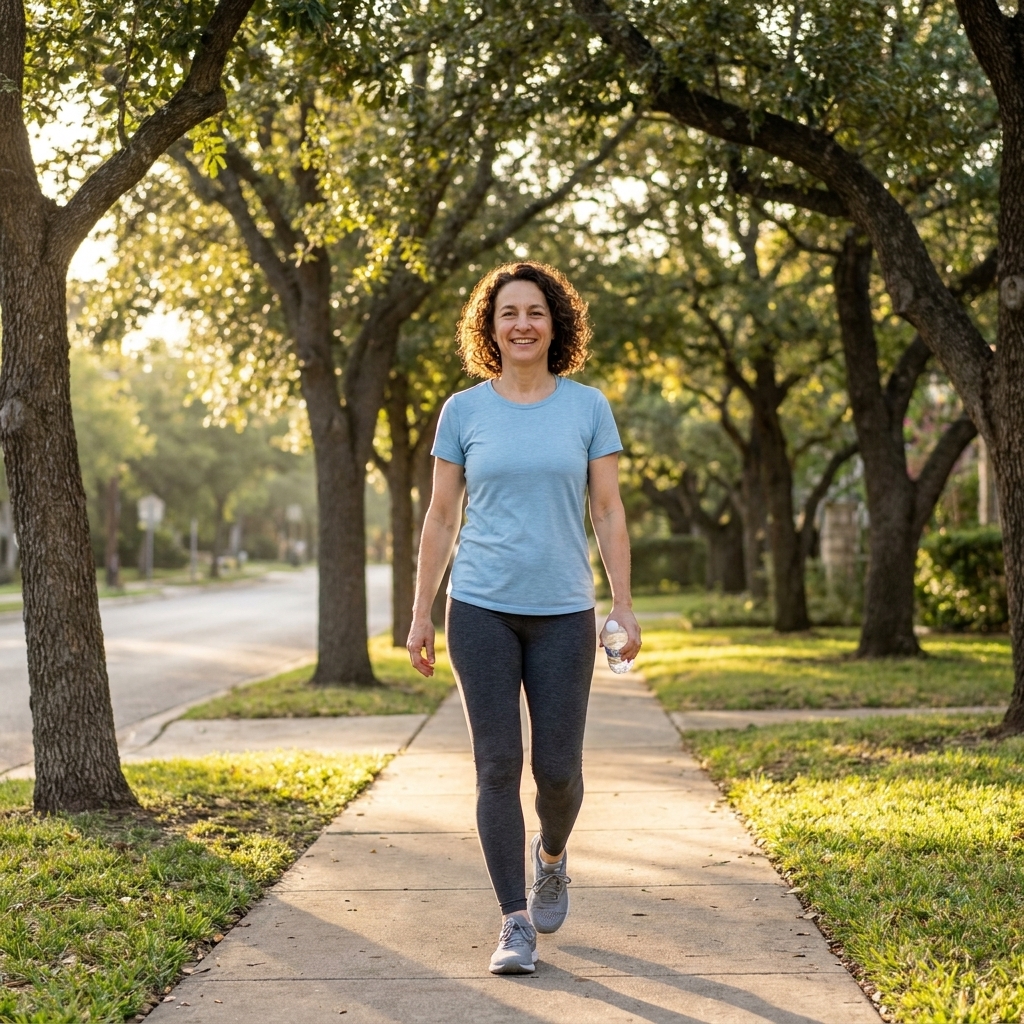
When my life was all color-coded calendars and sprinting from one “urgent” thing to the next, I used to treat walks like errands. Get steps. Check the box. Keep moving. But the moment I started slowing down on purpose, I realized something sweet: nature can feel like a free reset for your nervous system, and your body already knows how to plug into it.
Mindful walking is not about hiking faster, burning more calories, or achieving a perfect zen state. It is simply choosing to be here for a few minutes. Below are five ways to turn an ordinary park loop into a calming little ritual , even if you only have ten minutes between meetings.
Before you start: set up for calm
Think of this like setting the mood, not setting rules. A few tiny tweaks make it easier to actually feel the walk.
- Choose “good enough” nature. A tree-lined street, a pocket park, a creek path, even a backyard counts.
- Put your phone on Do Not Disturb. If you want, keep it for safety or a photo, but give your attention a little break.
- Pick a short time container. Try 8, 12, or 20 minutes. Your brain often relaxes when it knows there is an end.
- Dress for comfort. If your shoes pinch or your waistband is annoying, mindfulness becomes a grit-your-teeth exercise.
A quick safety and access note: Stay aware of your surroundings, especially near roads, bikes, or uneven terrain. If walking is not accessible today, you can do the same practices seated outdoors (or by an open window). If any breath pattern makes you dizzy or tense, return to your natural breathing.
1) Match breath to steps
This is my favorite “quick calm” switch because it gives your mind something simple to do. You are basically creating a gentle metronome that steadies your body.
How to do it
- Walk at a comfortable pace.
- Inhale for 3 or 4 steps.
- Exhale for 3 or 4 steps.
- Repeat for one minute, then let it be natural again.
If you want an even more soothing option, try a slightly longer exhale: inhale for 3 steps, exhale for 4 or 5. Many breathwork teachers suggest longer exhales because they may help your body shift toward “we are safe” mode.
Make it kinder: If you get winded, shorten the count. The goal is ease, not endurance.
2) Try a 5-4-3-2-1 senses check
You may have heard of this grounding practice for anxiety. In nature, it becomes surprisingly beautiful because there is so much to notice that is not a screen.
How to do it
- 5 things you can see: a leaf vein, cloud edges, a bird hopping, sunlight on bark, ripples on water.
- 4 things you can feel: breeze on your cheeks, sock seam, warmth on your shoulders, the spring of the ground.
- 3 things you can hear: wind, your footsteps, insects. (Or pick any three sounds you notice.)
- 2 things you can smell: grass, damp earth. (Or whatever is true today.)
- 1 thing you can taste: mint from gum, coffee lingering, clean air.
This takes about two to three minutes and gently escorts your attention out of “what if” thoughts and into your actual environment.
3) Use soft eyes
When we are stressed, we tend to visually tunnel. We stare at the path, our to-do list, or the ground five feet ahead. “Soft eyes” is a simple way to invite spaciousness back in.
How to do it
- Relax your gaze as if you are looking through the scene, not at one object.
- Let your peripheral vision wake up. Notice shapes and movement at the edges.
- Keep walking slowly for 60 to 90 seconds.
It sounds almost too easy, but widening your visual field can feel like letting your shoulders drop without even trying. If you get overstimulated in busy places, this may feel especially supportive.
4) Do a listening meditation
If your brain is loud, borrow the soundscape. Nature gives you layers: near sounds, far sounds, steady sounds, surprise sounds. Listening on purpose can be deeply settling.
How to do it
- Start with the farthest sound you can detect (maybe distant traffic or a train).
- Move to mid-range sounds (voices on a nearby trail, a dog’s tags, water in a fountain).
- Finish with the closest sound (your breath, your steps, fabric moving).
When thoughts pop in, you are not “failing.” Just label it softly as thinking and return to sound. You are practicing coming back, and that is the whole skill.

5) Choose one intention
High-achievers (past me included) love to turn wellness into a performance. Mindful walking works best when it is small, specific, and doable on your messiest day.
Pick one intention for today
- “I walk to settle.” (You are not solving everything, you are helping your body settle.)
- “I walk to notice beauty.” (Collect little moments: a wildflower, a funny cloud.)
- “I walk to be kind to my mind.” (Less inner commentary, more gentle returning.)
- “I walk to come home to myself.” (Feel your feet, feel your breath, feel your life.)
Then pick an anchor phrase you repeat quietly with your steps, like “here” on the inhale and “now” on the exhale, or “soften” and “release.” Keep it light. You are not trying to force calm. You are giving it a place to land.
A simple 10-minute walk
If decision fatigue is real today, borrow this little structure.
- Minute 1: Slow down and match breath to 3 to 4 steps.
- Minutes 2 to 4: 5-4-3-2-1 senses check.
- Minutes 5 to 7: Soft eyes and wide view.
- Minutes 8 to 9: Listening meditation, far to near.
- Minute 10: Choose one intention and repeat your anchor phrase.
When you finish, pause for one full breath before you reach for your phone or your next task. That tiny pause is often where the calm “sticks.”
Mindful walking FAQs
Does mindful walking have to be in the woods?
Not at all. Any outdoor space with even a hint of nature counts. Trees on a street, a community garden, a trail around a soccer field. Your senses still get the message.
What if I cannot stop thinking?
Totally normal. The practice is not “no thoughts.” The practice is noticing you drifted, then gently returning to breath, steps, or sounds. That return is the win.
Is it okay to walk with a friend?
Yes. If you want it to be mindful, try a “quiet first five minutes” together, then chat after. Or agree to pause occasionally and name one beautiful thing you noticed.
How often should I do this?
Even once can help. If you want a rhythm, aim for 10 minutes, three times a week. Consistency beats intensity every time.
A gentle reminder
You do not need perfect weather, a perfect trail, or a perfect mindset. You just need a body that can take a few steps and a willingness to notice what is already here.
If you try one of these today, let it be small. Let it be easy. Let it count.