There is a certain kind of dinner party that feeds people in more ways than one. The kind where everyone arrives a little tense from the week, and leaves softer. More seen. More themselves.
That’s what I mean by a mindful dinner party. Not silent, not strict, not fancy. Just intentionally paced, thoughtfully flavored, and gently hosted so your guests can actually land in the moment.

Below is my go-to blueprint, built for real life. You can make it as simple or as elevated as you want. The goal is always the same: a relaxing atmosphere, wholesome food, and conversation that feels nourishing instead of performative.
Start with an intention
Before you plan a menu or light a candle, choose one sentence that guides the night. It keeps you grounded when the to-do list gets loud.
- “Everyone feels welcome exactly as they are.”
- “We eat slowly and savor.”
- “Connection over perfection.”
- “Cozy, calm, and easy.”
If you want to share it, you can weave it into a toast. If not, keep it as your private north star. Either way, it changes how you host.
Set the atmosphere
Mindful hosting isn’t about “vibes” in a vague way. It’s about creating cues that can help people feel more settled and at ease. Think: softer lighting, fewer decisions, less competing noise.
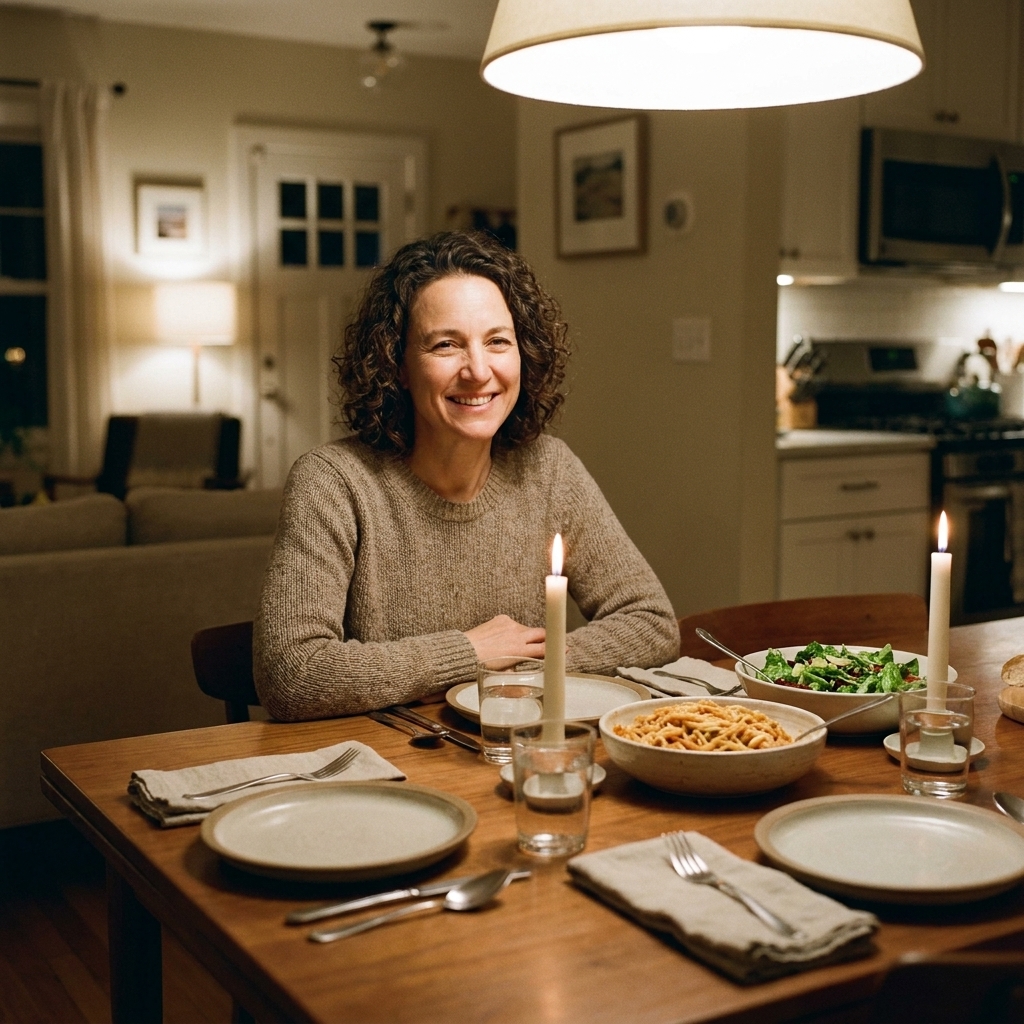
Lighting: warm and gentle
Overhead lights can feel like a conference room. Swap them for lamps, string lights, or a few candles. If you only do one thing, do this one.
Sound: a quiet backdrop
Choose a playlist that supports conversation instead of stealing it. Instrumentals, mellow jazz, acoustic, lo-fi, bossa nova, or nature sounds all work. Keep it low enough that nobody has to lean in and shout.
Scent: keep it subtle
Strong fragrances can overwhelm, especially for sensitive guests. If you want scent, go natural and light: a simmer pot (citrus peel, cinnamon stick), fresh herbs on the table, or a simple unscented candle if anyone’s sensitive.
Touch: comfort counts
Little things read as care: cloth napkins, a cozy throw on the couch, chairs that aren’t painful after 30 minutes. If seating is mixed, try to avoid anyone getting stuck on the hard chair all night.
Visual calm: clear a few surfaces
You don’t need a spotless home. You just need a little breathing room. I do a 10-minute reset: clear the entryway, clear the dining table (obviously), and put one small “drop zone” basket somewhere for keys and phones.

Plan a grounding menu
Wholesome doesn’t mean bland. And mindful doesn’t mean restrictive. I like menus that feel balanced, colorful, and forgiving if something runs a few minutes late.
My menu formula
- One cozy anchor: soup, stew, roasted chicken, baked salmon, lentil ragu, or a big sheet-pan meal
- Two vibrant sides: something crunchy and fresh (salad, slaw) plus something warm (roasted veggies, grain pilaf)
- One sauce or topping: chimichurri, tahini drizzle, herby yogurt, salsa verde, toasted seeds, or a quick gremolata
- One simple dessert: fruit-forward, not fussy (berries and whipped coconut cream, baked pears, dark chocolate squares, or olive oil cake)
Build in choice without stress
Mindful hosting includes accommodating common needs in a way that feels normal. A few easy moves:
- Serve dressings and spicy elements on the side.
- Include at least one solid protein option and one hearty plant-based option if your group is mixed.
- Offer a gluten-free “base” like potatoes, rice, polenta, or quinoa so nobody’s stuck eating lettuce all night.
Ask about allergies
If you can, ask guests ahead of time about allergies and strong dislikes (nuts, shellfish, dairy, gluten are common). It’s also helpful to mention what’s in a dish when you set it down, especially for anything with nuts or hidden heat.
Keep it sleep-friendly
If your goal is “deeply relaxing,” go easy on the classic sleep disruptors for many people: very heavy fried foods, lots of sugar late at night, or endless cocktails. You can absolutely serve them, just do it thoughtfully. A slower pace and a balanced plate tends to feel better for most people.
Serve for presence
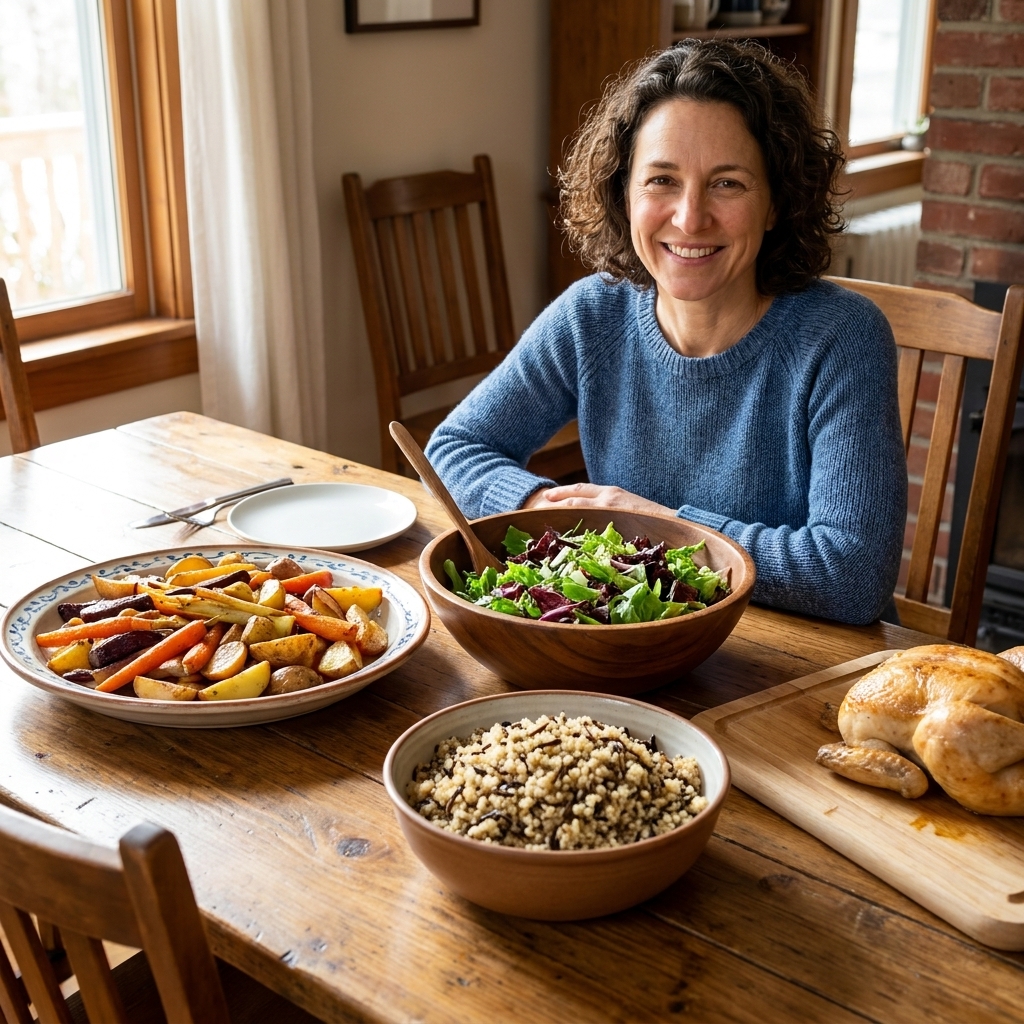
The way you serve matters as much as what you serve. The goal is to reduce rush and help everyone savor.
Try family-style
- Pre-portion tricky foods: salads, saucy dishes, or anything messy can go in medium bowls rather than one huge one.
- Put the “extras” in one place: salt, pepper, chili flakes, lemon wedges, herbs. Guests can customize without interrupting the flow.
- Keep water on the table: a pitcher or carafe lowers the “host up every five minutes” energy.
Create a gentle start
Instead of launching straight into dinner the second people arrive, offer a small landing snack. Think olives, sliced citrus, nuts, hummus and veggies, or a simple crudité. It gives late arrivals time to breathe and prevents the hangry spiral.
Slow the pace on purpose
In my event-planner era, I moved people through a night like it was a schedule. Now I do the opposite: fewer courses, more space. Build in a little pause after the main meal before dessert. That’s where the best conversations tend to happen.
Offer supportive drinks
Mindful drinks aren’t “no fun allowed.” They’re “everyone feels good tomorrow.” I love a simple bar with options that feel celebratory either way.
A mini drink menu
- Signature mocktail: sparkling water + citrus + muddled herbs (mint, basil, rosemary) + a splash of juice
- Something warm: herbal tea (peppermint, chamomile, ginger) for after dinner
- If serving alcohol: one or two options max, plus plenty of water and food alongside

Keep conversation easy
The secret to “deep” conversation isn’t a set of intense questions. It’s psychological safety. People open up when they feel unjudged and unhurried.
Set the tone
- Ask open questions, then actually pause for the answer.
- Model warmth and curiosity, not debate energy.
- Keep the spotlight moving so one person doesn’t carry the whole table.
My favorite prompts
These are light, but surprisingly connecting:
- “What’s something that made you smile this week?”
- “What’s a meal you loved growing up?”
- “What’s one small thing you’re looking forward to?”
- “What’s a place that makes you feel calm?”
- “What’s a tiny habit that’s been helping lately?”
A mindful moment that won’t feel weird
If your group is open to it, try a 10-second pause before eating. You can say something simple like:
“Before we dig in, let’s take one breath and arrive. I’m really grateful you’re here.”
That’s it. No long ritual required.
Prep with ease
Mindful hosting starts hours before guests arrive. The goal is for you to feel resourced, too.
Choose a forgiving menu
- One main dish that can rest without suffering (roasts, stews, baked pastas, sheet-pan meals).
- At least one thing you can make entirely ahead (dressing, dessert, grains).
- One “cheat” item you buy, not make (good bread, dessert, fancy olives).
My simple timeline
- The day before: grocery shop, tidy the bathroom, prep sauces and dressings, set the table if possible
- Morning of: chop vegetables, marinate protein, make dessert, chill drinks
- One hour before: change into comfortable clothes, set lighting, start music, put out the landing snack
- Ten minutes before: one deep breath, quick mirror check, and a reminder that this is about connection
Let your guests help
If someone asks what they can bring, give them something specific and helpful:
- “Would you bring sparkling water and citrus?”
- “Could you grab a simple bouquet of flowers?”
- “Dessert would be amazing if you’re up for it.”
People genuinely like contributing. You’re not burdening them, you’re including them.
Make it welcoming
You don’t need a magazine-worthy space. You just need a few cues that say: you can exhale here.
- Entryway: a place to set a bag, a hook for coats, a clear path
- Bathroom: soap that actually smells nice, a clean hand towel, extra toilet paper visible
- Table: one simple centerpiece (fruit bowl, herbs in a jar, a small vase) so sightlines stay open
A quick accessibility check
Two small things that make a big difference: keep walkways clear for anyone with mobility needs, and keep music low enough for easy hearing so nobody has to strain.

End gently
One of the most overlooked parts of hosting is the ending. A mindful close keeps the energy warm instead of abrupt.
Try a winding-down dessert
Think tea, fruit, and something small and sweet. It signals: we’re winding down now.
Offer a tiny takeaway
This can be as simple as sending guests home with leftover cookies, a little container of soup, or a few sprigs of herbs. It’s not about being extra. It’s about extending care.
Close with gratitude, not cleanup panic
When the last guest leaves, resist the urge to sprint into full reset mode. Put leftovers away, load the dishwasher, and leave the rest for tomorrow. Future-you can handle it. Present-you deserves a cup of tea and a quiet moment.
One food-safety note
If you’ve got perishable leftovers, get them into the fridge within about 2 hours (sooner if it’s a very warm room). Your next-day self will thank you.
Quick checklist
- Pick a one-sentence intention
- Warm lighting, low music, subtle scent
- Balanced menu with one cozy anchor + vibrant sides
- Landing snack ready before guests arrive
- Water and extras (lemon, herbs, salt) on the table
- Allergies checked, dressings and heat on the side
- Easy conversation prompts in your back pocket
- Plan an unhurried ending (tea, simple dessert)
FAQ
How do I host mindfully if I’m anxious about entertaining?
Make ease the point. Choose a forgiving menu, set up the space early, and give yourself permission to be a warm host instead of a perfect one. Also, name one friend who tends to be grounding and seat them near you. It helps more than you think.
What if my guests just want to scroll or talk about work?
Meet them where they are, then gently steer. Put a small basket by the entry for phones (optional, not a rule). If work talk takes over, ask a reset question like, “What’s been feeling good lately?” or “What are you excited about outside of work?”
Is a mindful dinner party kid-friendly?
Absolutely. Mindfulness isn’t silence, it’s presence. Offer simple foods, keep expectations flexible, and build in a little movement break. A calm environment can still be joyful and a little loud.
What’s the easiest mindful menu for beginners?
A sheet-pan meal (salmon or chickpeas with roasted vegetables), a big salad with dressing on the side, warm bread, and berries with yogurt or whipped cream. Minimal stress, maximum nourishment.
How long should the night be?
If you’re hosting and want it to feel easy, a 2.5 to 3 hour window is usually the sweet spot. For example: drinks and snacks, dinner, a little pause, dessert, then a natural goodbye.