Grocery shopping can be oddly emotional. One minute you're feeling proud of your list, the next you're stress-scrolling through labels like it's a final exam.
I get it. In my corporate event planner era, I treated the grocery store like a competitive sport: rush in, grab “healthy” things, rush out, and somehow still end up with random snacks and zero dinner plan. Mindful grocery shopping is the opposite of that vibe. It's not slow for the sake of slow. It's intentional for the sake of peace.
Here are 10 practical, real-life tips to help you shop in a way that supports your body and your actual week.
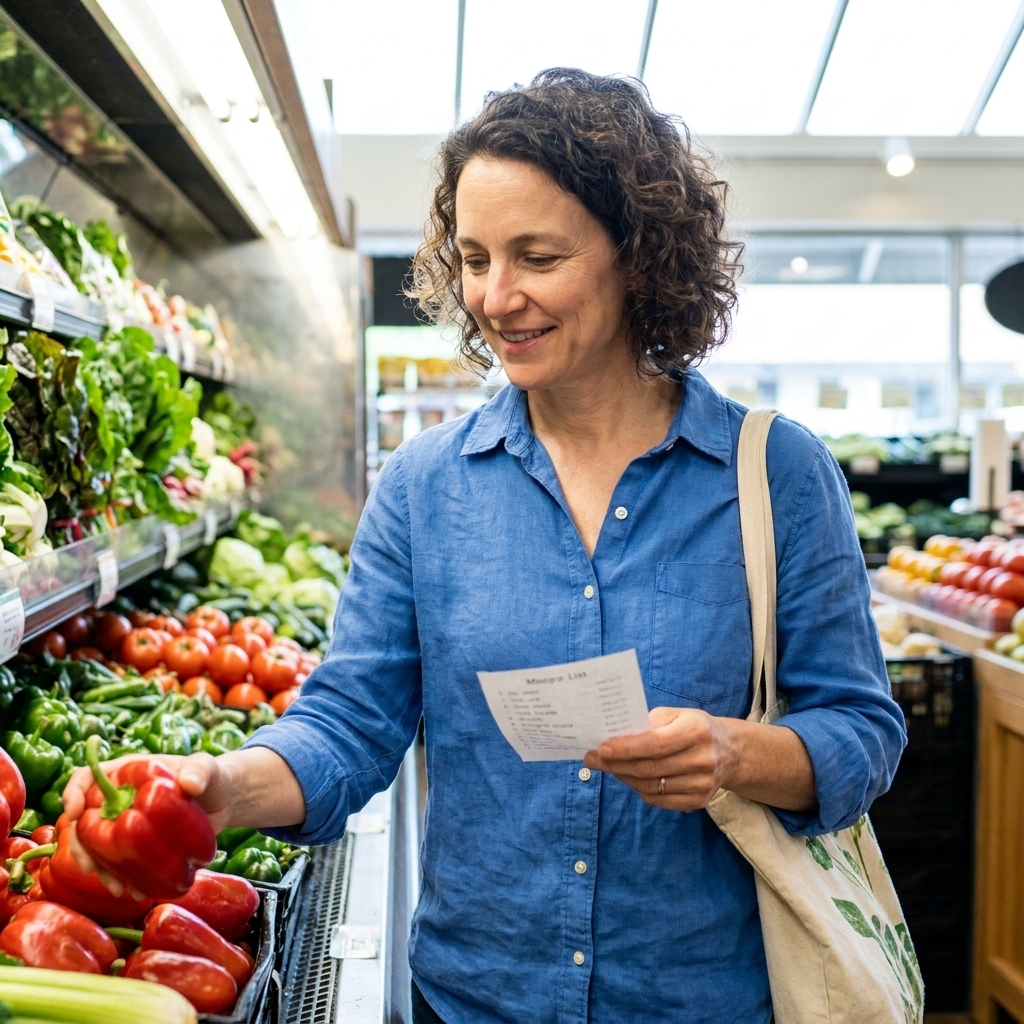
1) Set an intention first
This takes 10 seconds, and it changes everything. Before you grab a cart, pause and pick one simple intention:
- “I'm shopping for steady energy this week.”
- “I'm choosing foods that make meals easier.”
- “I'm keeping it simple and doable.”
When the store gets loud and overwhelming, that one sentence becomes your anchor.
2) Shop your kitchen first
Mindful shopping starts at home. A quick kitchen scan helps you avoid duplicates and sparks meal ideas from what you already have.
- Check the fridge for produce that needs to be used.
- Look in the freezer for proteins or veggies that can become a quick dinner.
- Peek at your pantry for grains, beans, sauces, and snacks.
Then build your list around what's missing, not around what looks exciting in aisle seven.
3) Make a meal-based list
If your list is just “chicken, spinach, rice,” you're still going to stand there later like, “Okay but what's dinner?” Instead, write 3 to 5 simple meal anchors. Nothing fancy.
Examples:
- Taco bowls (beans or chicken, salsa, greens, rice)
- Sheet pan sausage and veggies
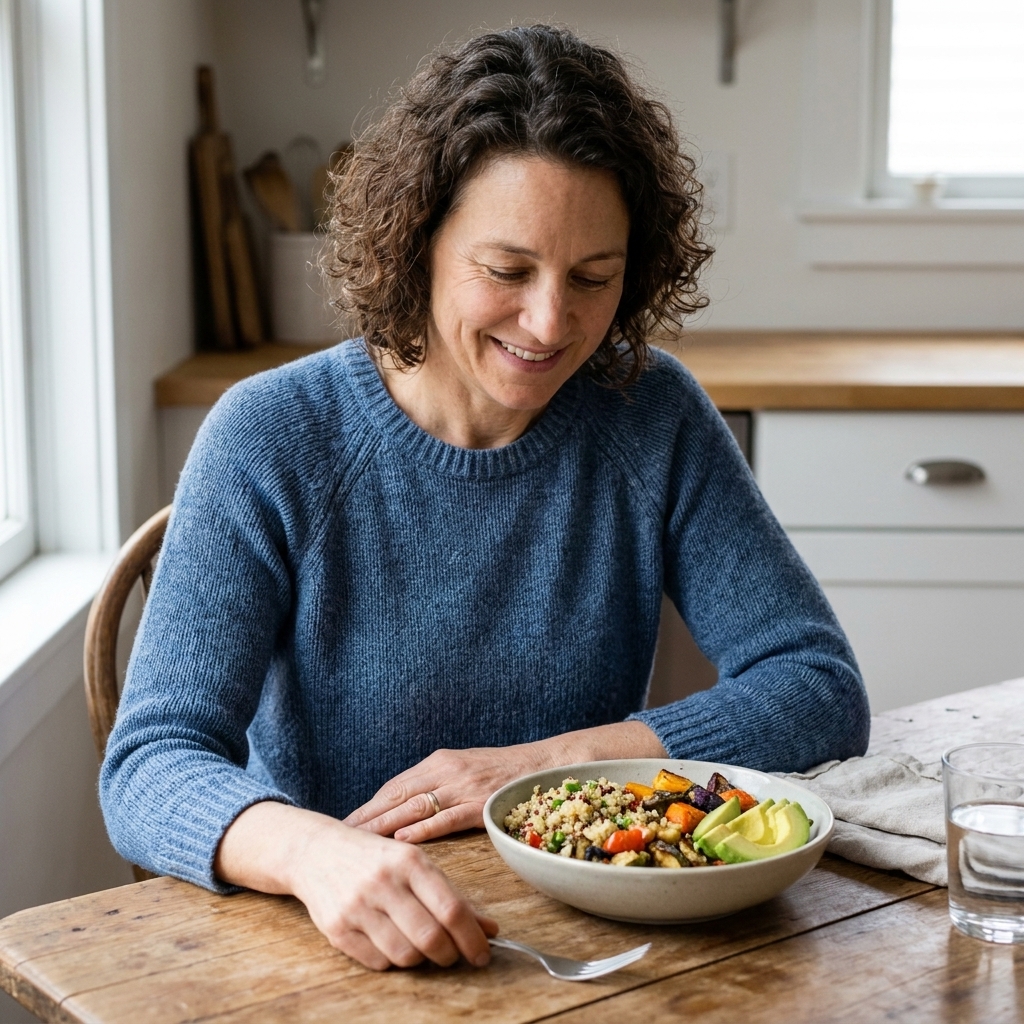
- Big salad with a protein and crunchy topping
- Breakfast yogurt bowls
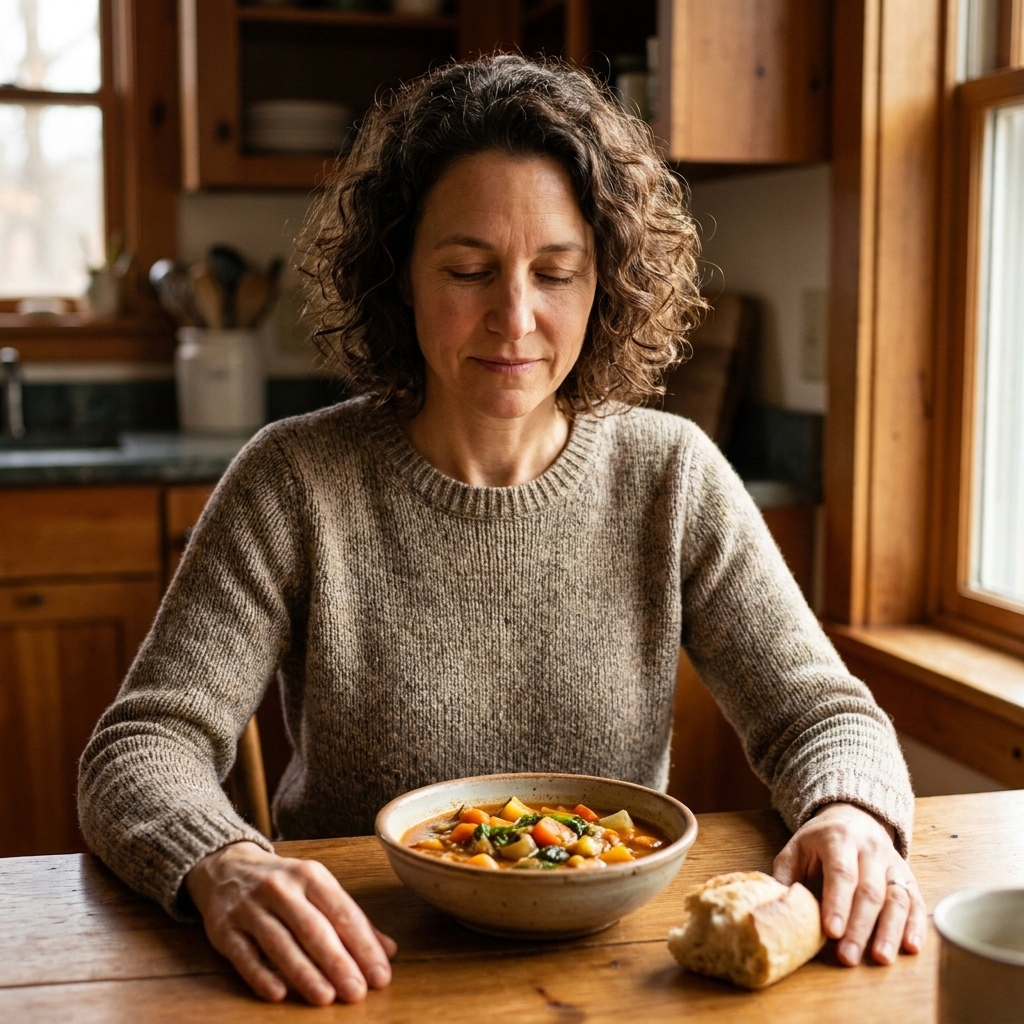
- One cozy soup with bread
Then list the ingredients under each anchor. This keeps your cart aligned with your real life.
4) Match your capacity
Mindful eating isn't just what you buy, it's how supported you'll feel making it.
Ask yourself: How much capacity do I have?
- Low capacity: pre-chopped veggies, rotisserie chicken, microwave rice, bagged salad
- Medium capacity: a few easy recipes, some batch cooking
- High capacity: more ingredients, more cooking projects
There's no gold star for struggling. Buying convenience can be a wellness choice.
5) Eat before you shop
This is a classic tip because it works. When you're hungry, your brain prioritizes fast comfort and novelty. When you're steady, you can actually hear your body's “yes” and “no.”
A quick snack counts: a banana with peanut butter, a yogurt, a handful of nuts, or a cheese stick. Mindful doesn't mean dramatic.
6) Start with the basics
When I want my cart to feel grounding, I shop in a simple order. Think of it like building a calm foundation:
- Color: fruits and veggies you'll truly eat
- Protein: beans, lentils, eggs, tofu, fish, chicken, Greek yogurt
- Fiber carbs: oats, rice, potatoes, whole grain bread, tortillas
- Healthy fats: olive oil, avocado, nuts, seeds
- Flavor helpers: salsa, pesto, spices, broth, lemons
Once the basics are in, everything else becomes optional instead of chaotic.
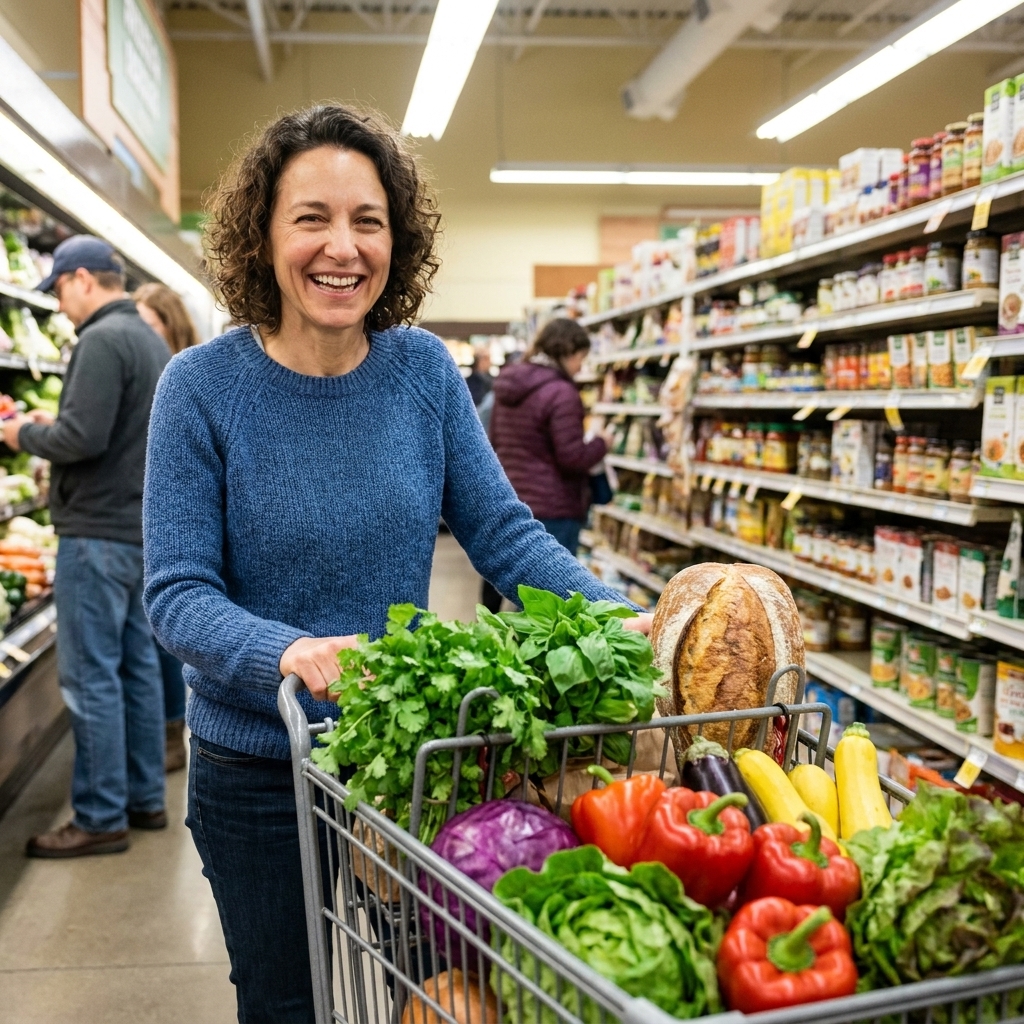
7) Pause on impulse buys
I love a fun snack. I also love not bringing home five “fun snacks” that don't actually hit the spot.
Try this tiny mindful practice: when something jumps into your cart, pause and ask:
- Do I want this, or do I want relief?
- Will I be happy to see this in my pantry in two days?
- What would make this feel more supportive? (Maybe it's paired with fruit, yogurt, or something satisfying.)
If it's still a yes, enjoy it on purpose. Intentional treats are part of a healthy relationship with food.
8) Keep labels simple
Labels can be helpful, but they can also pull you into perfectionism. If you want a quick, sanity-saving approach, focus on just a few things:
- Added sugar: does this food taste sweet because it's meant to, or is it sneaky-sweet?
- Protein and fiber: especially for snacks, these help with satiety.
- Ingredients list: can you roughly recognize what's in it?
And remember: “healthy” isn't one universal checkbox. The best choice is the one you'll eat, digest well, and feel good about.
9) Budget with kindness
Being intentional with money is part of mindful nutrition. A gentle budget strategy I love is to pick 1 to 2 splurge items and keep the rest steady.
Examples of splurges:
- Fresh berries
- Nice olive oil
- Wild-caught salmon
- A fancy sauce that makes quick meals exciting
Then save on staples: frozen veggies, store brand beans, oats, rice, eggs, in-season produce.
This way, your cart feels both supportive and sustainable.
10) Do a 5-minute reset
This is the part that makes the rest of the week easier. Put on a song you love and do a tiny future-you setup:
- Wash and dry berries and greens you want to snack on.
- Chop one veggie (even just cucumbers or bell peppers).
- Put the most perishable items at eye level.
- Group lunch items together.
You're not meal-prepping your entire life. You're reducing friction so nourishing choices feel like the easiest choices.
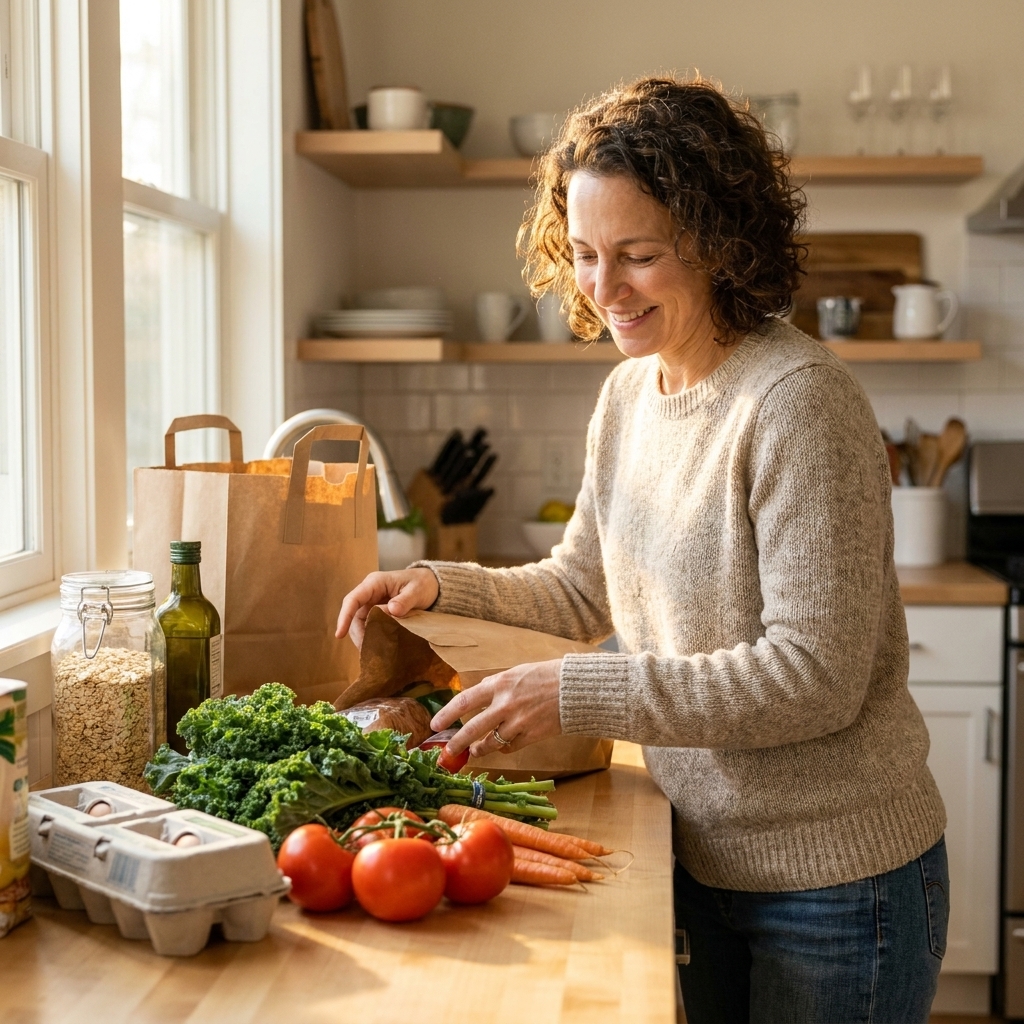
Mindful grocery checklist
If you want something you can screenshot mentally, here's your calm-cart recap:
- Intention set
- Kitchen checked
- 3 to 5 meal anchors chosen
- Snack eaten
- Basics first, extras second
- Pause before impulse buys
- Labels kept simple
- One small splurge allowed
- 5-minute reset at home
Mindful grocery shopping isn't about controlling food. It's about choosing foods that support the way you want to feel, and making that support easy to access all week long.
FAQ
What if I don't have time to shop slowly?
You don't need a long, dreamy grocery trip for it to count. Mindful can be as quick as: a short list, basics-first shopping, and one intentional pause before a few extra items. Even 15 focused minutes beats 45 frantic ones.
How do I shop mindfully with kids or a busy partner?
Pick one non-negotiable for the trip, like sticking to meal anchors or choosing one fruit and one veggie everyone will eat. Also, giving each person one choice can reduce chaos: one snack pick, one dinner request, one fun drink.
How do I avoid wasting produce?
Buy produce in two categories: ready-now (berries, salad greens, cucumbers) and later-in-the-week (carrots, cabbage, apples, frozen veggies). And choose at least one flexible rescue meal, like soup, fried rice, or a sheet pan dinner that can use whatever is fading.