There are two tiny practices I come back to when life feels loud: speaking affirmations and writing gratitude. They’re simple, uplifting, and often misunderstood. One isn’t “better” than the other. They just serve different goals and work different muscles.
If you’ve ever tried affirmations and felt a little silly, or tried gratitude lists and felt like you were repeating “coffee, my bed, my dog” forever, you’re in the right place. Let’s make this feel supportive, not performative.

The quick difference
Gratitude is about noticing what’s already true and already good, even if it’s small. It grounds you in the present.
Affirmations are about choosing what you want to believe, practice, or grow into. They orient you toward the future and your identity.
Think of it like this:
- Gratitude: “Here’s what’s supporting me today.”
- Affirmations: “Here’s who I’m becoming today.”
Why gratitude lists work
Gratitude lists are powerful because they train your attention. Your brain tends to scan for problems so you can stay safe. Psychologists often call this negativity bias. Gratitude gently nudges your mind to also register safety, support, beauty, and progress. Not to deny hard things, just to balance the view.
Benefits you may notice
- More emotional steadiness: a calmer baseline, especially on chaotic days
- Better stress recovery: you may come back to center a bit faster
- Improved relationships: appreciation tends to make us kinder and more connected
- More “enough” energy: less chasing, more savoring
Common gratitude pitfalls (totally normal)
- Repetition fatigue: you keep listing the same safe, obvious things
- Forced positivity: you feel like you’re not allowed to be honest
- Speed listing: you write three items and immediately move on without feeling anything
If any of those sound familiar, don’t quit. Just upgrade the prompt. Instead of “What am I grateful for?” try: “What made today 2 percent easier?” or “What did I enjoy for ten seconds?”

Why affirmations work
Affirmations aren’t magic spells. They’re identity cues, or a simple way to practice a version of you on purpose. When you repeat an affirmation regularly, you’re rehearsing a way of thinking and behaving. Over time, it becomes more familiar, and what’s familiar becomes easier to choose.
Benefits you may notice
- More self-trust: you start acting like someone who can handle things
- More direction: you remember what matters before the day grabs you
- Healthier self-talk: fewer spirals, more supportive inner language
- More courageous micro-actions: you do the small thing you’ve been avoiding
When affirmations feel fake
If you tell yourself “I am wildly confident” while your body is panicking, your brain may respond with: “No, you’re not.” That isn’t failure. It’s feedback.
Try a bridge affirmation, which is more believable while still stretching you. Examples:
- Instead of “I never procrastinate,” try “I can take one small step right now.”
- Instead of “I love my body,” try “I’m learning to treat my body with respect.”
- Instead of “I am calm all day,” try “I can come back to calm when I need to.”

Why combining them helps
Gratitude and affirmations make an incredible pair because they cover each other’s blind spots.
- Gratitude keeps affirmations from becoming pressure. It reminds you: you already have good, you already are supported.
- Affirmations keep gratitude from becoming passive. They remind you: you can choose, create, and grow.
Together, they create a steady emotional rhythm: appreciate what’s here, then practice what’s next.
The 5-minute routine
This is my favorite blend because it’s quick, realistic, and it works even on messy days.
Step 1: Notice (2 minutes)
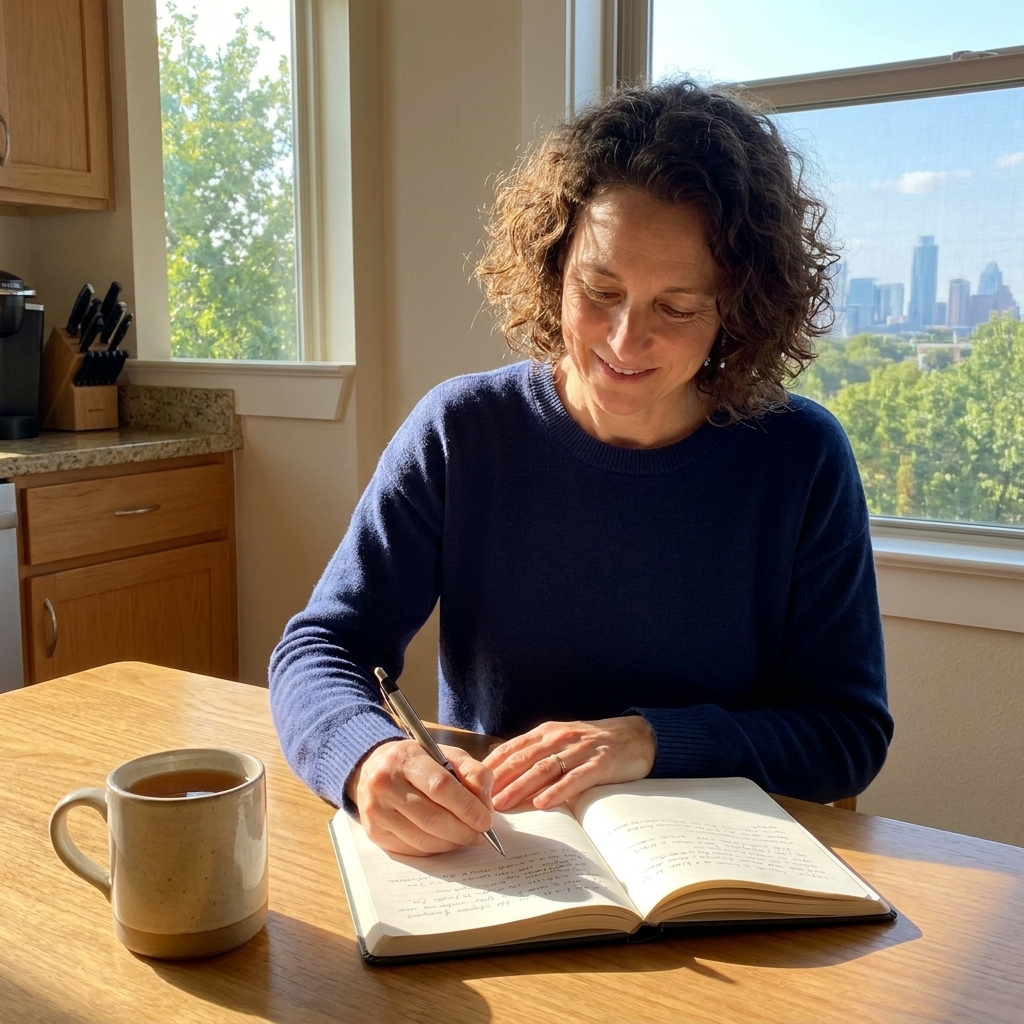
Write three specific gratitudes. Specific is the secret sauce. Instead of “my friends,” write “Jess texting me a voice memo that made me laugh.”
- One tiny joy: something that felt pleasant, comforting, or beautiful
- One support: a person, tool, habit, or resource that helped
- One win: something you did, even if it was small
Step 2: Name (2 minutes)
Say or write one to three affirmations in the present tense. Choose the tone your day needs: steadying, energizing, or compassionate.
- Steadying: “I can do hard things in small steps.”
- Energizing: “I bring focused effort to what matters today.”
- Compassionate: “I’m allowed to be a work in progress.”
Step 3: One proof point (1 minute)
Add one sentence: “I know this is true because…” and write a real example, no matter how small.
Example: “I can do hard things in small steps. I know this is true because I made the dentist appointment even though I wanted to avoid it.”
A finished page example
If it helps to see what this looks like when it’s done, here’s a simple template:
- Tiny joy: The sun hit the kitchen floor for a minute and I actually noticed.
- Support: My calendar reminder saved me from forgetting that meeting.
- Win: I replied to the email I’ve been avoiding.
- Affirmation: I can take one small step right now.
- Proof point: I know this is true because I took five minutes and hit send.
If you only have 60 seconds
Some days are pure survival mode. Here’s the micro version you can do while your coffee brews.
- Gratitude: “Right now I appreciate…”
- Affirmation: “Today I choose…”
Example: “Right now I appreciate this warm mug in my hands. Today I choose patience with myself.”
How long it takes
You might feel a small shift the first day, especially if you’re coming from a stressful season. More often, the real payoff shows up with repetition. Give it one to two weeks of the smallest, most doable version before you judge it. Consistency beats intensity.
Believable affirmations
Borrow any of these, then tweak the words so they sound like you. The best affirmation is the one you’ll actually use.
For anxiety and overwhelm
- “I can meet this moment without rushing myself.”
- “I don’t need to solve everything today.”
- “I’m safe to take one next step.”
For confidence and boundaries
- “My needs are valid and worth honoring.”
- “I can say no without over-explaining.”
- “I trust myself to handle the response.”
For motivation and consistency
- “Small actions count, and I show up for them.”
- “I keep promises to myself in realistic ways.”
- “Done is a form of self-respect.”
For body kindness
- “My body deserves care, not criticism.”
- “I can choose foods and movement that make me feel good.”
- “I’m allowed to rest.”
Gratitude prompts
If your list has been stuck on repeat, use one of these prompts for a week and see what you notice.
- “A moment I felt supported today was…”
- “Something I’m proud of from the last 24 hours is…”
- “A problem that didn’t happen today is…”
- “A tiny comfort I enjoyed was…”
- “Something in my home that makes life easier is…”
- “A skill I’m grateful I have is…”
- “Something my body did for me today is…”
Make it a habit
As a former corporate event planner, I will always be tempted to overproduce my wellness. Gold star stickers. A perfect notebook. A 25-minute routine. Then life happens and I “fail.”
Here’s what actually helps:
- Anchor it: pair it with an existing habit like brushing your teeth or feeding the dog.
- Keep it visible: leave your notebook and pen where you’ll trip over them.
- Choose a minimum: decide your smallest version in advance, like one gratitude and one affirmation.
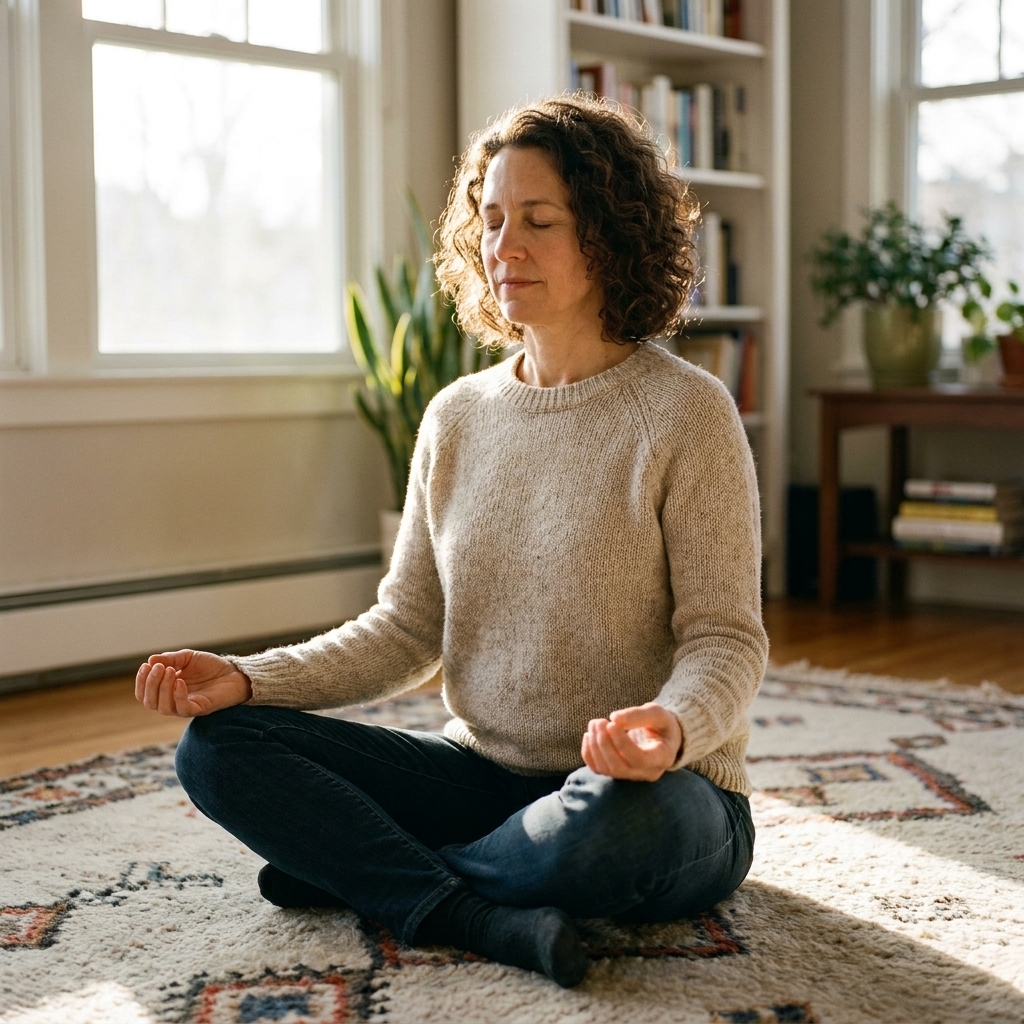
- Use your voice: if writing feels like too much, speak it while you shower or drive.
- Return gently: if you miss a day, you’re not behind. You’re just human.

FAQ
Is it better to do affirmations in the morning or at night?
Morning can set the tone, night can help you wind down and release the day. If you’re choosing one, pick the time you’ll realistically repeat most days. Consistency beats perfect timing.
Should I say affirmations out loud?
If you can, yes. Speaking them can make the practice feel more embodied and memorable. But whispering, writing, or even thinking them with intention still counts.
What if gratitude makes me feel guilty because life is hard?
Then your practice needs more honesty. Try “I’m grateful for one small relief,” alongside “This is still hard.” Both can be true in the same breath.
How many items should a gratitude list include?
Three is a sweet spot for most people. If you want more, go for it, but don’t let it become a performance. Specific beats long.
When to pause
If affirmations make you feel worse, flooded, or more self-critical, it’s okay to pause and switch to something grounding, like naming five things you can see, a few slow breaths, or writing what’s true without trying to “fix” it. And if you’re dealing with intense anxiety, depression, or trauma triggers, you deserve support that fits the weight of what you’re carrying. A trusted professional can help you tailor tools that feel safe and steady.
A gentle start
If you want a simple plan: tomorrow morning, write three specific gratitudes, then choose one bridge affirmation that feels believable. End with one proof point.
That’s it. No pressure to be radiant. No requirement to feel amazing. Just a small daily vote for joy, written down and spoken back to you.
Your life doesn’t need to be perfect to be precious. Start where you are. Celebrate what’s working. Then name what you’re growing.