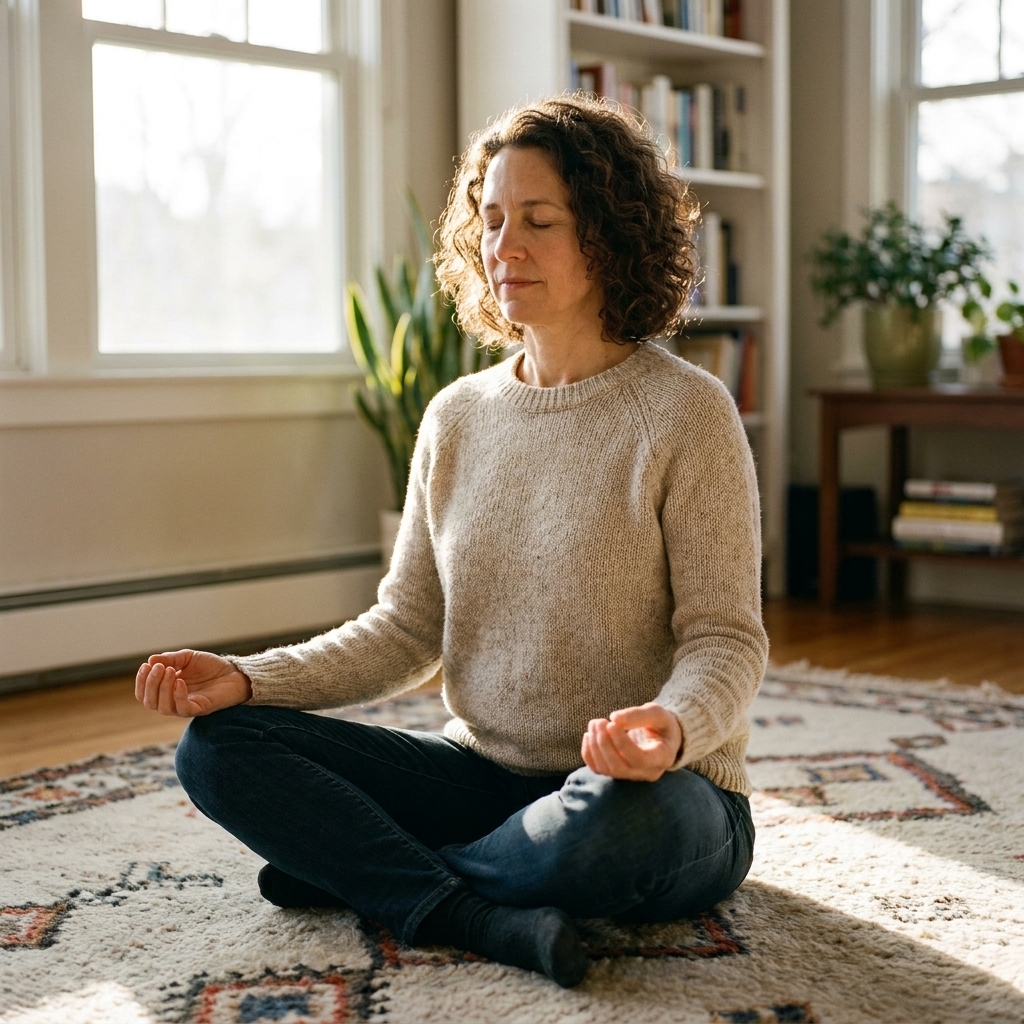
Some seasons of life call for big changes. Others call for a notebook, a pen, and ten honest minutes with yourself.
Journaling is one of my favorite forms of elective wellness, meaning a low-stakes practice you choose, not a prescription. It is simple, powerful, and wonderfully human. It is not about crafting beautiful sentences or having a life-changing breakthrough every day. It is about making tiny, steady deposits into your mental wellbeing. A little more clarity. A little more self-compassion. A little more gratitude for what is already here.
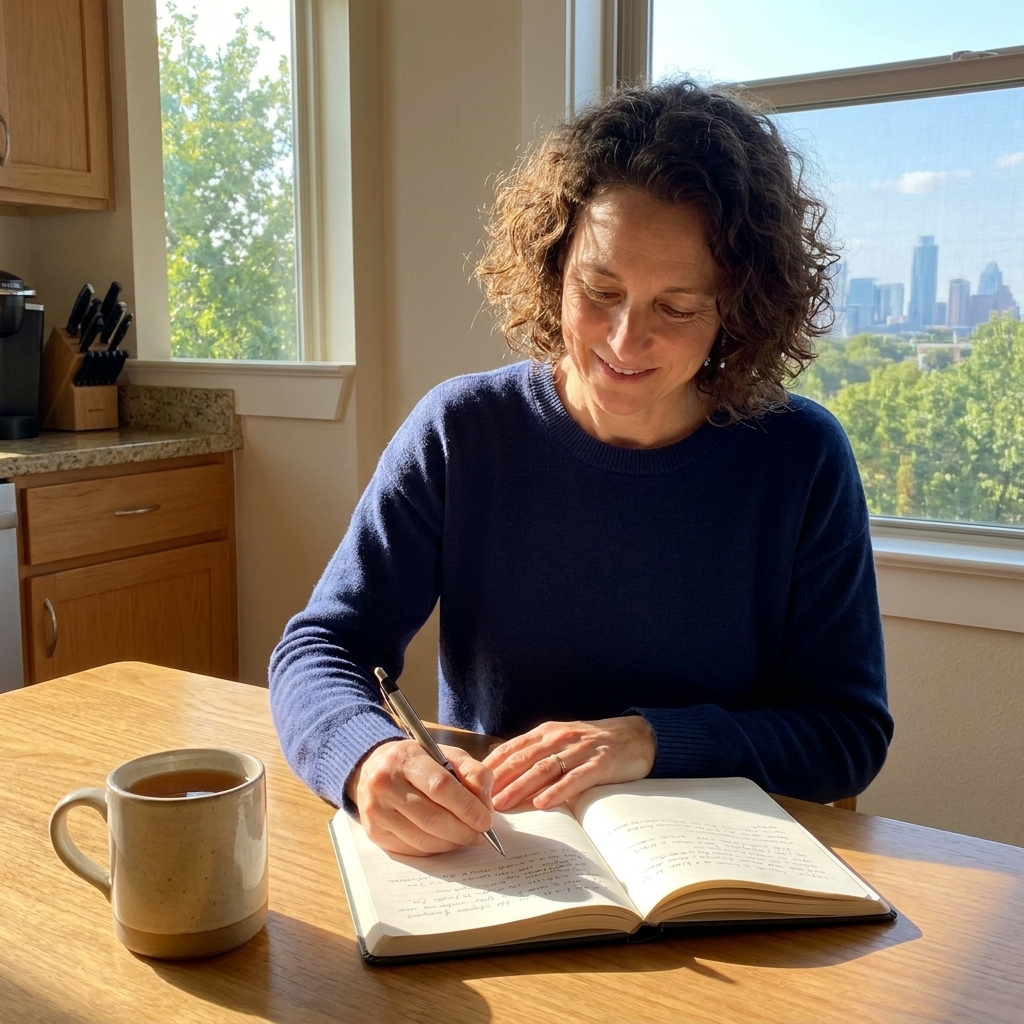
Below is a curated, month-long list of prompts for self-discovery and gratitude. You can do them in order, pick what you need each day, or repeat your favorites. This is your practice. You get to make it feel good.
How to use these prompts
If journaling has ever felt intimidating, here is the gentlest way in: choose one prompt, set a timer for 5 to 10 minutes, and write without editing. If you get stuck, write “I do not know yet” and keep going. Many people find it easier to keep writing right after that.
- Keep it small. Consistency beats intensity. Three minutes counts.
- Make it cozy. Tea, a candle, your comfiest chair, a playlist, whatever signals “safe and soft.”
- Try a simple structure. One honest sentence, one grateful sentence, one next-step sentence.
- End with kindness. If a prompt brings up something tender, close with a grounding line like: “I am here. I am learning. I am safe.”
Quick note: Journaling is supportive, not a substitute for mental health care. If writing brings up intense emotions you feel unable to manage alone, it can be a beautiful moment to reach out to a therapist or trusted professional.
30 uplifting prompts for self-discovery and gratitude
Consider this a choose-your-own-adventure for your inner world. Some prompts are light and bright, others are gently reflective. All of them are designed to help you come home to yourself.
Gentle permission slip: If a prompt feels like too much on a given day, skip it. Choose something grounding instead, or use the 5-minute options below.
Week 1: Grounding and gratitude
- Today, I am grateful for… (List 10 small things. Tiny is perfect.)
- A moment that made me smile recently was… What about it felt good?
- Three things my body did for me today were… Thank it like you would a friend.
- What feels steady in my life right now? (A person, a routine, a place, a belief.)
- When I slow down, I notice… What do you miss when you rush?
- My favorite simple comfort is… How can I give myself a little of that this week?
- If today had a theme song, it would be… Why does it fit?

Week 2: Self-trust and confidence
- Something I handled better than I give myself credit for is…
- A challenge I have already survived is… What did it teach me about my strength?
- When I feel most like myself, I am usually… (Where are you, who are you with, what are you doing?)
- My inner critic tends to say… What would a supportive best friend say instead?
- A boundary that would make my life lighter is… What is one baby step toward it?
- I trust myself when I… How can I practice that more often?
- One brave thing I can do this week is… Make it specific and doable.
Week 3: Joy, meaning, and connection
- Three things that bring me genuine joy are… Which one can I schedule?
- A person who has positively shaped me is… What did they show me about love or life?
- A compliment I wish I could fully believe is… What evidence do I have that it is true?
- A place that makes me feel calm is… What sensory details do I remember?
- What do I want more of in my days? (Ease, creativity, laughter, movement, quiet.)
- What do I want less of? How can I reduce it by 10 percent?
- A moment I felt supported was… What did support look like?

Week 4: Reflection and gentle growth
- If I could redo one moment lately with more compassion, it would be… What would I say to myself?
- What is something I am learning about myself right now? Let it be unfinished.
- A habit that helps my mental health is… How can I make it easier to keep?
- A habit that drains me is… What is the kindest alternative?
- What do I need to forgive myself for? What would forgiveness look like in practice?
- What am I avoiding? What is the smallest next step that feels safe?
- What do I want to celebrate about this month? Include the “small” wins.
- What do I want next month to feel like? Name 3 words, then write one action for each.
- A reminder I want to carry with me is… Write it like a note you would tape to your mirror.
If you only have 5 minutes
On busy days, I love a tiny template that still feels nourishing. Pick one and call it a win.
- Gratitude sprint: “Right now I appreciate…” (Write 5 lines, no repeats.)
- Mind check-in: “In my head is… In my heart is… In my body is…”
- One good thing: “One good thing I can do for myself today is…”
- Release list: “Today I am allowed to let go of…”
Journaling styles to try
If you have ever wondered whether you are doing it “right,” this is your reminder: there are lots of right ways. Try one style for a week, then switch.
- Free-write: Set a timer and write whatever is true. No structure required.
- Gratitude list: A few bullet points a day. Simple and surprisingly steadying.
- Prompt journaling: Use one question to guide the page, like the list above.
- Bullet journaling: Quick notes, habits, and tiny reflections, all in one place.
Keep it easy, not like homework
As a former high-stress event planner, I have a very specific allergy to anything that feels like a strict regimen. Journaling should feel like a supportive exhale. Here are a few ways to keep it that way.
- Lower the bar on purpose. Messy handwriting is welcome. Fragments are welcome.
- Give yourself a starting line. Begin with “Today feels…” and let the next sentence be honest.
- Write to someone. A younger you, future you, or even your anxiety. It creates instant clarity.
- Pair it with a cue. Coffee brewing, after a shower, right before bed. Same cue, easier habit.
- End with a soft landing. One sentence of gratitude or a self-kindness statement.
Common pitfalls to avoid
- Chasing perfect. If you wait to feel inspired, you will write less. Let it be ordinary.
- Using journaling to spiral. If you notice rumination, pivot to a grounding list, a body check-in, or “What is one small helpful step?”
- Re-reading in a harsh mood. If you tend to judge yourself, give your past pages privacy. You can always come back later with kinder eyes.

Frequently asked questions
What should I write if I do not feel grateful?
Start smaller. Gratitude does not have to be grand or forced. Try: “One neutral thing that supported me today was…” or “One thing that did not go wrong was…” This counts. It can help you practice a steadier, safer feeling in your day.
How long should I journal each day?
Long enough to be honest, short enough to be sustainable. For many people, 5 to 10 minutes is the sweet spot. If you want a simple goal, aim for one page or one timer.
Is it better to journal in the morning or at night?
Morning journaling can clear mental clutter and set a tone. Night journaling may help some people process the day and wind down for sleep. If you are not sure, try mornings for a week, then nights for a week, and see what feels more supportive.
What if a prompt brings up something heavy?
Pause and ground: feel your feet, take three slow breaths, look around the room and name five things you see. Then choose a gentler follow-up prompt like: “What do I need right now?” If you feel overwhelmed, it is a brave and caring choice to talk with a mental health professional.
A note to your future self
If you do this for a month, you will not become a new person overnight. You will become a more connected version of the person you already are. And that is the point.
Pick your first prompt, set a tiny timer, and let it be imperfect. I will be cheering for you from Austin, probably with Barnaby nudging my elbow for a walk.