If you have ever wanted a workout that feels more like play than punishment , welcome. Rebounding is simply moving on a mini trampoline, and it can be a surprisingly effective way to wake up your energy, shake out stress, and get your body feeling bright again. No perfect routine required.
As a former high-stress event planner turned wellness coach, I love rebounding because it fits into real life. Five minutes counts. Ten minutes counts. Even two minutes while your coffee brews counts. Let’s get you bouncing safely, comfortably, and joyfully.
What rebounding is
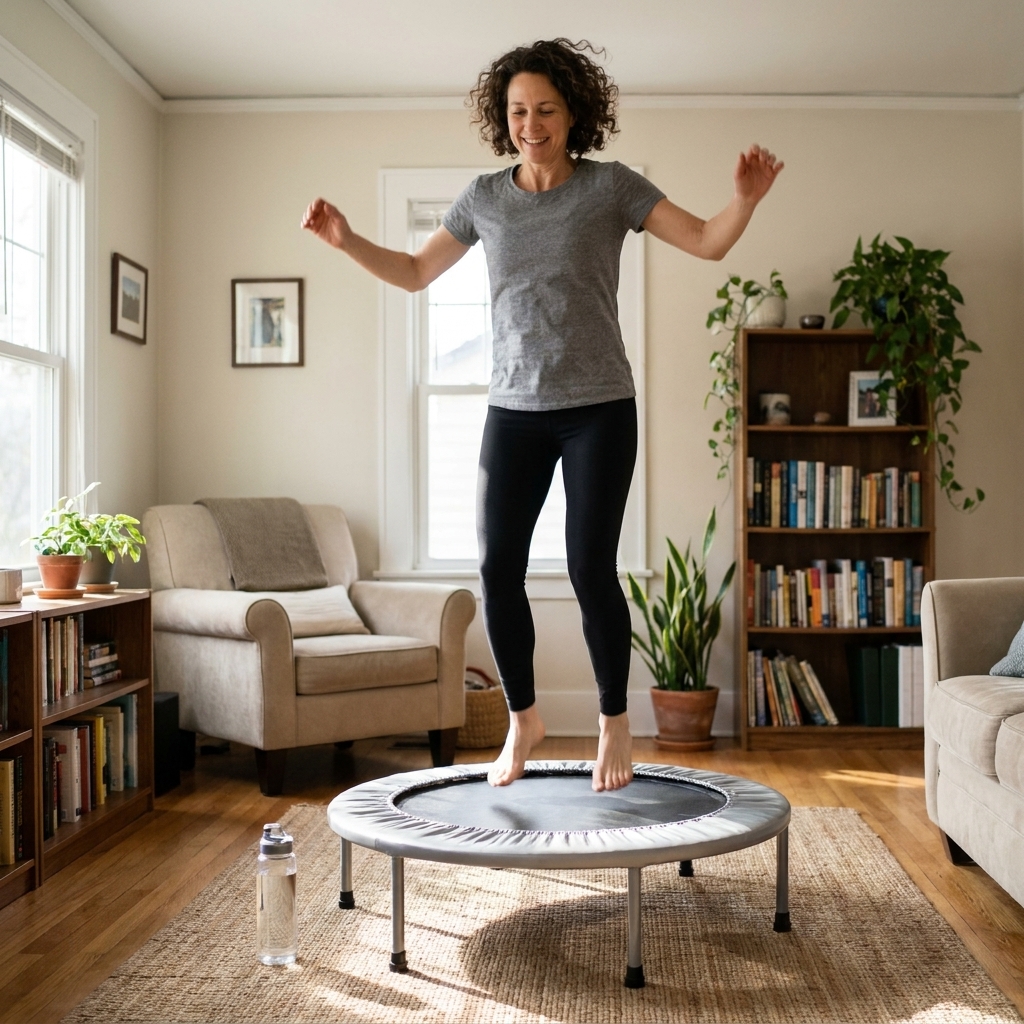
Rebounding is low-impact, rhythmic movement on a mini trampoline (often called a rebounder). The mat and elastic surface can reduce some of the impact you would normally feel from jogging or jumping on the floor, which is why many people say it feels gentler on their joints. Impact is not eliminated though, and form and volume still matter.
It is also wonderfully versatile. You can keep it soft and steady (think: a relaxing bounce that feels like a moving meditation), or you can build intensity over time with intervals, bigger bounces, and simple dance-like patterns .
Why people love it
- Energy without the crash: Many people report that short sessions feel like a mood and momentum boost.
- Joint-friendlier cardio: The trampoline surface can reduce impact compared to hard ground for many bodies.
- Easy to do at home: No commute, no mirrors, no pressure.
- It is fun: That matters more than we were taught.
Is it good for you?
For most generally healthy adults, rebounding can be a great way to support cardiovascular fitness, coordination, and overall daily movement. Like any exercise, the “good for you” part depends on your body, your form, and how you progress.
One of the biggest benefits I see with clients is consistency. When movement feels good, you are more likely to come back to it. That is where the real change happens.
Check in first
If any of these apply, get personalized guidance before starting: pregnancy or postpartum recovery, uncontrolled high blood pressure, known cardiac conditions (including uncontrolled arrhythmias), severe balance issues, recent surgery, acute back or joint injury, vertigo or significant vestibular disorders, uncontrolled seizure disorders, severe osteoporosis, or pelvic floor symptoms (like heaviness, leaking, or known pelvic organ prolapse) where bouncing could be risky.
Choosing a rebounder
There are lots of options, and you do not need the fanciest trampoline to start. You do want one that feels stable, quiet enough for your home, and supportive for your body.
What to look for
- Weight capacity: Choose a model with a capacity comfortably above your body weight. More headroom often means more stability.
- Bungee cords vs. springs: Bungees tend to feel quieter and softer. Springs can feel snappier and may be noisier. Both can work well.
- Mat size: A larger mat gives you more room to move and can feel more confidence-building as a beginner.
- Leg stability: Wide, sturdy legs with non-slip feet are your best friend on hardwood and tile.
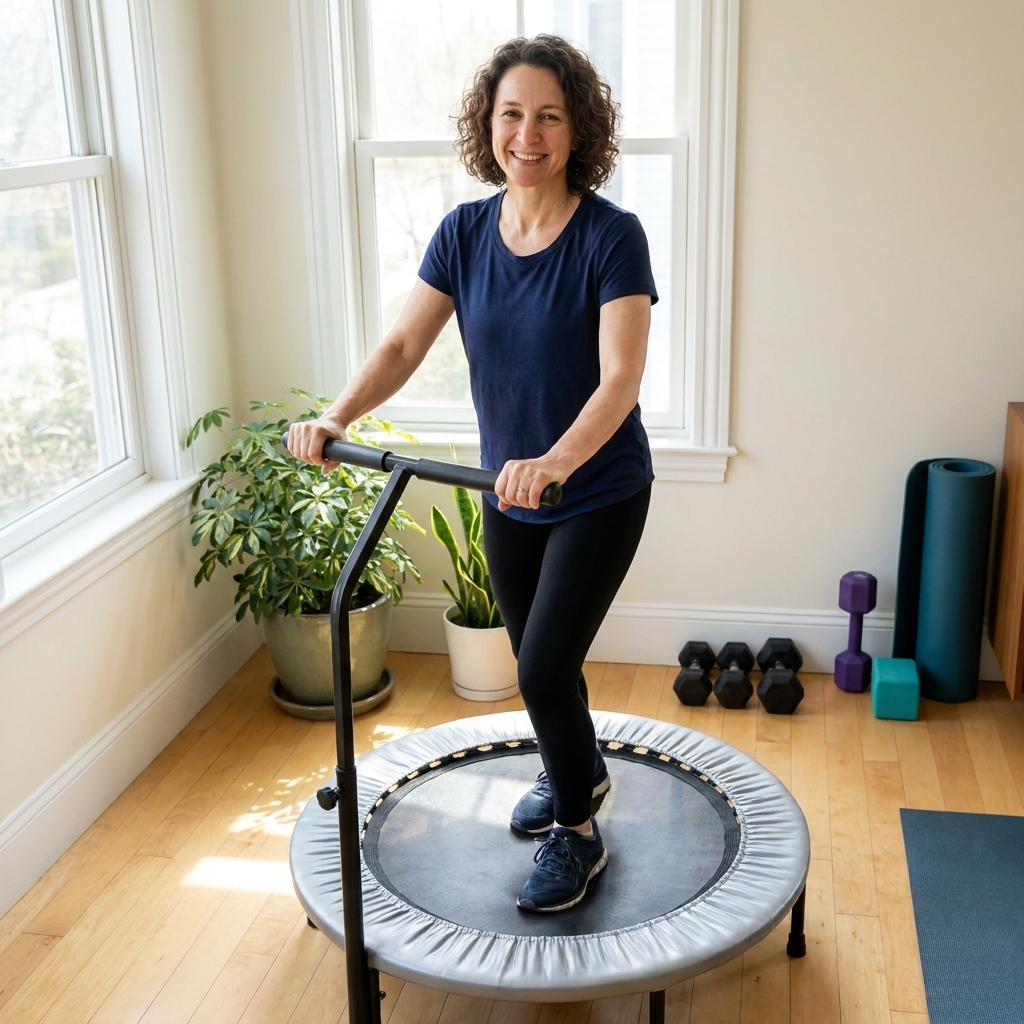
- Optional handlebar: Great for beginners, balance support, or anyone who wants extra confidence. You can also use a wall or chair nearby as a just-in-case support.
- Storage: Foldable legs or a foldable frame can make it easier to slide under a bed or stand in a closet.
My simple guide
- Want the softest, quietest bounce: look for a bungee model.
- Want a more athletic, springy feel: a spring model can feel more dynamic.
- Nervous about balance: choose a rebounder with a handlebar, or plan to bounce near a stable surface.
Set up your space
Rebounding does not require a full home gym. It does require a little breathing room .
- Ceiling clearance: Give yourself enough space overhead so you can do gentle jumps without worry. If your ceiling is low, keep your bounce small and grounded.
- Floor: Place the rebounder on a flat surface. A thin exercise mat underneath can help with noise and prevent sliding, especially on smooth floors.
- Nearby support: If you do not have a handlebar, set up near a wall, counter, or sturdy chair you can touch lightly as needed.
- Shoes or barefoot: Many people rebound barefoot for better foot awareness. If you wear socks, choose grippy socks to reduce slipping. If your feet are sensitive, supportive sneakers are fine.
Form basics
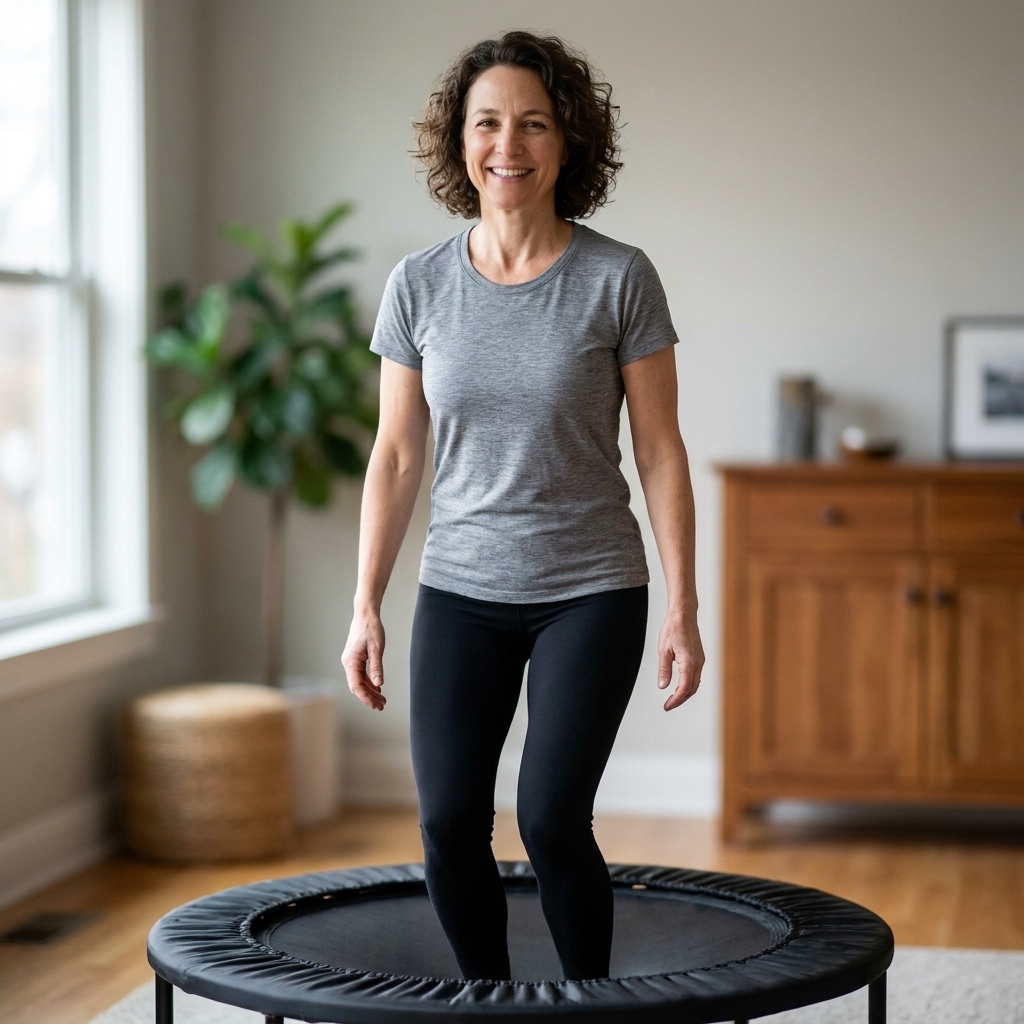
If you learn one thing today, make it the health bounce. It is a gentle, feet-stay-down bounce that builds rhythm, balance, and confidence. It is the foundation of most rebounding routines, and it is wonderfully beginner-friendly.
How to do it
- Stand tall with feet about hip-width.
- Keep your feet in contact with the mat.
- Bend your knees softly and let your heels lift just a little.
- Imagine you are gently pressing the mat down, not trying to jump up.
- Keep your core lightly engaged and shoulders relaxed.
Quick cues
- Quiet bounce: Aim for minimal noise. That usually means great control.
- Soft knees: No locked legs.
- Eyes forward: This supports balance.
- Breath steady: If you are holding your breath, slow down.
Beginner win to celebrate: a two-minute health bounce is a legitimate workout on a busy day.
Warm-up and cool-down
Your warm-up can be as simple as one minute of health bounce. If you want an extra joint-friendly boost, add 30 to 60 seconds off the trampoline first:
- Ankle circles
- Calf raises
- Hip circles
- Shoulder rolls
To cool down, keep the bounce tiny for 30 to 60 seconds, then step off slowly and take a few deep breaths. A gentle calf stretch or hip flexor stretch can feel wonderful here.
Your first week
Let’s keep this deliciously doable. Your goal in week one is not intensity. Your goal is to build comfort, balance, and the habit of showing up.
Option A: 5 minutes a day
- Minute 1: Health bounce, easy breathing
- Minute 2: March in place (slow)
- Minute 3: Health bounce again
- Minute 4: Side-to-side step touch (small)
- Minute 5: Gentle bounce, then step off slowly
Option B: 10 minutes, three times
- 2 minutes: Warm-up health bounce
- 6 minutes: Beginner sequence (see below)
- 2 minutes: Cool down with a very small bounce and deep breaths
Important: Step off the rebounder slowly. Some people feel a little wobbly at first because your balance system is adapting. Hold something stable if needed.
Beginner sequences
These are meant to feel playful, not perfect. Keep the bounce small until your body trusts the rhythm. If anything feels sharp, dizzy, nauseating, or uncomfortable, stop and reset. Next time, go smaller and shorter.
Coffee break bounce (4 minutes)
- Health bounce: 60 seconds
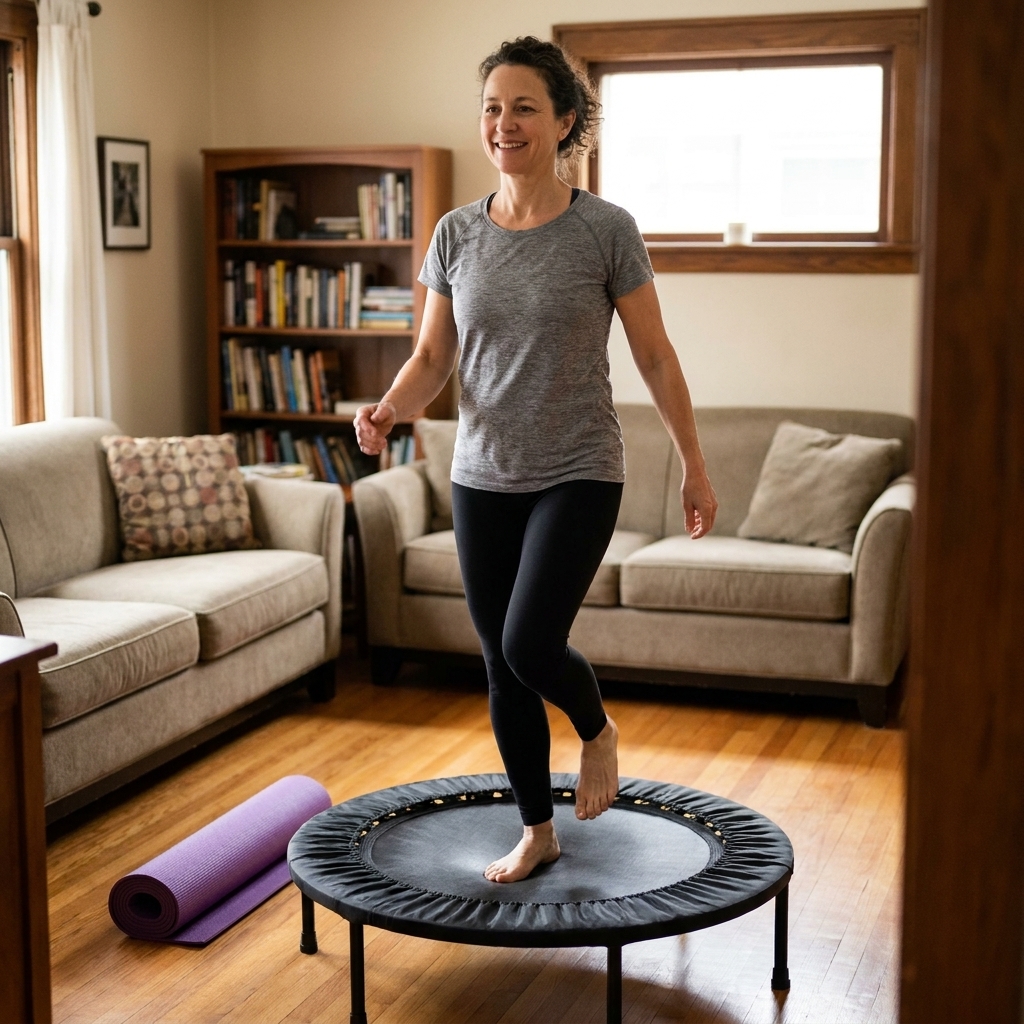
- March: 60 seconds, arms swinging naturally
- Step touch: 60 seconds side to side
- Easy bounce: 60 seconds, exhale long and slow
Mood lift (6 minutes)
- Health bounce: 90 seconds
- Wide-stance bounce: 60 seconds, feet a little wider than hips
- Narrow-stance bounce: 60 seconds, feet together or close
- Twist bounce: 60 seconds, tiny twist through hips, shoulders stay relaxed
- March with pauses: 60 seconds, pause for one beat every 4 steps
- Cool down bounce: 30 seconds, then stand still and breathe
Beginner cardio ladder (9 minutes)
This one gently builds intensity, then brings you back down.
- Warm-up health bounce: 2 minutes
- Round 1: 30 seconds march, 30 seconds health bounce (repeat 2 times)
- Round 2: 30 seconds step touch, 30 seconds health bounce (repeat 2 times)
- Round 3: 20 seconds light jog bounce, 40 seconds health bounce (repeat 2 times)
- Cool down: 1 minute gentle bounce
About the jog bounce: This is still small. Think quick feet, soft knees, minimal airtime.
How long to rebound
Start with what you will actually do. For many beginners, that is 5 to 10 minutes. As your stamina and balance improve, you can grow into 15 to 20 minutes a few times per week.
If you love it and your body feels great, you can absolutely do longer sessions. Just build gradually, especially if you are adding higher bounces or faster jogging patterns.
Progress after week one
Keep it simple and steady. A gentle rule of thumb is to increase total bounce time by 1 to 2 minutes per week, or add just one new interval or move at a time. Your joints, calves, and feet will thank you for the slow build.
Common mistakes
- Bouncing too high too soon: Keep it low and controlled at first. Quiet bounce is the goal.
- Locking the knees: Soft knees protect joints and help you find rhythm.
- Looking down: Gaze forward to support balance and alignment.
- Going all-out every time: For many people, most sessions feel like a 6 or 7 out of 10 effort. Save “spicy” workouts for when your body is ready.
- Skipping a warm-up: Even one minute of health bounce helps your body settle in.
Make it joyful
Rebounding is one of those habits that can stick if you make it easy and pleasant.
- Pair it with something you already do: bounce after brushing your teeth, while a podcast starts, or during your afternoon slump.
- Create a bounce uniform: a comfy outfit you can throw on fast.
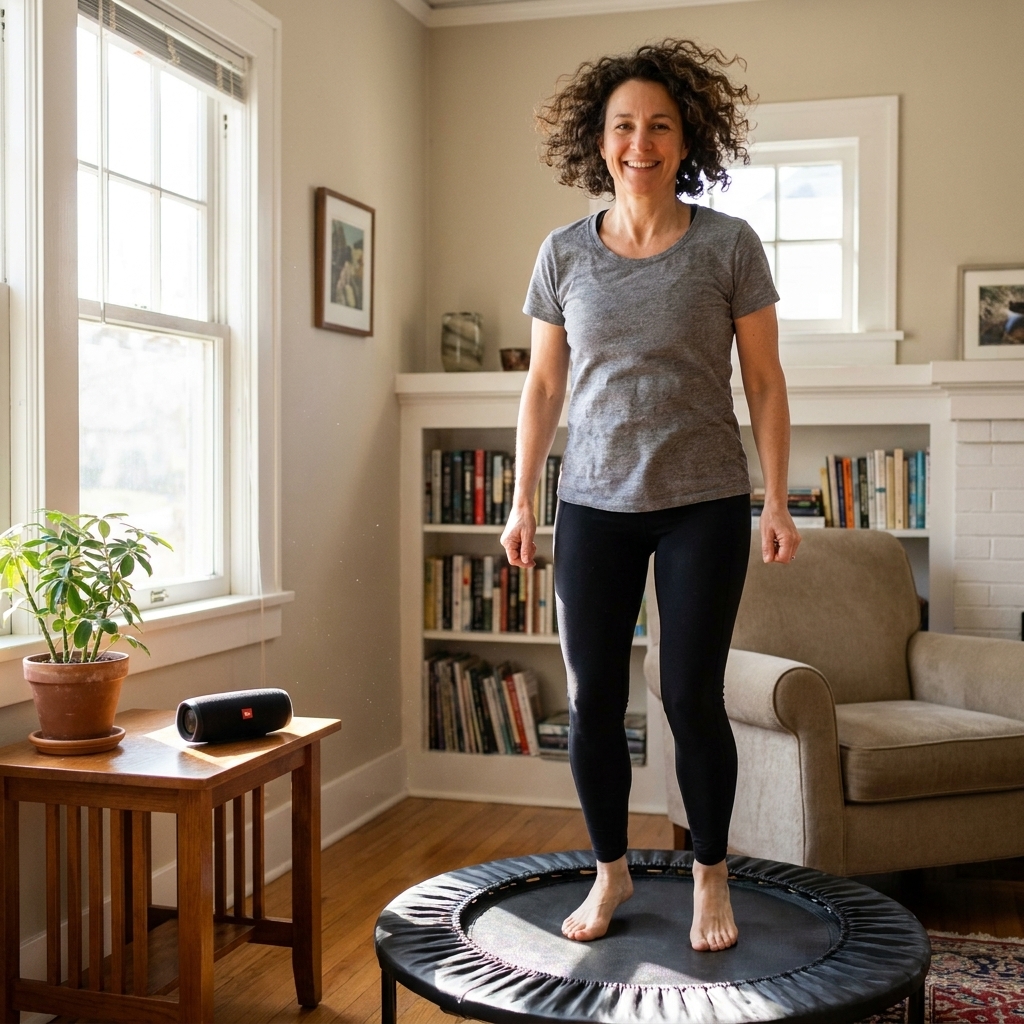
- Use music: Pick three songs and call it a session. Done.
- Keep the rebounder visible: If it is tucked away, it becomes a concept. If it is out, it becomes an option.
Safety notes
- One person at a time: No sharing the rebounder.
- Kids and pets: Supervise closely. And yes, this is me gently reminding you to keep curious golden retrievers like my Barnaby from turning your trampoline into a game.
- Hydrate: Especially if you sweat easily.
- Stop if you feel dizzy or nauseated: Step off slowly, breathe, and try a shorter session next time with smaller bounces.
- Check your equipment: Make sure legs are secure and the mat is in good condition.
FAQ
Is rebounding good for weight loss?
It can support weight goals because it is a form of cardio and it can help you move more consistently. But the biggest win is finding a routine you enjoy enough to repeat. Consistency beats intensity almost every time.
Can I rebound every day?
Many people can, especially if most sessions are gentle. Think of it like walking with a bounce . If you start adding more intense intervals, bigger jumps, or longer sessions, add rest days as needed and pay attention to how your joints, calves, pelvic floor, and energy feel.
Is a handlebar necessary?
Not required, but it can be a confidence booster for beginners or anyone working on balance. You can also rebound near a wall or counter and use a light fingertip touch.
What if my rebounder is noisy?
Place a thin exercise mat underneath, check that all legs are tightened, and consider a bungee model if you are very noise-sensitive. Some spring models also quiet down after a short break-in period.
A gentle next step
If you are feeling a little intimidated, promise me this: do two minutes of health bounce today. Put on one song, keep it small, and let it be enough.
Joyful movement is not about earning rest or shrinking yourself. It is about coming home to your body. And sometimes, the simplest way back is a tiny bounce.