Somewhere along the way, a lot of us were taught that exercise has to look serious to “count.” Matching sets. A certain heart rate. A certain outfit. Perfectly logged workouts. But your body does not actually care if your movement came from a treadmill or a chalked-up square on the court. It cares that you moved, you breathed, and you felt safe enough to enjoy it.
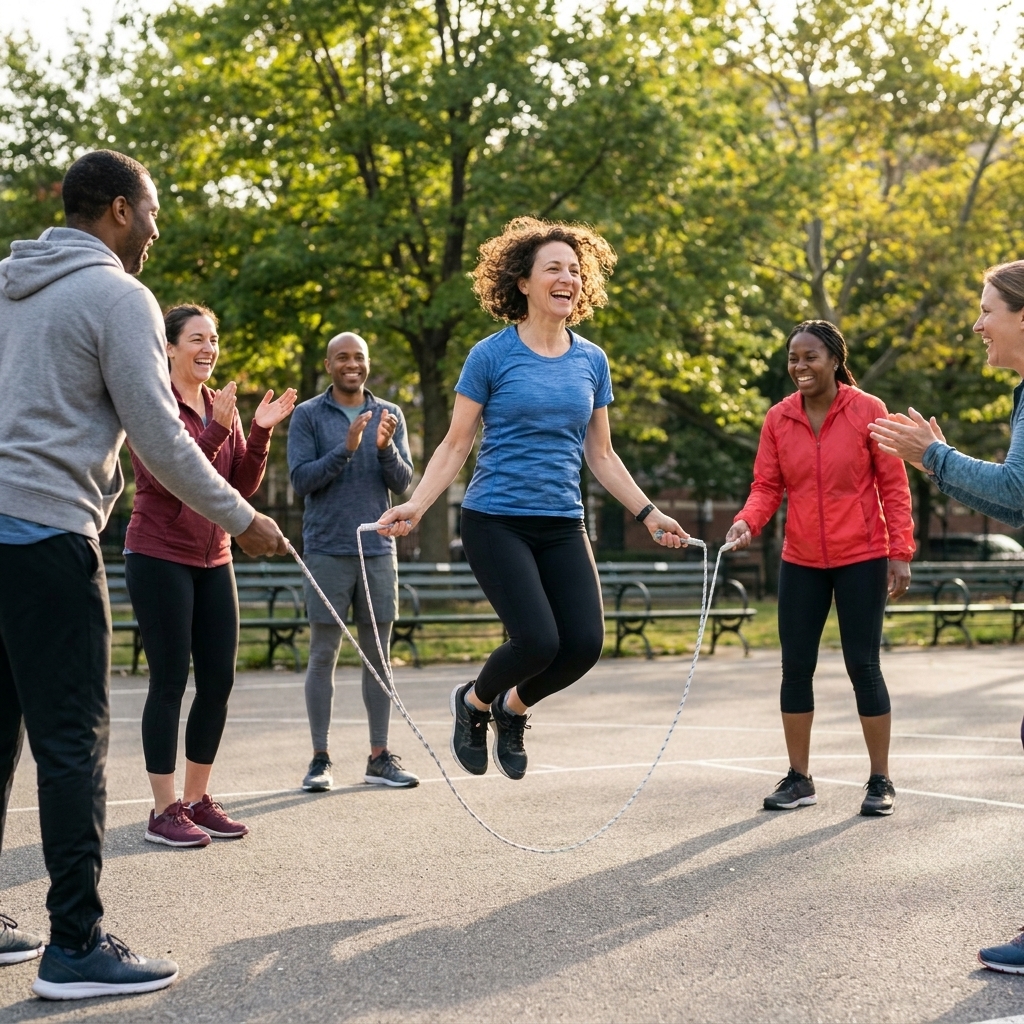
This is your permission slip to bring playground energy back into your fitness routine. Jump rope. Foursquare. A casual kickball game that turns into uncontrollable laughter. Not as a gimmick, but as a genuinely effective way to build cardio, coordination, and consistency.
Why playful movement works
Playground games are secretly a wellness trifecta: they raise your heart rate, build functional strength, and give your brain and body a dose of play. That matters more than we give it credit for, especially for mood, stress relief, and sticking with a habit.
- They create natural intervals. You sprint, you pause, you laugh, you go again. That stop-and-go pattern is basically interval training without the stopwatch anxiety.
- They train coordination. Jumping, pivoting, catching, and quick direction changes can support balance, agility, and confidence with movement as we get older. If you have cranky joints, treat this like skill practice: start small, build gradually, and adjust rules and surfaces as needed.
- They boost consistency. It is easier to show up to “meet friends for foursquare” than “go suffer alone for cardio.” Consistency is the magic, not intensity.
- They build connection. Even introverts benefit from low-stakes social movement. Community is a health habit, too.
Also, from a coaching perspective: joy is an underrated form of motivation. The kind that actually lasts.
Start with a weekend plan
If weekdays are already full, weekends are your best entry point. Keep it simple: pick one “play session” and treat it like a standing date with yourself or friends.
A simple 60-minute session
- 10 minutes: easy warm-up walk plus a few gentle leg swings and arm circles
- 35 minutes: the game (jump rope, foursquare, or a rec sport)
- 10 minutes: cool-down walk, slow breathing, light stretching
- 5 minutes: water, snack, and a tiny moment to notice you did something good for yourself
Key mindset shift: you are not trying to “burn off” anything. You are trying to add something. Energy. Lightness. Aliveness.
If you are new, coming back from a break, or managing an old injury, start with once a week and build from there. Stop if you feel sharp pain, dizziness, or anything that feels off. If you have a medical condition or are unsure, getting a quick green light from a clinician can be a smart move.
Jump rope basics
Jump rope is wildly efficient. It trains calves, ankles, core stability, and cardio all at once. It can also reinforce upright positioning and core control when you stay tall and relaxed. And yes, it can feel humbling at first. That is part of the charm.
Make it feel doable
- Choose the right rope. A simple adjustable speed rope is fine. If you are brand new or have joint sensitivity, try a slightly heavier rope for better feedback.
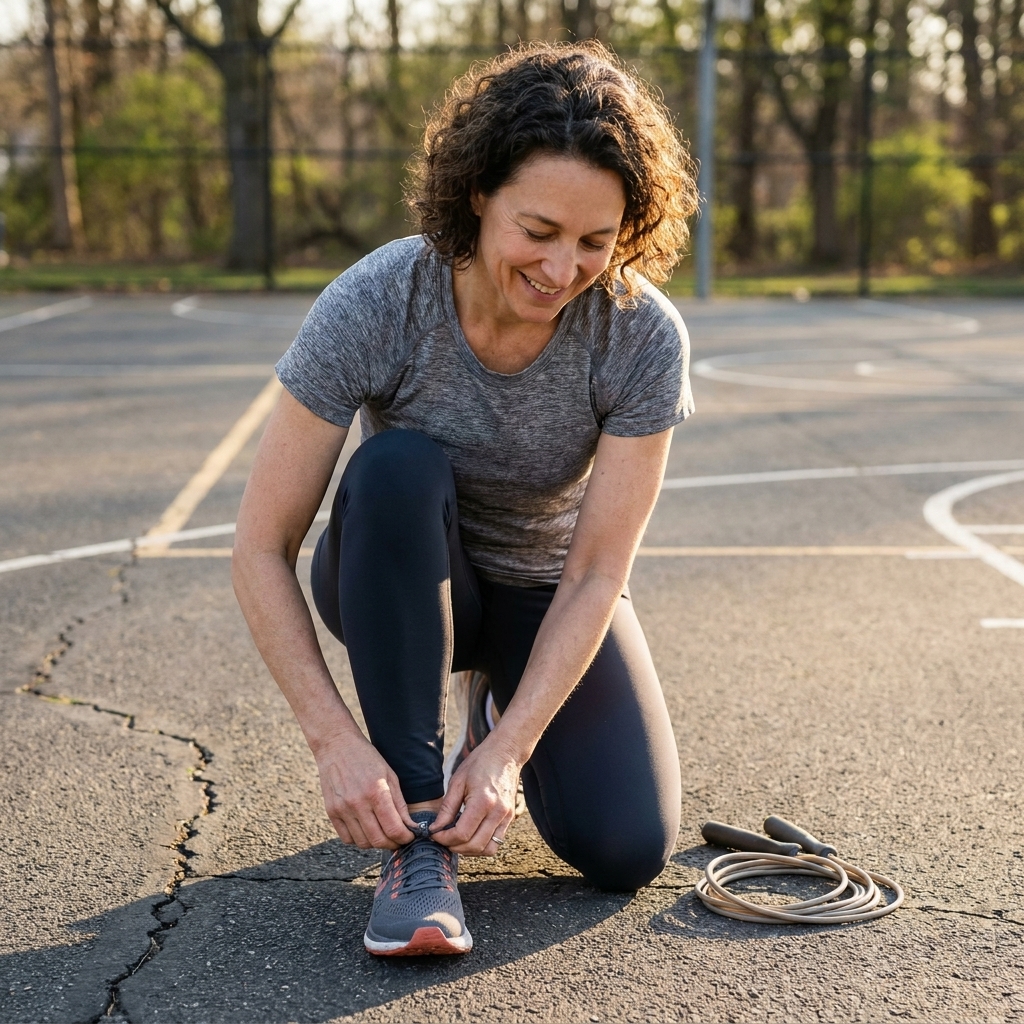
- Check rope length. A quick starting point: stand on the middle of the rope and bring the handles up. Around armpit height is a solid baseline (then adjust based on comfort and skill).
- Start with practice reps, not long sets. Think: 10 to 20 seconds at a time, then rest.
- Use a soft surface. Rubber court, gym flooring, or a smooth driveway. Avoid super uneven ground.
- Keep your jumps small. You only need to clear the rope. This is not a vertical leap competition.
Beginner jump rope circuit (12 minutes)
- 30 seconds: easy jump (or pretend jumps without the rope)
- 30 seconds: rest
- Repeat for 12 rounds
Want to level up without turning it into a bootcamp? Add a “play break” halfway: walk a lap, toss a ball, or do a quick sidewalk chalk doodle. Seriously. Keep it light.
Foursquare for agility
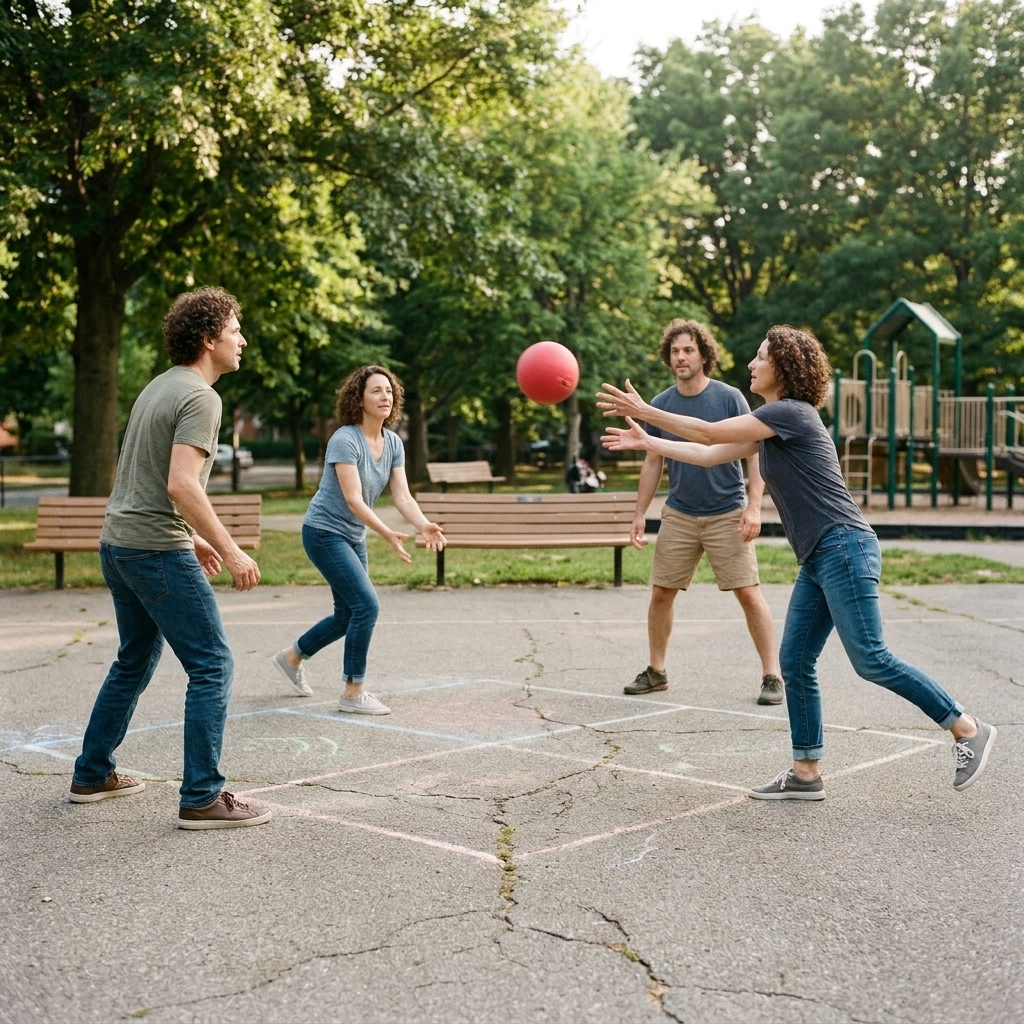
Foursquare is one of my favorite “this is not a workout, but it definitely is” activities. It trains quick feet, reaction time, and lower-body endurance, plus it has built-in laughter because nobody stays coordinated the whole time.
What you need
- Sidewalk chalk or court tape
- A rubber playground ball or kickball
- 3 friends, neighbors, or willing strangers at the park (truly)
Adult-friendly tweaks
- Play to a time limit, not points. Try 15 minutes, then rotate players or take a water break.
- Agree on intensity. “Friendly, not feral” is a valid rule.
- Choose joint-kind serves. Underhand, gentle bounces, no surprise cannonballs.
- Reduce hard pivots if needed. If knees or ankles tend to complain, keep the court smaller, allow a second bounce, and make “no diving, no lunging” an official house rule.
- Make it inclusive. If someone is new, give them a few practice rounds. We are building a habit, not a hierarchy.
If you are thinking, “This sounds silly,” I get it. I also think it is exactly why it works. Adults need safe places to be a little silly.
Rec sports that stay fun
Recreational sports are the easiest way to get a longer movement session without clock-watching. The trick is choosing the vibe you want and opting out of the overly competitive versions.
Easy weekend options
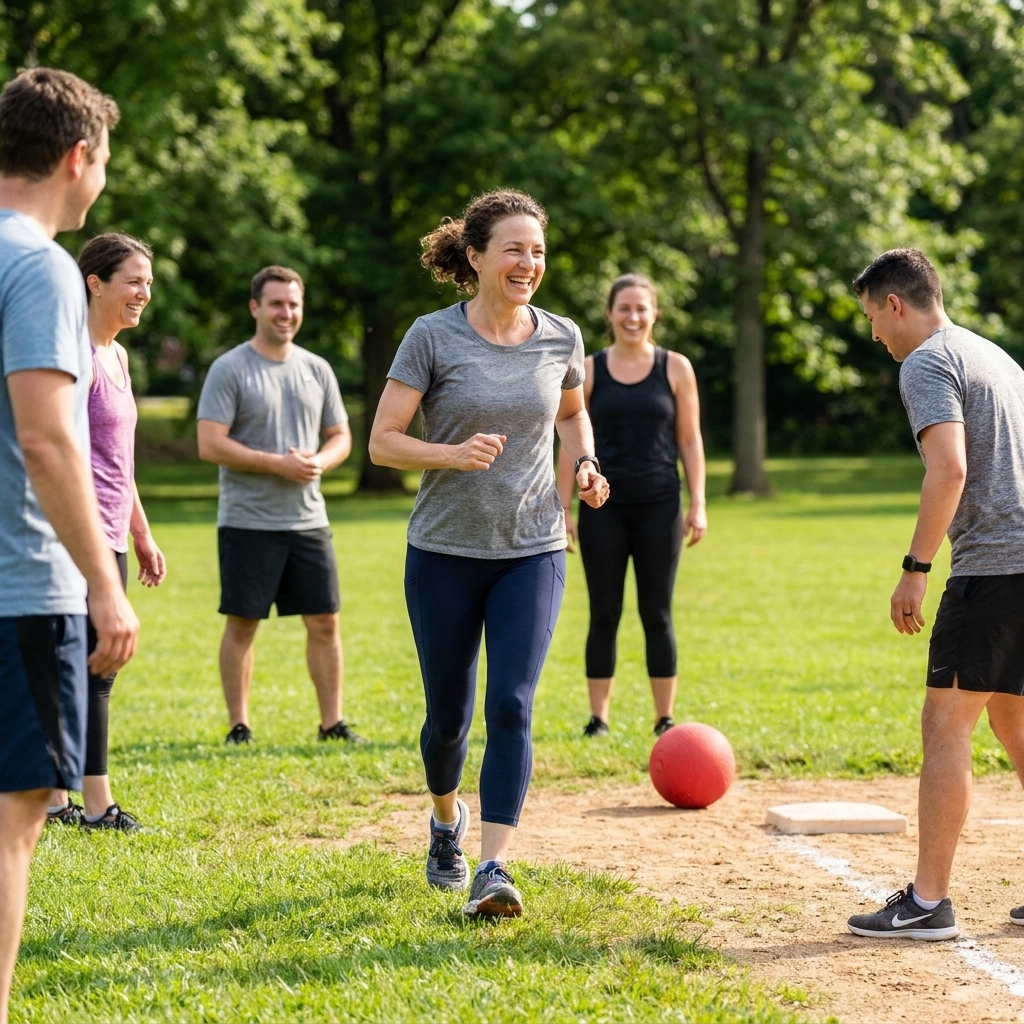
- Kickball: quick bursts of running with lots of standing and chatting
- Pickleball: accessible, social, and surprisingly good for lateral movement
- Frisbee or ultimate-lite: choose a smaller field, rotate often
- Basketball HORSE: playful skills practice with built-in rest
- Soccer passing games: cones optional, laughter encouraged
Keep it truly recreational
- Use a talk test. You should be able to speak in short sentences most of the time.
- Rotate positions often. This spreads effort around and keeps things social.
- Stop while you still feel good. Ending with energy makes you want to come back next weekend.
- Set one comfort rule. Examples: no sliding, no body contact, no playing through pain.
- Choose safe footing. Supportive shoes and a dry, even surface go a long way when a game involves cutting or quick turns.
Don’t have a group? Try solo play that still feels playful: a chalk agility ladder, a walking scavenger hunt , or a simple “wall ball” catch-and-throw with a tennis ball (start close, go slow, build up).
Warm-up and recovery
You do not need a complicated pre-game routine. You just need to arrive in your body before you ask it to sprint, jump, or pivot.
Two-minute warm-up
- 30 seconds brisk walking
- 30 seconds high knee marches (slow, not intense)
- 30 seconds heel-to-butt kicks (gentle)
- 30 seconds arm circles and shoulder rolls
Recovery that helps you return
- Hydrate and add a snack. Something with carbs and protein is your friend. Examples: an apple with peanut butter, Greek yogurt with berries, or a turkey sandwich half.
- Do a five-minute walk cool-down. It helps your heart rate come down smoothly.
- Give your calves and hips some love. Light stretching or a warm shower counts.
- Sleep is part of the plan. Play hits different when you are rested.
Worried about looking silly?
I want to say this gently: you are allowed to look like a beginner. You are allowed to miss the rope. You are allowed to shank the serve. You are allowed to laugh at yourself.
Most people at the park are thinking about their own lives, not grading your coordination. And the people who are judgmental about adults having fun? They are not your wellness committee.
Try this reframe: you are not “working out in public.” You are “playing outside.”
Make it a habit
The sweet spot is structure with flexibility. A little plan, lots of permission.
Three ways to lock it in
- Create a recurring invite. “Saturdays at 10, park court” is easier than renegotiating every week.
- Keep a go-bag. Rope, ball, chalk, water, sunscreen. Put it by the door.
- Track joy, not numbers. Afterward, rate it from 1 to 10: “How good do I feel?” That is your metric.
And if you miss a week, you are not “off track.” You are just a person with a life. You can pick it back up next weekend.
Quick FAQ
Is jump rope hard on your knees?
It can be if you jump too high, use a very hard surface, or ramp up too fast. Keep jumps small, land softly, and start with short intervals. If you have persistent knee pain, choose a lower-impact option like walking games, gentle pickleball, or modified foursquare with calm rules and minimal pivoting. If it still hurts, swap it out and get support.
What if I do not have a group?
Jump rope and solo playground circuits are perfect. You can also bring one friend and start small. In some areas, parks have casual pickup games, and community centers often run beginner-friendly rec leagues.
Does this really count as fitness?
Yes. If your heart rate rises, your muscles work, and you do it consistently, it counts. Bonus points for the fact that you might actually look forward to it.
What should I wear?
Comfortable clothes you can move in and supportive sneakers. That is it. The most important accessory is the one you cannot buy: willingness to play.
If you try this, start with one tiny move this weekend: toss a ball, chalk a foursquare court, or jump rope for three rounds of 20 seconds. Let it be light. Let it be imperfect. Let it be yours.
Healthy living is not only built in gyms. Sometimes it is built on a sunny court with a little squeaky playground ball and the sound of your own laughter.